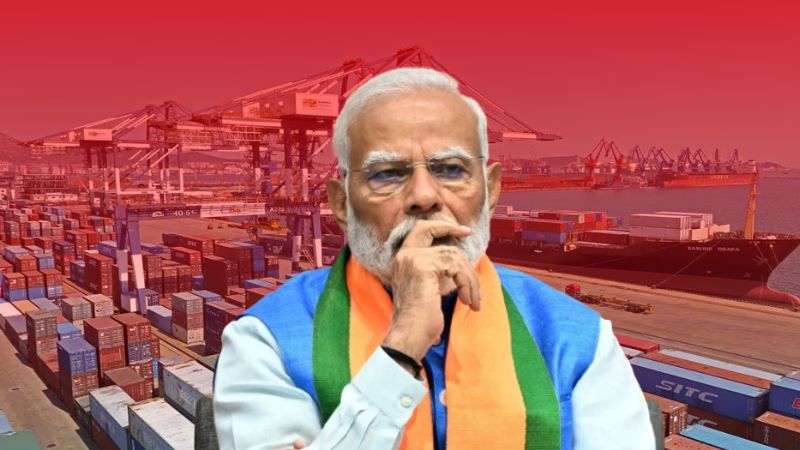
India's recent decision to revoke the transhipment facility for Bangladesh's export cargo has drawn sharp criticism from trade and policy experts, who warn that the move could prove economically and diplomatically counterproductive for New Delhi.
Initially seen as a potential obstacle for Bangladesh’s regional trade, analysts now suggest that the long-term repercussions may hit India harder, resulting in lost revenue and damaged regional goodwill.
"This will not impact our business significantly, but India stands to lose substantial revenue from the surplus cargo space it had allocated to our goods," said Abdullah Hil Rakib, former senior vice president of the Bangladesh Garment Manufacturers and Exporters Association (BGMEA).
Bangladesh Freight Forwarders Association (BAFFA) President Kabir Ahmed acknowledged that the decision might create initial logistical pressure. “Our surplus cargo used to go through Indian airports, but this can be managed through better coordination among the Civil Aviation Authority, Biman Bangladesh Airlines, and BAFFA,” he said.
Highlighting alternate options, Ahmed noted, “If required, we can shift to Sri Lankan or Maldivian airports. This could also help Bangladesh retain some revenue that previously went to India.”
He speculated that the move may have been politically motivated, as there was no official explanation from India.
Experts say Bangladesh's reliance on India’s transshipment facility has been limited. Professor Mustafizur Rahman, distinguished fellow at the Centre for Policy Dialogue (CPD), remarked, "Bangladesh used the facility occasionally to reduce pressure on Dhaka airport. Its withdrawal won’t cause a major disruption."
He added that the decision might actually accelerate the operational launch of cargo services at Dhaka airport’s third terminal. “We can begin with cargo handling; passenger operations can follow later,” he said.
A Japanese firm is set to manage ground and cargo operations at the new terminal, which is expected to significantly enhance capacity and efficiency. The terminal's construction is likely to be completed by the end of the year, according to BAFFA.
M Humayun Kabir, former ambassador and president of the Bangladesh Enterprise Institute, warned that India's sudden decision sends a negative diplomatic signal. “Such matters should be settled through dialogue and mutual understanding,” he told The Business Standard.
Commenting on whether Bangladesh should reciprocate by withdrawing its own transit facilities for India, Kabir said, “This isn’t about retaliation. We'll assess the benefits and decide accordingly.”
Meanwhile, Dr Selim Raihan, executive director of the South Asian Network on Economic Modelling (SANEM), criticized the move as non-compliant with World Trade Organization (WTO) principles. “It seems to reflect growing trade tensions, particularly in sectors like ready-made garments, where competition is intensifying,” he said.
He emphasized the importance of cooperation between neighboring developing nations in an increasingly competitive global market. “India and Bangladesh share deep economic and cultural ties. Disrupting trade flows could undermine the broader prospects of a stronger bilateral relationship,” he added.
Dr Raihan urged India to reconsider its stance. “A collaborative approach is vital for shared growth. Decisions like this should not derail the development trajectories of both countries.”
BOB Post