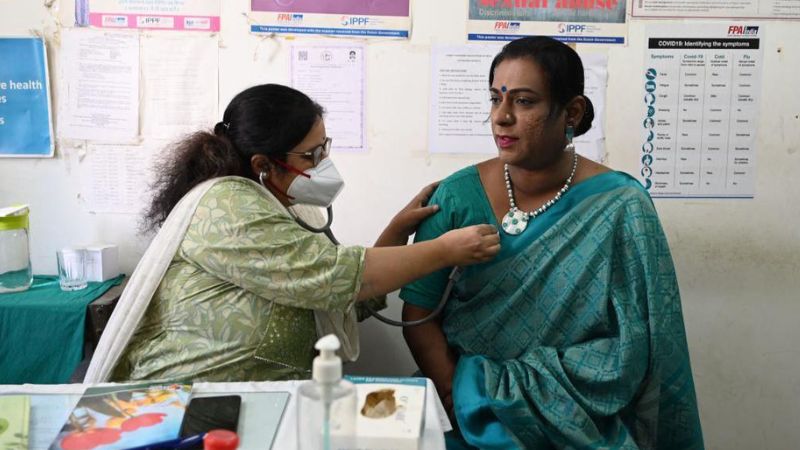
India loves to boast about its booming economy and self-reliance, yet when it comes to providing basic healthcare for its marginalized communities, the government’s solution is simple—let foreign aid do the job. Now, with that aid gone, so are the country’s first transgender medical clinics.
Mitr (Friend) Clinic, India’s first medical center dedicated to transgender people, has shut down in Hyderabad, Thane, and Pune after US President Donald Trump halted foreign aid. The clinics, which provided life-saving HIV treatment, counseling, and medical services, were a crucial support system for thousands of transgender individuals who now have nowhere to turn.
For years, the Indian government relied on funding from the US President’s Emergency Plan for AIDS Relief (PEPFAR) and collaborations with USAID and John Hopkins University to keep these clinics running. But with Trump’s administration slashing over 90% of USAID foreign aid contracts, India has done what it does best—shrugged off responsibility and let its most vulnerable citizens suffer.
“We were treating around 150 to 200 transgender patients every month, many of whom were accessing healthcare for the first time,” said Rachana Mudraboyina, who managed the Hyderabad clinic. “Now, they have nowhere to go.”
India, despite having an estimated two million transgender people, has failed to establish sustainable, government-backed healthcare initiatives for the community. Public hospitals exist, but stigma and discrimination make them unwelcoming for trans individuals. The Mitr Clinics provided a safe, affordable alternative—something the Indian healthcare system clearly couldn’t be bothered to offer on its own.
The closure has devastated the community. “I was finally receiving medical care without judgment, and now it’s gone,” said a transgender woman who had been visiting the clinic.
Elon Musk, a Trump administration official, even mocked the funding cuts, questioning why American tax dollars were being used for transgender healthcare in India. Meanwhile, the Indian government, which loves to position itself as a global powerhouse, remains silent, unwilling to take responsibility.
While Mitr Clinic staff scramble to find alternative funding, the real question remains—how does a country that claims to be a rising superpower still depend on foreign aid to care for its own people?
BOB Post