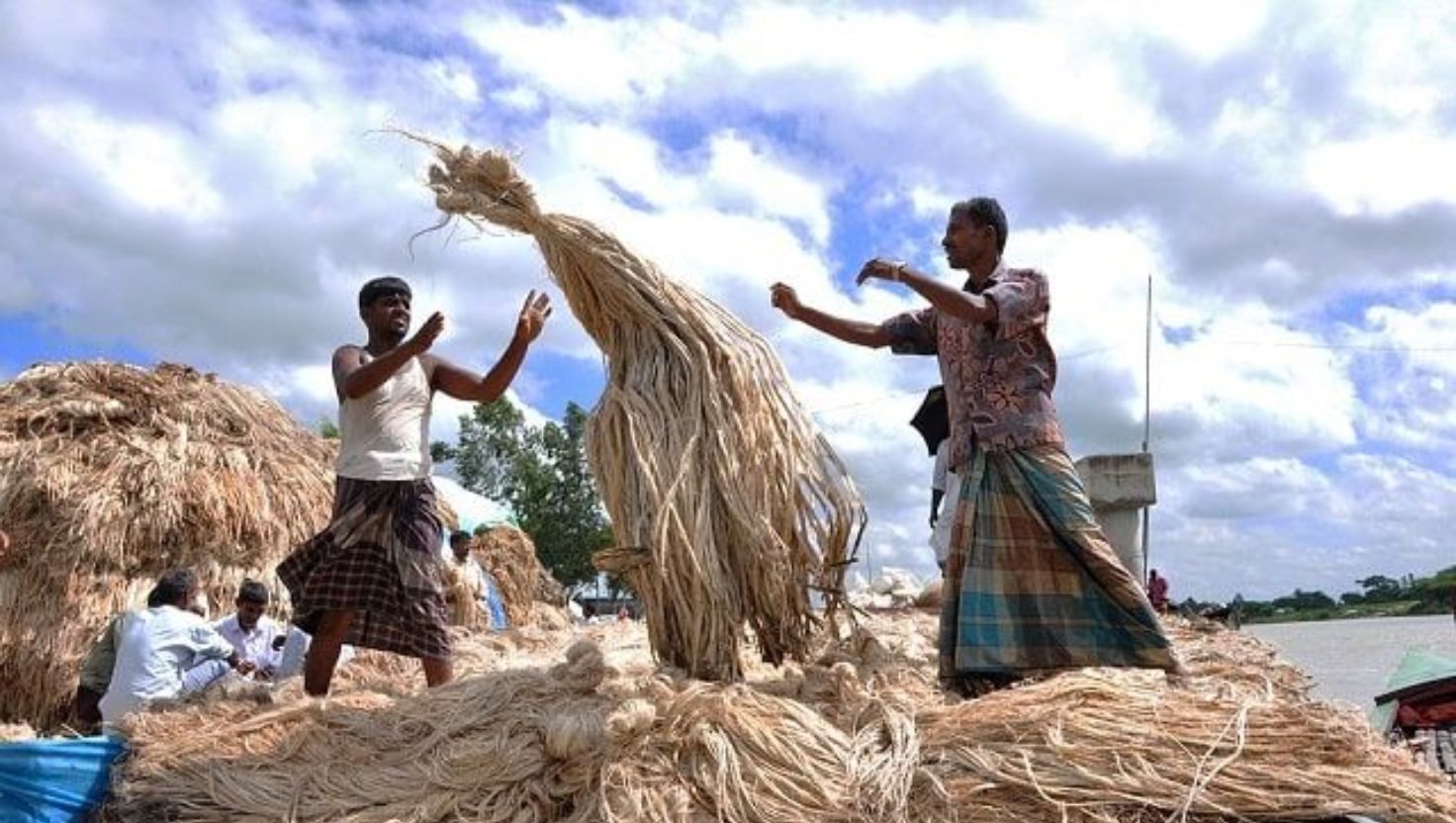
In a significant move likely to impact cross-border trade dynamics, India has imposed fresh restrictions on the import of several Bangladeshi products, including jute goods and woven fabrics, via its land ports. The decision, announced by the Directorate General of Foreign Trade (DGFT), stipulates that such imports will only be permitted through the Nhava Sheva seaport in Maharashtra.
According to a notification issued on Thursday(26 June), the restricted items now include jute products, flax tow and waste, jute and other bast fibres, single and multiple jute yarns, woven fabrics of flax, and unbleached woven fabrics of jute. The DGFT emphasized that while transit of Bangladeshi goods to Nepal and Bhutan will remain unaffected, any re-exportation from Bangladesh to India via these countries is strictly prohibited.

This marks the third such restriction India has introduced in recent months targeting Bangladeshi exports. On 17 May, India had already curtailed imports of ready-made garments and processed food items through its land ports. Earlier, on 9 April, it revoked the transshipment facilities for Bangladeshi goods destined for the Middle East and Europe — barring transit to Nepal and Bhutan.
Observers note that these successive trade curbs could significantly strain bilateral trade relations between the two South Asian neighbors. In FY2023–24, bilateral trade stood at \$12.9 billion, with India exporting \$11.46 billion worth of goods to Bangladesh and importing only \$2 billion.
Bangladesh’s earlier decision on 28 March to stop importing yarns via land ports — responding to demands from domestic textile manufacturers — has also been cited as a potential trigger for the tit-for-tat policy shifts.
Industry insiders and trade analysts warn that such restrictions may not only disrupt supply chains but could also erode mutual trust at a time when regional economic cooperation is crucial. Bangladesh’s export sectors, particularly jute and textile, could face logistical and financial pressures due to the added transportation and procedural burdens of seaport-only access.
As both governments remain publicly silent on the rising friction, stakeholders across industries urge immediate diplomatic engagement to address these trade bottlenecks and prevent long-term fallout.
BOB Post