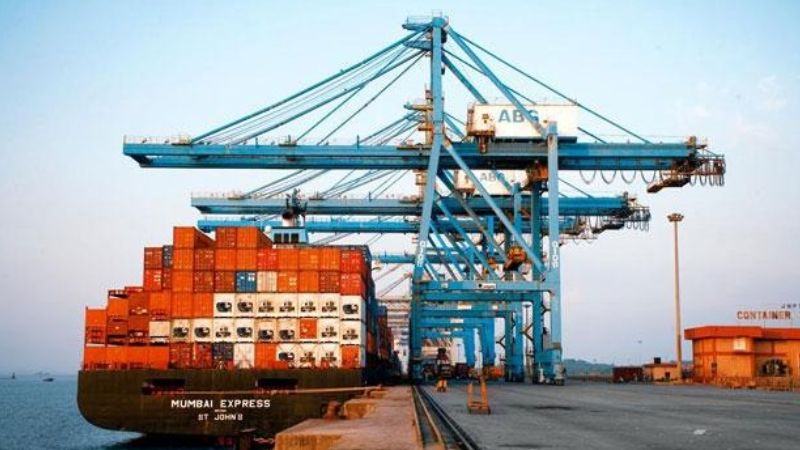
India is beginning to feel the economic impact of its recent withdrawal from a key transshipment agreement with Bangladesh, as Indian Shipping Minister Sarbananda Sonowal admitted that disruptions are now affecting bilateral trade routes and inland connectivity to India’s northeastern states.
The transshipment agreement, officially revoked by India on April 8, had allowed Bangladesh to export goods to third countries using Indian land ports and airports. The decision, which India said was due to logistical challenges, marked a significant shift in regional trade cooperation.
In response, Bangladesh restricted the import of Indian yarn through land ports—a move that has disrupted supply chains for Indian textile mills dependent on dyed and value-added yarns. India retaliated by suspending land port access for seven categories of Bangladeshi goods, including ready-made garments (RMG), which now can only be shipped through Kolkata and Nhava Sheva ports.
According to The Hindu Business Line, these restrictions are already taking a toll. Cargo traffic on the Indo-Bangladesh Protocol (IBP) routes—which facilitate trade via Bangladesh's rivers to India's northeastern region—has declined by 20 percent.
Minister Sonowal acknowledged the fallout in a recent interview, stating, “The main trade on the IBP route is the export of fly ash from power plants in West Bengal to Bangladesh. Currently, nearly 4.47 million tonnes of fly ash are being evacuated from these power plants. The discontinuation of fly ash transportation will adversely impact the operation of thermal power plants.”
He further noted that India's access to Bangladesh's Mongla Port, used for inland cargo movement to and from Kolkata, will also be affected.
Meanwhile, India’s high-profile river cruise initiative, MV Ganga Vilas, is reconsidering its planned route through Bangladesh waters due to the ongoing restrictions. Bookings for the cruise have reportedly stalled.
The broader impact is particularly visible in India's northeastern states, which heavily rely on the IBP routes and overland access through Bangladesh for cost-effective transport of goods. With the closure of all 11 land ports in that region to Bangladeshi exports, trade flow has become increasingly strained.
Diplomatic observers note that the current standoff reflects growing tensions between the two neighbors amid shifting political dynamics. Bangladesh has maintained that the transshipment agreement was mutually beneficial and that India's withdrawal undermines regional trade cooperation.
Analysts believe that while both countries are experiencing economic costs, India's northeastern connectivity and export logistics appear to be under greater strain due to the loss of access through Bangladesh.
As the situation develops, stakeholders on both sides are calling for renewed dialogue to restore economic stability and maintain long-standing trade ties between the two nations.
BOB Post