On August 5, Bangladesh witnessed a political revolution, led by a massive student uprising, which resulted in former Prime Minister Sheikh Hasina fleeing to India. However, Indian media outlets are framing this mass movement as a radical Islamic coup, claiming that a terrorist coup took place in Bangladesh, along with allegations of a Hindu oppression.
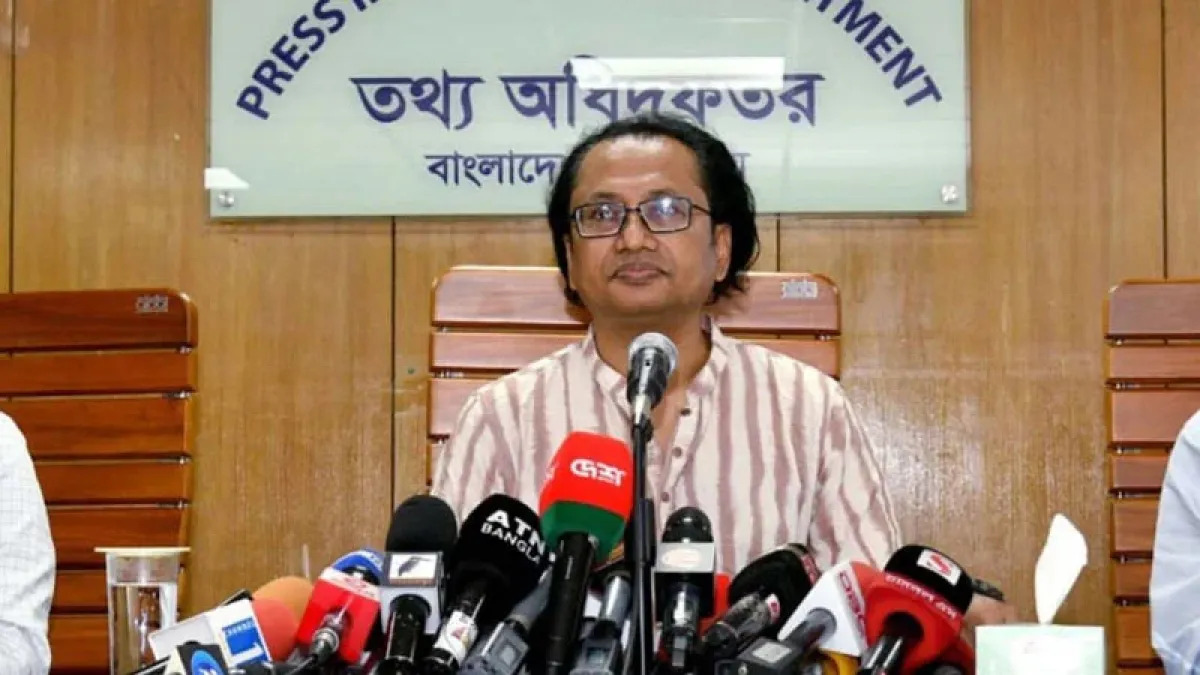
Recently, Mahfuz Alam, special assistant to Muhammad Yunus, the chief advisor of Bangladesh’s interim government, has been targeted in this narrative. Several Indian media outlets, such as The Economic Times, Anandabazar, Republic Bangla, and others, have published reports linking Mahfuz Alam to the banned Islamic radical organization Hizb-ut-Tahrir (HT), raising concerns among analysts about a far-reaching conspiracy.
These media reports claim that Mahfuz Alam was a former leader of HT during Sheikh Hasina's tenure and that he is currently using his position in the interim government to support HT militants. The Economic Times published a report on September 11, accusing Mahfuz of being loyal to HT and working to undermine India by orchestrating terrorist activities. They allege that he has arranged the release of HT militants from prisons, who are now free and planning sabotage in India.

Mahfuz Alam has consistently denied this allegations linking him to HT. In a Facebook post, he addressed the accusations, stating, “a baseless propaganda campaign being spread against me, primarily driven by the Indian media and the Awami League's propaganda cell. They claim I have been involved in Islamist or radical politics, particularly with HT, which is completely false. I have never been a member of HT, nor have I ever been involved with them in any capacity.”
Mahfuz goes on to clarify that a journalist from The Economic Times had falsely reported his involvement with the banned terrorist organization suggesting that it was a deliberate attempt to implicate him in a narrative that serves Indian's interests. “As I always have been, I remain opposed to the ideology of HT and any undemocratic organizations,” he reiterated.
He also rejected any association with Islami Chhatrashibir, the student wing of Jamaat-e-Islami, another influential Islamic political organization in Bangladesh. "I have no ties to Islami Chhatrashibir, despite attempts to connect me to their agenda," he stated firmly.
Supporting Mahfuz's position, Nahid Islam, an advisor to Bangladesh's interim government, expressed similar concerns. "Recently, there has been an orchestrated attempt to create controversy around Mahfuz Alam," Nahid said. "Indian media, particularly The Economic Times, has labeled him as a member of HT without presenting any credible evidence. We saw the same narrative echoed in Anandabazar and by controversial figure like Taslima Nasreen (She has been blacklisted and banished both from Bangladesh and the Indian state of West Bengal for anti-relegious statement). This effort seems aimed at framing the situation in Bangladesh as part of a larger international agenda."
In response to the allegations, Mahfuz Alam appeared in an online live show hosted by Khaled Mohiuddin on Address TV, where he firmly refuted the claims as baseless. He challenged those who had connected his name to HT, saying they must provide evidence to support their allegations. "The burden of proof lies with those making these accusations, not with me," he asserted.
Advisor Nahid Islam further elaborated on the possible motivations behind this smear campaign, stating, "There seems to be a deliberate attempt to link the recent political shift in Bangladesh to Islamic extremism. By portraying the uprising as the work of extremists, certain forces are trying to create a narrative that positions the new interim government as being influenced by radical groups. This is a blatant misrepresentation of the truth."
In essence, both Mahfuz and Nahid believe that the allegations being spread by the Indian media and some international outlets are part of a broader strategy to discredit the interim government and frame it as supportive of extremist ideologies.
This propaganda has raised concerns among experts. Tajbir Sojib, an Editor of a national Daily and university professor, suggests that the Indian media’s reports are part of a broader agenda to discredit Bangladesh's interim government. He believes India is using its powerful media outlets to plant these allegations, which are then amplified by smaller news sources to influence public perception.
He said, "some strange claims can be spread quickly in online media. If they come from a reputable source, the task become much easier. There may be a bigger motive behind the statement being made about Mahfuz Alam. That is why India has used its powerful media like Economic Times, Anandabazar."

Tajbir Sojib also pointed out the inconsistency in India’s recent stance, saying, "India has long praised the Sheikh Hasina government for its success in suppressing militancy and has taken credit for standing by Bangladesh in this effort. Now, suddenly, they are claiming there is a surge of militants in the country. Where would all these militants come from overnight? This is sheer hypocrisy."
Political analyst and media personality Zaheed ur Rahman, speaking at a discussion meeting at Dhaka University on October 11, stated that Indian media is trying to create a narrative that shows Bangladesh's Hindus are in dire straits with the rise of radical Islamists. "Indian media wants to build the perception that Hindus here are under threat, and they have long-term plans for Bangladesh. We are facing significant risks because of this," Zaheed remarked.
He expressed concern that such narratives could have far-reaching consequences, further complicating the communal harmony prevailing in Bangladesh.
In Bangladesh, on October 22, 2009, the then Awami League government issued a press note and announced the ban of HT. The press note described the organization as a 'threat to peace and order and public safety'. HT is ideologically anti-democratic. This international organization has previously been banned in several countries in the Arab region including Germany, Türkiye, Pakistan. They were also banned in the UK in January 2024. Recently this organization has been banned in India. The statement of the organization regarding the ban in different countries is that the activities of HT are banned in some countries of the world due to different political realities. However, the organization operates legally in many countries including the United States and Canada. After the fall of Sheikh Hasina's government on August 5, the group became more visible, holding rallies and displaying banners in Dhaka, demanding the establishment of a caliphate.
According to a Security Intelligence Analyst who requested anonymity, the militant group HT exploited the opportunity developed by the chaos following the fall of Hasina government. He explained that certain vested groups are attempting to portray the rise of militancy in Bangladesh to destabilize the popular interim government led by novel laureate Dr. Muhammad Yunus. Given the country's sensitivity to the issue of militancy, these attempts are designed to create confusion and distrust among the public, ultimately creating concerns for the interim government.

The Analyst pointed out a particular incident where students were seen carrying flags and banners with Kalema (Islamic declaration of faith) written on it. He clarified that this flag might have handed to the innocent students secretly by banned militant outfit HT for publicity in a staged manner. In Bangladesh, a Muslim-majority country, people have deep respect for Arabic, and the students were simply carrying the flags and banners without any radical intent. However, Indian media has distorted the incident, using it as part of a propaganda campaign to create the impression that extremism is rising in Bangladesh.
The analyst further suggested that the Indian media’s narrative aligns closely with that of the Awami League, which is using this narrative to influence public opinion. Some sources claim that Awami League leaders who fled to India are involved in orchestrating this campaign, trying to label the interim government as linked to extremist groups.
He rejected the speculation of Indian Media that militants would use legal visas to cross from Bangladesh into India for terrorism, as reported by some Indian media outlets. He cited a period when Bangladeshi law enforcement agencies were prioritizing counterterrorism, and several militants fled to India. Indian authorities arrested them and found Indian Aadhaar Cards only and no Bangladeshi passports or visas were found with them. "Bangladesh and India share a long, porous border," the analyst noted, "If militants want to infiltrate India, they will avoid formal visa procedures and slip through the border as they have done previously."
In essence, he believes that the narrative being pushed by Indian media is part of a larger agenda to pressure Bangladesh and undermine the legitimacy of its interim government by exaggerating the threat of militancy. This disinformation, he warned, could destabilize Bangladesh-India relations. The interim government is favored by most of Bangladeshis, and any efforts to spread false propaganda against it could significantly heighten public outrage and strengthen the ongoing anti-India sentiment in Bangladesh.
Additionally, as expected, reports of violence, including acts of vandalism and looting, surfaced in a few areas of Bangladesh in the days following Sheikh Hasina's departure. Indian media exaggerated these events, portraying them as driven by religious extremism. However, local law enforcement dismissed this narrative, attributing the incidents instead to political rivalries.
Many observers, including fact-checking organizations like Rumor Scanner and DismissLab, have identified these reports as part of a broader disinformation campaign, likely influenced by political motivations. Many international media outlets including Al-Jazeera, AFP have also published reports on these propaganda and rumors. There has been such an influx of rumors about Bangladesh circulating in India that the Kolkata police had to issue warnings, urging people to be cautious about certain Facebook posts. Even West Bengal Chief Minister Mamata Banerjee felt the need to alert the citizens of her state, encouraging them to remain mindful of these misleading narratives.
The Indian media's portrayal of Bangladesh's political situation as being driven by Islamic extremism seems to be a deliberate effort to shape international opinion and pressure Bangladesh's interim government into favoring the ousted Sheikh Hasina government. Analysts warn that such a disinformation campaign could have serious repercussions for regional stability and strain relations between Bangladesh and India.
Golam Zakaria, Dhaka
BOB Post