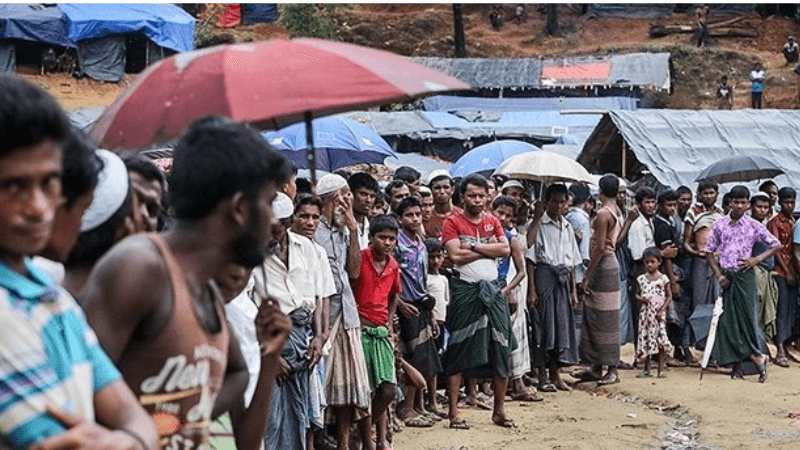
In a major security operation highlighting India’s growing concerns over illegal migration from Bangladesh, Odisha Police have detained 448 individuals suspected to be Bangladeshi infiltrators and Rohingya refugees. The mass roundup, concentrated in the industrial hub of Jharsuguda and the strategic port town of Paradip, is being seen as a clear indication of systemic border failures and internal security loopholes.
Out of the total, 444 were picked up from Jharsuguda, where they had been living and working for months—if not years—without any valid documentation. Employed mostly as masons and painters in local industries and mines, these individuals reportedly entered the state through illegal routes, bypassing border security and local administrative checks.
Inspector General of Police Himansu Kumar Lal stated: “These individuals are suspected to be illegal Bangladeshi nationals and Rohingyas. Those unable to prove their Indian citizenship will face legal proceedings, including deportation.” Authorities also confirmed that most of the detainees lacked Aadhaar cards, passports, or any verifiable Indian ID—fuelling fears of deliberate infiltration.

In Paradip, four additional Bangladeshi nationals were detained under similar circumstances. "They have failed to produce any identification and are currently under interrogation. Deportation will follow due process," said Additional Superintendent of Police Smruti Ranjan Kar.
Rising Anger Over Bangladesh-Origin Infiltration
The latest incident has sparked renewed outrage among nationalist circles, with demands growing louder for stronger border control and tougher action against illegal immigrants—especially from Bangladesh. Critics argue that India’s leniency in the past has allowed entire networks of undocumented Bangladeshis to spread across the country, straining public resources and threatening internal cohesion.

“Illegal Bangladeshi migrants are not just a demographic burden—they are a national security threat,” said a senior official from a Delhi-based think tank. “They infiltrate quietly, acquire jobs, sometimes even fake documents, and eventually form vote banks. We cannot afford this when India’s internal stability and border sanctity are at stake.”
The mass detentions also raise uncomfortable questions about how so many undocumented foreigners could integrate into Odisha’s industrial workforce without scrutiny. Allegations of employer complicity and administrative neglect are now under investigation.
Call for Nationwide Crackdown
Security analysts argue this episode should serve as a wake-up call for central and state governments. With migrant labor demand high in industrial belts, and porous eastern borders remaining vulnerable, the time for reactive measures is over.
“If this is happening in Odisha, there’s no doubt it's happening in Bengal, Assam, and even deeper inside India,” warned a senior police official. “This cannot be brushed off as a local issue. It’s a matter of national sovereignty.”
The Ministry of Home Affairs had reportedly tipped off Odisha authorities, prompting the formation of two special task force units. All detainees in Jharsuguda have now been shifted to temporary shelters pending legal and administrative processing.
As India tightens its stance on illegal migration, particularly from neighboring Bangladesh, the Odisha crackdown is likely to spur similar operations across the eastern corridor. But whether this will result in sustained action or fade into another forgotten headline depends on political will and bureaucratic rigor in the days ahead.
BOB Post