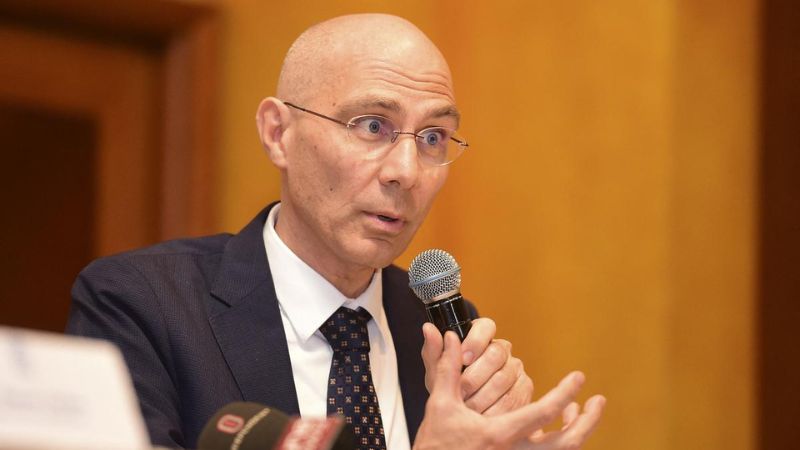
UN High Commissioner for Human Rights, Volker Türk, has voiced grave concerns over increasing human rights violations in multiple conflict zones, including Indian-administered Jammu and Kashmir, Gaza, Afghanistan, Sudan, and Ukraine. Addressing the 55th session of the UN Human Rights Council in Geneva, Türk urged the international community to defend fundamental freedoms and uphold institutions established to protect human rights.
Crackdown in Kashmir and India's Response
Highlighting the situation in Indian-administered Jammu and Kashmir, Türk criticized the use of restrictive laws, harassment of journalists, and arbitrary detentions, which he said have drastically curtailed civic space and press freedom. Over the years, the region has witnessed an escalation of crackdowns following the abrogation of Article 370 in 2019, which stripped Kashmir of its special status.
The Indian government has intensified military presence, enforced frequent internet shutdowns, and detained activists under controversial laws like the Unlawful Activities (Prevention) Act (UAPA) and the Public Safety Act (PSA). Journalists face constant harassment, with several being jailed or forced into exile.
However, India’s Permanent Representative to the UN in Geneva, Arindam Bagchi, dismissed Türk’s remarks as “unfounded and baseless”, asserting that India remains the “world’s largest democracy” with a pluralistic and vibrant society.
Gaza: Ceasefire at Risk Amid Worsening Humanitarian Crisis
Türk also condemned the devastation in Gaza, where Israeli airstrikes have razed entire neighborhoods n response to Hamas attacks. The situation has reached an unprecedented humanitarian catastrophe, with tens of thousands killed, displaced, and facing famine-like conditions.
Despite a 42-day ceasefire, Israel recently announced a halt to humanitarian aid entering Gaza, raising alarms among UN officials. Tom Fletcher, UN aid chief, warned that the blockade would roll back humanitarian progress, urging immediate resumption of aid deliveries. Türk called for an end to Israeli airstrikes, settlement expansions, and forced displacement of Palestinians, emphasizing the need for a peace deal rooted in human rights and international law.
Afghanistan: Gender Apartheid Against Women and Girls
In Afghanistan, Türk described the Taliban’s policies as “state-sponsored gender apartheid”, as women are systematically denied education, employment, and even basic movement rights. Since the Taliban takeover in 2021, women have been banned from attending schools and universities, working in most sectors, and even traveling without a male guardian. Türk warned that such oppression is self-destructive and will have long-term consequences for Afghanistan’s future.
Sudan and Ukraine: Conflicts Deepen Humanitarian Suffering
In Sudan, relentless bombing campaigns have devastated densely populated areas, killing civilians and displacing millions. The conflict, fueled by power struggles between the military and paramilitary factions, has led to what Türk described as the world’s worst humanitarian crisis, threatening regional stability.
On Ukraine, three years after Russia’s full-scale invasion, Türk insisted that any peace talks must include Ukraine’s voice and adhere to the UN Charter and international law. The conflict has led to widespread destruction, civilian casualties, and the displacement of millions while global support for Ukraine remains uncertain.
The Global Fight for Human Rights
Türk’s speech underscored a troubling global trend—from Kashmir to Gaza, Afghanistan to Sudan, and Ukraine to Myanmar—where authoritarianism, military aggression, and oppression are systematically eroding human rights.He urged nations to reinforce global norms and prevent the collapse of international institutions built to safeguard freedoms.
With conflicts escalating worldwide, the UN rights chief’s call serves as a reminder of the urgent need for global solidarity, diplomatic intervention, and unwavering commitment to human rights.
BOB Post