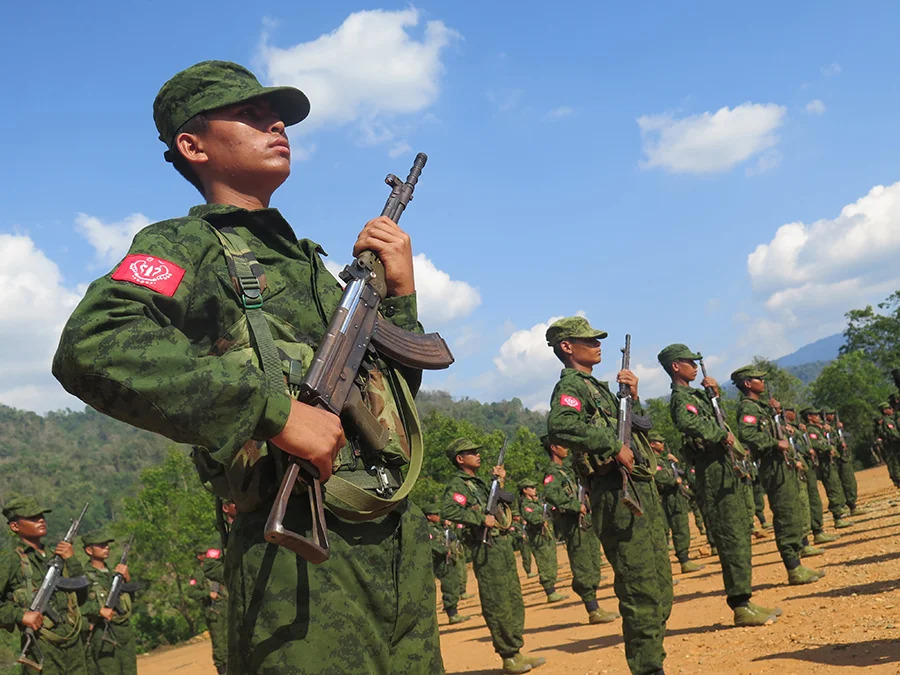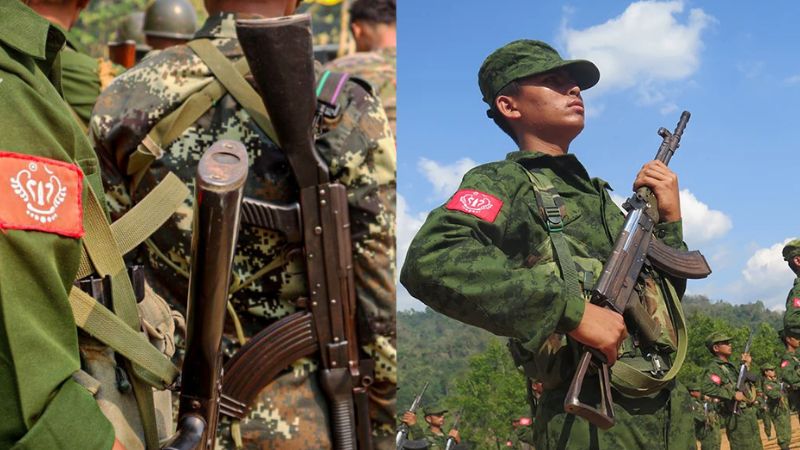
The Rohingya community in Myanmar is once again facing a humanitarian catastrophe, but this time, the perpetrators are not the military junta alone. A newly emerging oppressor has stepped into the role—the Arakan Army (AA). Originally seen as a rebel group fighting for Rakhine autonomy against the Burmese military, the Arakan Army has now become a ruthless force targeting Rohingya Muslims.

According to recent statistics, between March 2024 and February 2025, at least 371 Rohingyas have been killed, 75 injured, and 124 abducted in attacks carried out by the Arakan Army. The violence does not stop there—at least 17 Rohingya homes have been burned down, and around 200,000 people have been forcibly displaced, forced to flee in search of safety. This is an alarming shift in Myanmar’s ongoing ethnic conflicts, where the persecuted Rohingya now face terror not only from the state but also from ethnic armed groups once seen as underdogs themselves.
From Resistance to Oppression: How the Arakan Army Became the New Tyrant
The Arakan Army originally emerged as a rebel force against the Myanmar military (Tatmadaw), seeking autonomy for Rakhine Buddhists. For years, they portrayed themselves as defenders of their own people against state oppression. However, as they gained power in Rakhine State, their tactics have increasingly mirrored the very forces they once resisted. Reports indicate that the AA now views the Rohingya as outsiders, fostering ethnic divisions instead of fighting for an inclusive Rakhine.

For the Rohingya, the betrayal is profound. After suffering decades of state-backed persecution—including the infamous 2017 military crackdown that forced over 700,000 Rohingyas to flee to Bangladesh—many had hoped that armed resistance groups like the AA would provide some relief from oppression. Instead, they have found themselves trapped between the remnants of the junta’s forces and a new aggressor that is equally merciless.
A Crisis Beyond Rohingyas: Other Ethnic Groups Also Affected
While the Rohingya bear the brunt of this new wave of violence, the crisis is affecting other minority groups in Myanmar as well. Reports indicate that at least 400 people from ethnic communities such as the Chakma, Marma, Mro, Khumi, and Bom have also been displaced due to the instability caused by the Arakan Army. This raises serious concerns about ethnic coexistence in the region and whether any community is truly safe in Rakhine State anymore.
Why the World Cannot Ignore This Crisis
The international community, human rights organizations, and regional powers must recognize that the Rohingya crisis is far from over—it is simply evolving into a new and even more dangerous phase. While much global attention remains fixed on Myanmar’s military junta, the rise of ethnic militias as new oppressors must not be ignored. The Arakan Army’s actions must be condemned just as strongly as the crimes of the Tatmadaw.
A strong and urgent solution is needed to ensure the survival of the Rohingya people. This includes:
Immediate international intervention to halt the attacks on Rohingya civilians.
Pressure on the Arakan Army to cease its ethnic cleansing tactics and recognize Rohingya rights.
Safe zones and humanitarian corridors to protect displaced families.
A long-term political solution that guarantees citizenship and security for the Rohingya, preventing them from becoming victims of shifting power dynamics in Myanmar.
The Time to Act is Now
The Rohingya people have suffered too long—from colonial-era marginalization to modern-day genocide. Their persecution has outlasted governments, dictators, and even so-called resistance movements. The cycle of violence must be broken. The world must stop seeing the Rohingya crisis as a tragic footnote in Myanmar’s history and instead recognize it as an ongoing genocide that demands immediate and unwavering action.
If the Arakan Army, once seen as a force of resistance, has now turned into an oppressor, what hope is left for the defenseless? The time to act is now—before yet another wave of Rohingya blood is spilled on the soil of Rakhine.
BOB Post