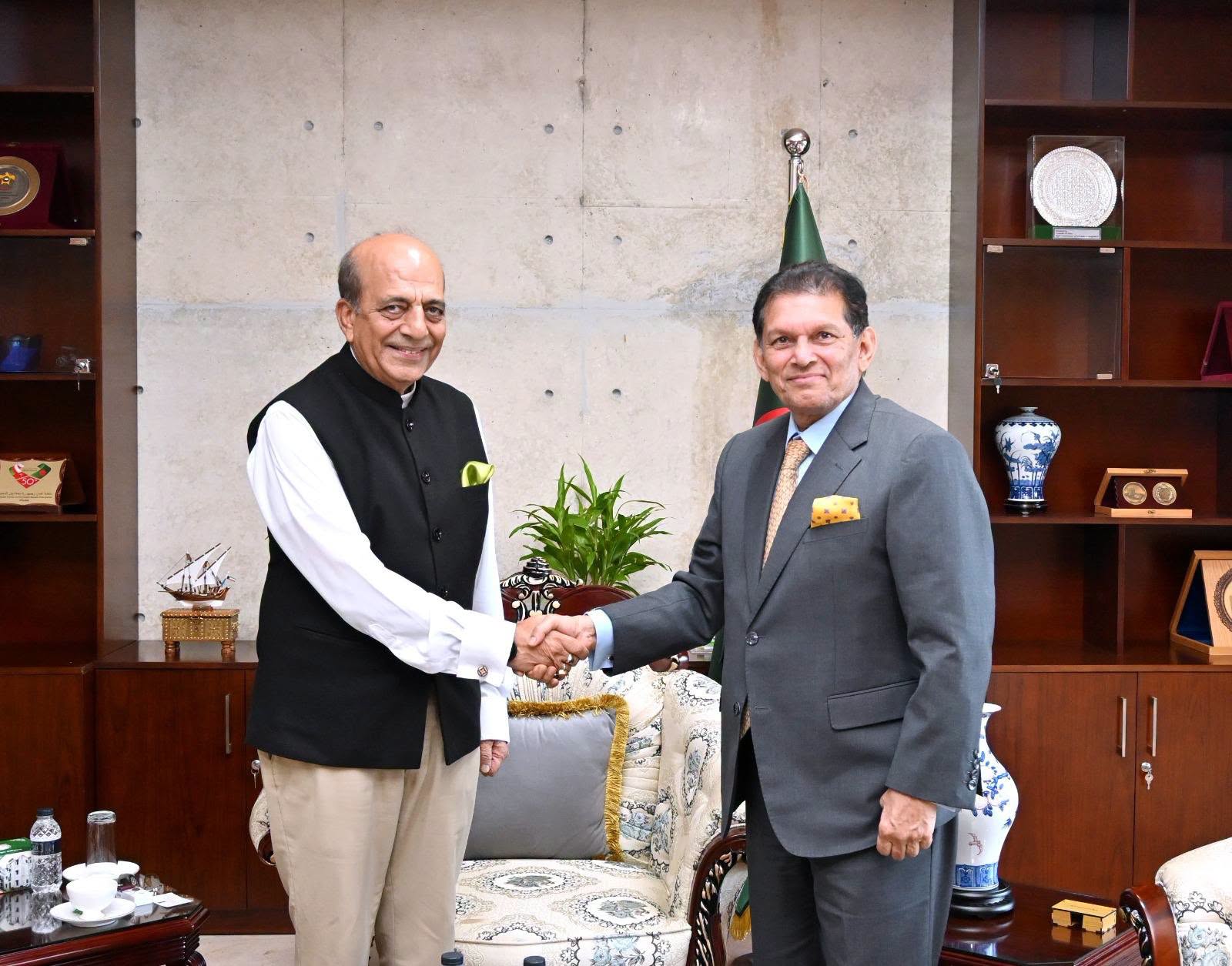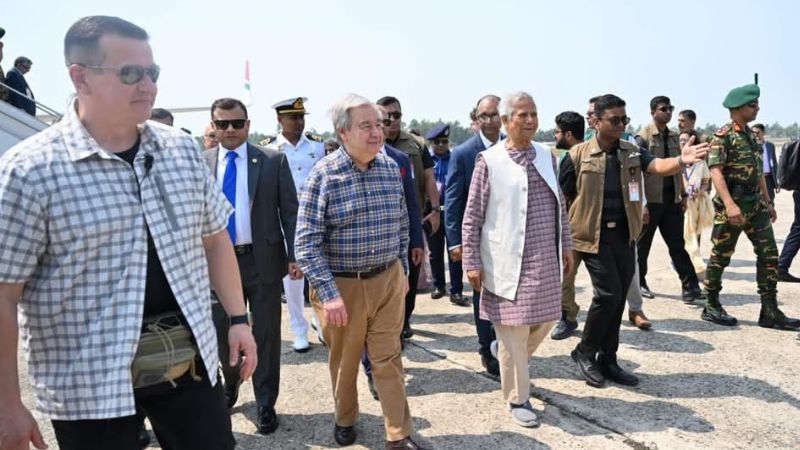
UN Secretary-General António Guterres and Bangladesh’s Chief Adviser Professor Muhammad Yunus arrived in Cox’s Bazar on Friday( March 14)afternoon for a high-profile visit addressing the Rohingya refugee crisis. Their trip includes discussions on the ongoing humanitarian response, climate challenges, and the host communities’ role in sheltering the displaced population.
Disaster Management and Relief Adviser Faruk E Azam Bir Protik received them at Cox’s Bazar International Airport around 12:55 PM. They were accompanied by UN Under-Secretary-General Rabab Fatima, Foreign Affairs Adviser Md Touhid Hossain, SDGs Affairs Principal Coordinator Lamiya Morshed, and Chief Adviser’s Press Secretary Shafiqul Alam.
A Critical Moment for the Rohingya Crisis
The delegation’s visit comes at a time when the Rohingya issue has reached a critical juncture, with more than a million refugees in overcrowded camps facing worsening humanitarian conditions and an uncertain future. The stalled repatriation process and dwindling international aid have heightened concerns over long-term solutions.
The UN Secretary-General and Dr. Yunus will visit the Rohingya refugee camps, where they will meet with displaced families and Bangladeshi host communities. Guterres will also share an Iftar meal with refugees, an event hosted by Dr. Yunus, as part of his annual Ramadan solidarity visits.
"Every Ramadan, I spend time with Muslim communities living in difficult circumstances, to observe the fast with them and help shine a spotlight on their plight. This year I’m in Bangladesh to express my solidarity with Rohingya refugees and the Bangladeshi people hosting them," Guterres said.
Exploring Climate and Infrastructure Challenges
Ahead of the camp visit, the delegation toured the under-construction Cox's Bazar International Airport and the Khurushkul Climate Refugee Center. The latter is a key initiative aimed at providing long-term shelter solutions for people displaced by climate-induced disasters.
The inclusion of the climate refugee center in the visit underscores the interconnected challenges of forced displacement—both due to conflict and environmental factors. Bangladesh, already hosting one of the world’s largest refugee populations, is also vulnerable to rising sea levels and extreme weather events, further complicating the humanitarian landscape.
Diplomatic Engagements and Future Roadmap
Earlier in the day, Guterres and Dr. Yunus held a bilateral meeting at the Chief Adviser’s Office in Tejgaon, discussing the Rohingya crisis, sustainable solutions, and international support. Foreign Affairs Adviser Md Touhid Hossain and Chief Adviser’s High Representative Dr Khalilur Rahman also held separate discussions with the UN chief.
Guterres will return to Dhaka on Saturday, where he is scheduled to meet youth representatives and civil society leaders. He will also hold a joint press conference with Foreign Affairs Adviser Hossain before departing Bangladesh on Sunday morning.
As the Rohingya crisis remains unresolved, this high-level visit is expected to renew global attention on the humanitarian crisis and press for sustainable solutions, including safe repatriation, increased international aid, and stronger regional cooperation.
BOB Post