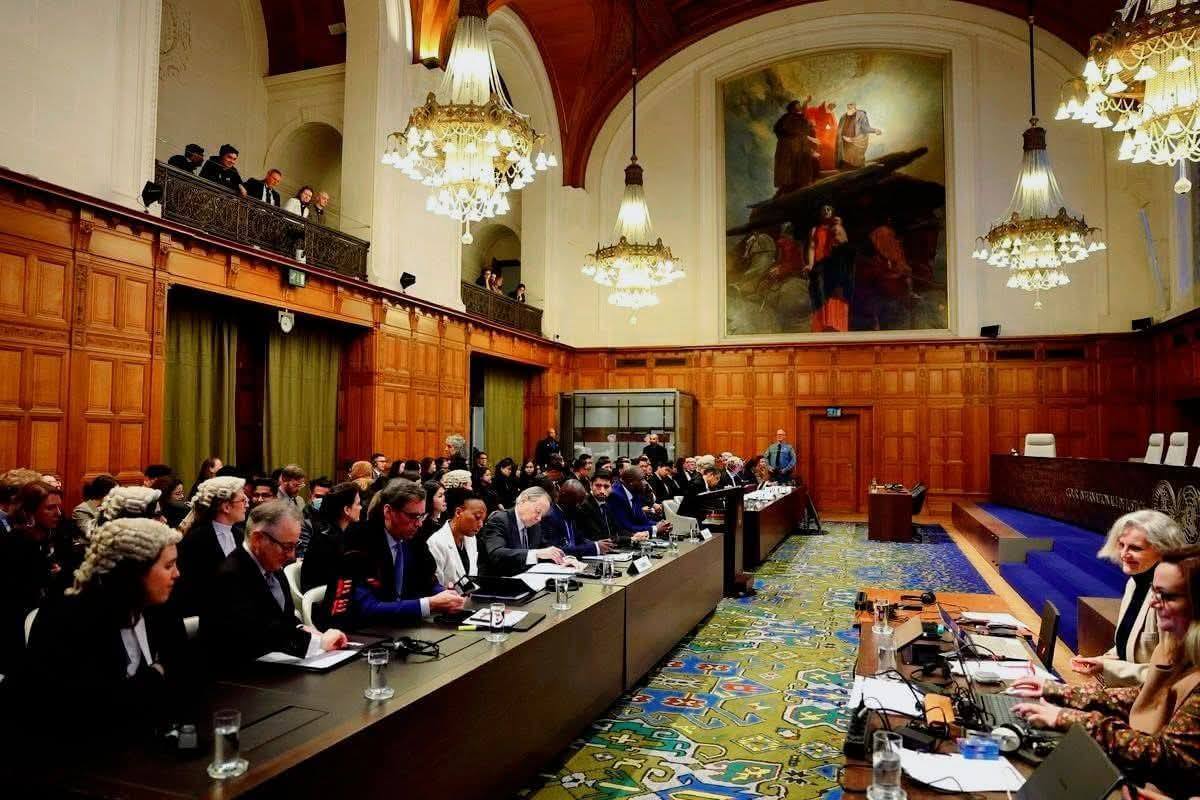
Gambia on Monday (January 12) urged judges at the International Court of Justice (ICJ) to rule that Myanmar committed genocide against the Rohingya, accusing the country’s military of deliberately targeting the minority Muslim community and reducing their lives to “a nightmare” through systematic violence.
Addressing the U.N.’s top court, Gambian Justice Minister Dawda Jallow said the Rohingya were ordinary people whose aspirations for peace and dignity were extinguished by state-led brutality. He told judges the community had been “targeted for destruction,” describing campaigns of killings, mass rape and the burning of villages that drove hundreds of thousands from their homes.

The case, filed by Gambia in 2019 with backing from the 57-nation Organization of Islamic Cooperation, marks the first genocide trial the ICJ is hearing in full in more than a decade. Its outcome could resonate well beyond Myanmar, potentially shaping how the court approaches other genocide-related disputes, including South Africa’s case against Israel over the war in Gaza, according to Reuters.
Myanmar has consistently denied committing genocide, maintaining that its 2017 military operations in Rakhine State were a lawful response to attacks by Muslim militants. Israel has also rejected genocide allegations in the separate Gaza case, with its lawyers calling South Africa’s filing an abuse of the Genocide Convention.
Myanmar’s 2017 offensive forced at least 730,000 Rohingya to flee into neighboring Bangladesh, where refugees described widespread atrocities. A United Nations fact-finding mission later concluded that the campaign included “genocidal acts,” a finding Myanmar’s authorities dismissed as flawed and politically motivated.
Outside the court in The Hague, Rohingya survivors said the proceedings offered a rare chance for accountability. “We want the world to know what happened to us,” said Yousuf Ali, a 52-year-old refugee who says he was tortured by Myanmar’s military. “A ruling in our favor would mean recognition and justice,” he said, as reported by the Japan Times.
Myanmar’s former civilian leader Aung San Suu Kyi personally defended the country during preliminary hearings in 2019, rejecting Gambia’s claims as “incomplete and misleading.” Since then, Myanmar has plunged deeper into crisis following the 2021 military coup, which triggered a nationwide armed rebellion after security forces crushed pro-democracy protests.
Gambia will continue presenting its arguments for several more days, with Myanmar set to respond on Friday. The court will then hear testimony from Rohingya victims in closed sessions an unprecedented step that will mark the first-time survivors address an international court directly. The hearings are expected to last three weeks, as the ICJ weighs a case that could redefine accountability for mass atrocities under international law.
BOB Post