The UN Refugee Agency (UNHCR) has raised alarms over severe funding cuts to community maintenance programs in the Rohingya refugee camps of Cox’s Bazar, warning that these reductions are endangering lives, undermining safety, and worsening living conditions during the ongoing monsoon season.
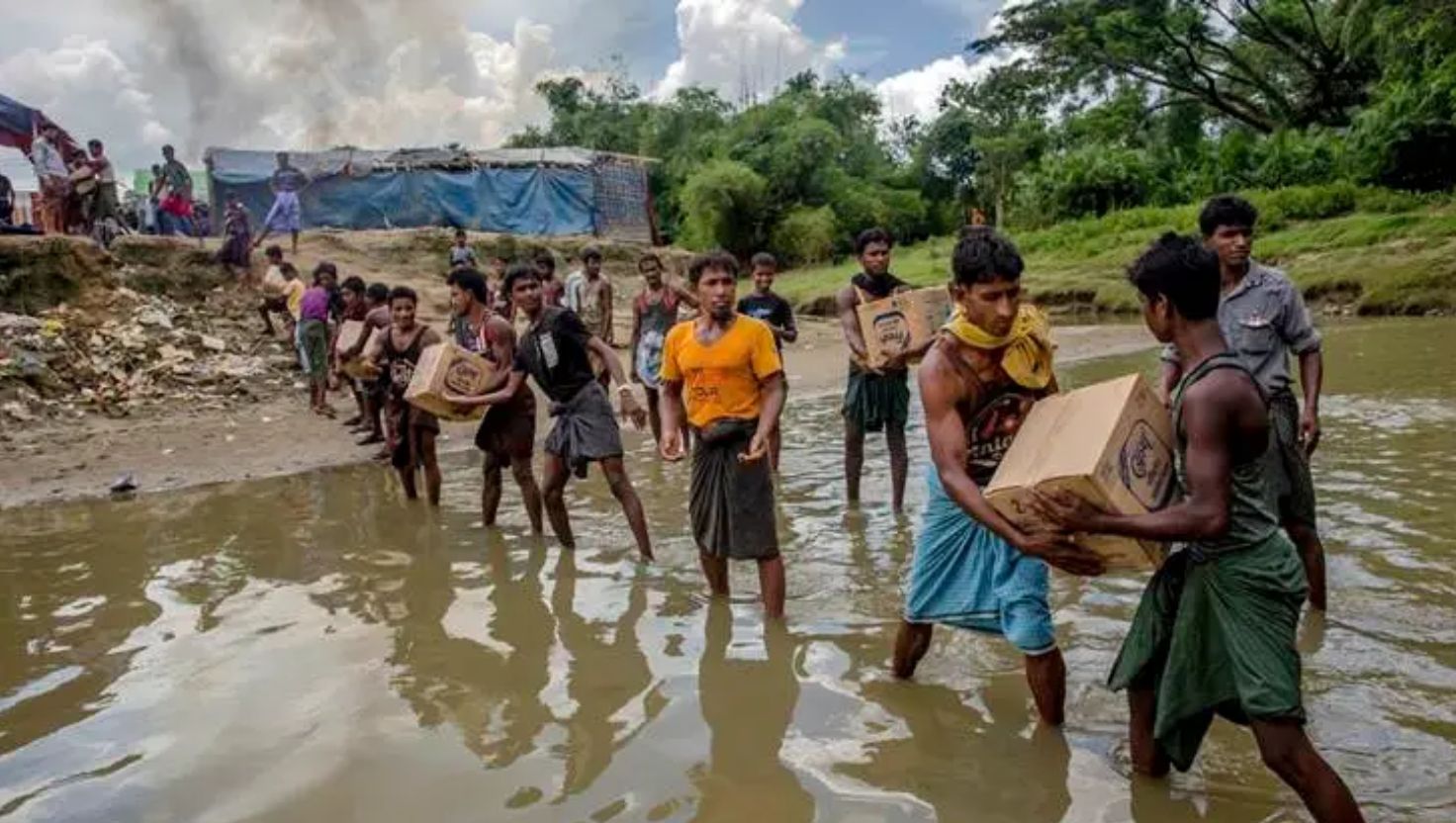
Home to over one million Rohingyas, the Cox’s Bazar settlement is the world’s largest refugee camp—and also one of the most congested. Life in the camp is always challenging, but the monsoon rains make it even more dangerous, with landslides, eroded pathways, and threats to essential sanitation systems now posing daily hazards.
A UNHCR-supported initiative launched in 2020, which employed refugees to maintain infrastructure such as footpaths and slopes, has seen dramatic downsizing due to a global humanitarian funding crisis. Where 30 to 40 workers were once engaged in each project, only 7 to 8 can now be involved due to budget constraints.
“These aren’t just inconveniences,” said Afruza Sultana, a Site Management Support officer at Brac, one of the lead organizations responding to the crisis. “They are daily hazards that threaten safety, health, and mobility in the camps.”

The UNHCR’s latest report details the impact of global aid shortages on displaced populations, particularly in Bangladesh, where refugees depend almost entirely on external assistance. The consequences, it says, extend beyond income—affecting access to food, health care, education, and shelter.
For residents like Jahid Alam, a 45-year-old father of two who once relied on earnings from maintenance work to feed his children, the cuts are devastating.
“The amount of food we get every month is limited,” Jahid explained. “With the extra work, I could buy some variety for my children. Now, that is no longer possible.”
His wife, who also lives with disabilities, similarly benefited from the sense of purpose and community involvement the work provided.
“This was never just a program—it was a vital lifeline,” Afruza emphasized. “It gave people dignity and helped families make ends meet.”
Since early 2024, maintenance projects in the camps have declined by nearly two-thirds. Infrastructural breakdowns are becoming more frequent, just as monsoon rains worsen conditions. Damaged roads, broken bridges, and blocked drains now plague many areas, putting residents at constant risk.
“There is a latrine near our shelter at risk of landslides, and we are scared to use it now,” said 24-year-old Jaynub Begum, a refugee who had previously worked on slope stabilization projects. “There is no initiative to protect it anymore.”
The crisis is also triggering social ripple effects. With household incomes collapsing, some children are being pulled out of education, while others face pressure to engage in unsafe or exploitative work. In some cases, desperate families are even considering dangerous migration routes.
UNHCR has warned that without immediate and increased funding, essential services—including healthcare, food aid, cooking fuel distribution, and schooling—will face further disruptions. The arrival of new refugees from Myanmar continues to strain the already overburdened support systems.
“Humanitarian funding may be shrinking, but the needs on the ground are not,” said Afruza. “The world must not turn its back. Behind every number is a human life.”
BOB Post