Myanmar’s military leadership is making fresh diplomatic gains as regional governments and the United States open channels of communication with a government long isolated over its seizure of power and widespread abuses against civilians.
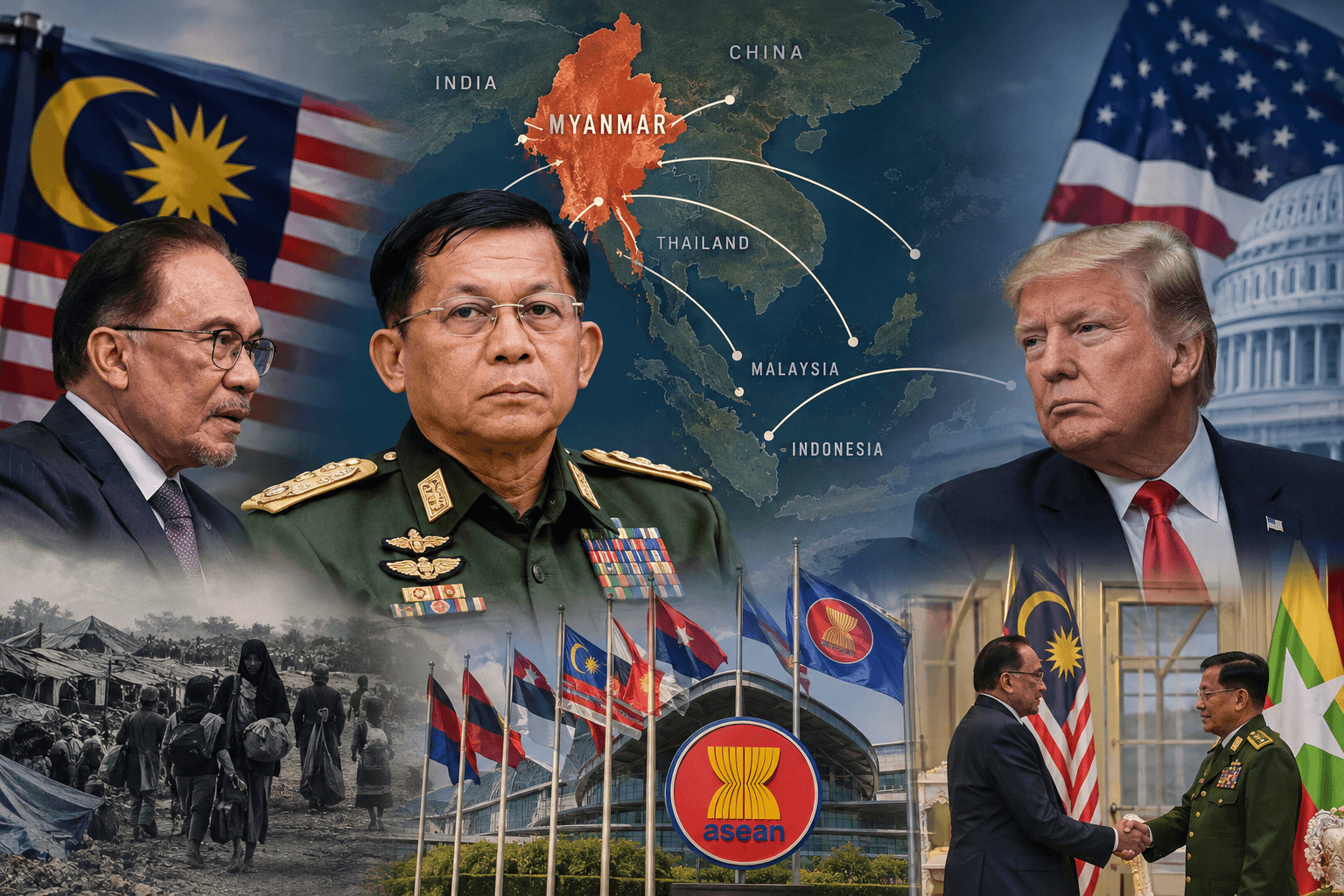
The latest development came during President Min Aung Hlaing’s visit to Malaysia on October 7–8, where he held talks with Prime Minister Anwar Ibrahim on bilateral cooperation and the return of Myanmar nationals. The visit has raised questions about whether regional engagement is gradually restoring international acceptance of a military leadership that took power in the February 2021 coup.
President Min Aung Hlaing became president in April following elections widely criticized over their lack of democratic credibility. Meanwhile, fighting continues across Myanmar, displacing millions and leaving civilians exposed to airstrikes, attacks and other abuses.
Malaysia opens a new diplomatic channel
According to AsiaNews, Malaysia’s renewed engagement with Myanmar reflects a broader regional shift, even as the humanitarian crisis remains unresolved. Following the talks, Myanmar officials indicated that Min Aung Hlaing could also visit Indonesia and Brunei, suggesting efforts to expand diplomatic contacts across Southeast Asia.
Anwar has expressed willingness to support Myanmar’s eventual reintegration into the Association of Southeast Asian Nations (ASEAN). Malaysian officials, however, have stressed that closer engagement does not mean unconditional recognition of the current administration.
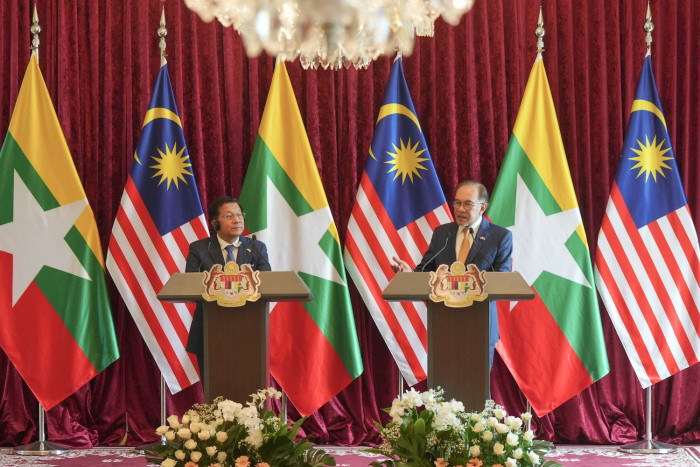
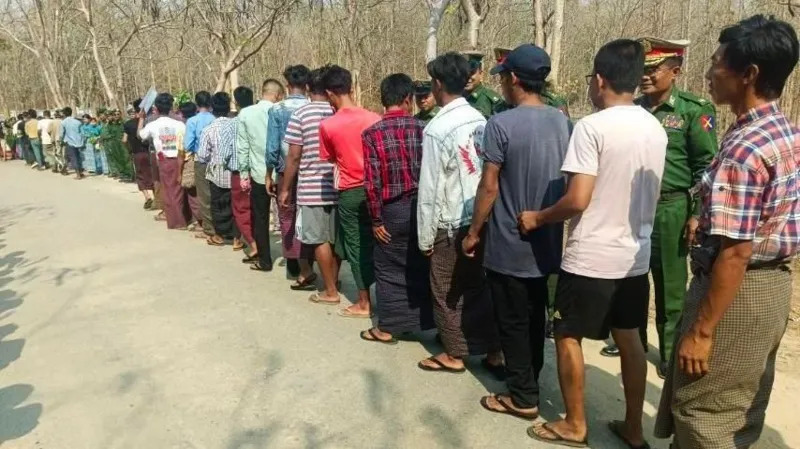
The two sides have agreed to strengthen cooperation in trade, investment, education, agriculture, energy and healthcare. Anwar also welcomed an agreement on the return of thousands of Myanmar nationals, although the proposed repatriations have drawn concern from UN experts and human rights organisations.
People sent back to Myanmar could face persecution, renewed violence or forced recruitment, particularly following the introduction of compulsory military service for men and women in 2024. The risks are especially serious for those returning to areas affected by armed conflict.
Rohingya rights remain unresolved
The diplomatic opening has also renewed concerns over the future of the Rohingya, a predominantly Muslim minority that Myanmar has largely denied citizenship and whose communities have endured decades of persecution.
In Rakhine State, fighting between Myanmar’s military and the Arakan Army has intensified the insecurity facing Rohingya civilians. The community has faced violence, displacement and restrictions on movement, while prospects for safe and voluntary repatriation from Bangladesh remain uncertain.
The return of Myanmar nationals from other countries is a separate issue from the Rohingya crisis. Any repatriation of Rohingya refugees would require credible guarantees of safety, citizenship rights, freedom of movement and protection from persecution. Diplomatic agreements alone cannot provide those assurances while conflict and discrimination continue.
Malaysia’s policy shift has also emerged against a backdrop of growing hostility towards Rohingya refugees within the country. Online campaigns have demanded their expulsion, while local residents drove around 100 Rohingya from their homes on Penang Island in July.
With the next Malaysian general election due by early 2028, domestic political pressures may also be influencing the government’s approach to migration and relations with Myanmar.
ASEAN faces questions over its Myanmar policy
Min Aung Hlaing’s engagement with Malaysia follows earlier visits to several regional countries, including Thailand, Cambodia, Laos and Vietnam, alongside contacts with major powers such as China, India and Russia.
The growing number of diplomatic contacts could weaken ASEAN’s efforts to maintain pressure on Myanmar’s military leadership. Since 2021, the bloc has struggled to implement its peace plan, which calls for an end to violence and dialogue among the parties to the conflict.
At the ASEAN summit in the Philippines in May, regional leaders acknowledged the need for fresh approaches to the crisis. Philippine President Ferdinand Marcos Jr., whose country holds the bloc’s rotating chairmanship in 2026, called for a way out of the deadlock while emphasizing ASEAN’s principles.
However, separate initiatives by member states could allow the military leadership to regain diplomatic space without making meaningful progress towards peace. Engagement may create opportunities for dialogue, but its effectiveness will depend on whether it produces an end to attacks on civilians and meaningful negotiations with resistance groups.
Washington also turns to direct engagement
The United States has also reportedly opened direct channels with Myanmar’s military government, signalling a potentially significant change in its approach.
According to Reuters reports cited in the original account, Michael Vance, the US assistant secretary of state for intelligence and research, met Min Aung Hlaing in Naypyidaw in mid-September. The immediate objective was reportedly to secure the release of Adam Castillo, president of the American Chamber of Commerce in Myanmar, who had been detained by the authorities.
Sources said Myanmar sought official engagement with Washington at an appropriate level in exchange for Castillo’s release. The meeting reportedly created an opportunity for broader discussions, although the extent of any resulting policy shift remains unclear.
Washington has an interest in dismantling online scam operations that have expanded along the Myanmar–Thailand border and targeted US citizens. Access to rare-earth deposits in territories influenced by armed groups and China could also form part of the wider strategic calculations surrounding Myanmar.
The United States has eased certain restrictions on individuals linked to the military leadership, but Min Aung Hlaing remains under sanctions imposed over the military’s persecution of the Rohingya in 2016–17. Washington also maintains contact with Myanmar’s democratic opposition and ethnic armed organisations.
The emerging diplomatic contacts expose a difficult question for the international community: whether engagement with those controlling Myanmar can produce meaningful change or instead help rehabilitate a leadership accused of grave abuses.
For Rohingya in Bangladesh and civilians trapped inside Myanmar, the test will not be the number of diplomatic visits or new cooperation agreements. It will be whether these contacts lead to accountability, protection for vulnerable communities and conditions that make a safe, voluntary and dignified return possible.
BOB Post