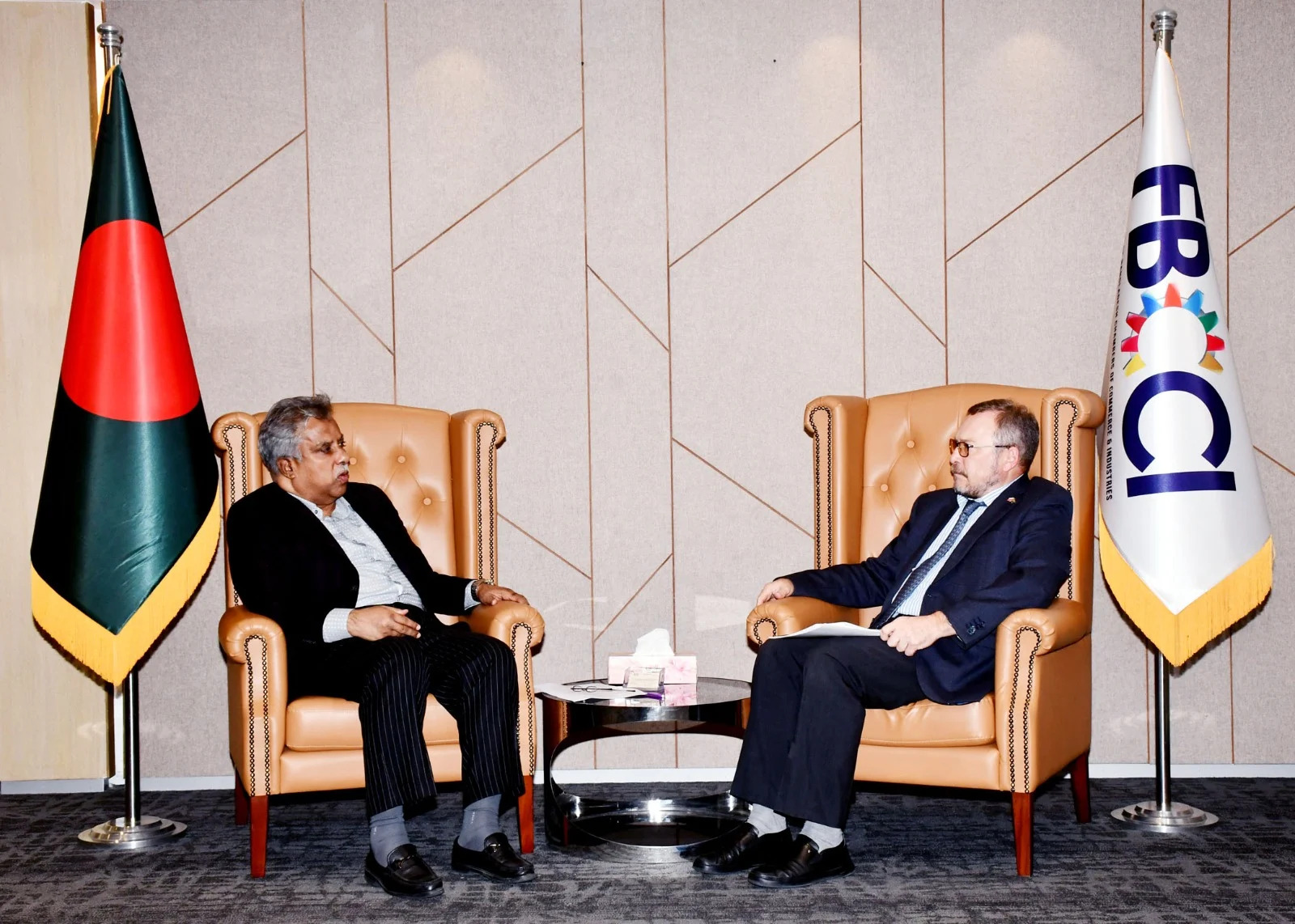
The European Union continues to advocate for a political resolution to the protracted Rohingya crisis, reaffirming its support for a "safe, voluntary, and dignified" repatriation of the forcibly displaced Rohingya population to Myanmar.
Speaking at a “DCAB Talk” hosted by the Diplomatic Correspondents Association, Bangladesh (DCAB) at the National Press Club on Sunday, EU Ambassador and Head of Delegation to Bangladesh, Michael Miller, said the bloc is committed to facilitating a viable political solution to the crisis.
“We support a political solution — the only viable path forward. We are working hard to facilitate it,” Miller stated, while praising Bangladesh’s humanitarian commitment in hosting over 1.3 million Rohingya refugees since the mass exodus from Myanmar in 2017.
However, questions persist about whether such a political solution is currently realistic, given the complex and volatile situation in Myanmar. The conflict-ridden Rakhine State is now largely under the control of the Arakan Army, an ethnic armed group, while Myanmar’s military junta remains entrenched in a broader civil war.

Ambassador Miller acknowledged these challenges while addressing the prospect of cross-border humanitarian access to Rohingyas who remain within Myanmar. “If the refugees are here, we will meet their needs here. If they are on the other side of the border, we will also look at how we can channel assistance to them there,” he said. But he stressed that such efforts depend on mutual government agreements and the assurance of safety.
On the possibility of Bangladesh being asked to accommodate more refugees amid renewed violence in Rakhine, the EU envoy said both Dhaka and Brussels agree that any further arrivals or returns must occur under safe and consensual conditions. Meanwhile, the UN High Commissioner for Refugees (UNHCR) has reportedly urged the Office of the Refugee Relief and Repatriation Commissioner to find room for another 113,000 Rohingyas who have crossed into Bangladesh since late 2023.
While the EU’s commitment to dialogue and humanitarian aid is commendable, analysts and rights advocates remain skeptical about the viability of a political resolution under current circumstances. The prospect of Rohingya repatriation remains dim in the absence of a stable and inclusive governance framework in Myanmar — something neither the junta nor the rebel groups have been able to guarantee.

Furthermore, the lack of international pressure on Myanmar's military regime, coupled with waning global attention, has deepened the sense of hopelessness in Rohingya camps. Many fear that the repeated emphasis on a "political solution" may ultimately delay meaningful action or resettlement alternatives.
DCAB President AKM Moinuddin and General Secretary Md Arifuzzaman Mamun were also present at the event.
As the Rohingya crisis nears its eighth year, observers say that without sustained international pressure on Myanmar and regional cooperation — including from ASEAN — political promises alone may not bring durable solutions to one of the world’s most protracted refugee crises.
Bob post