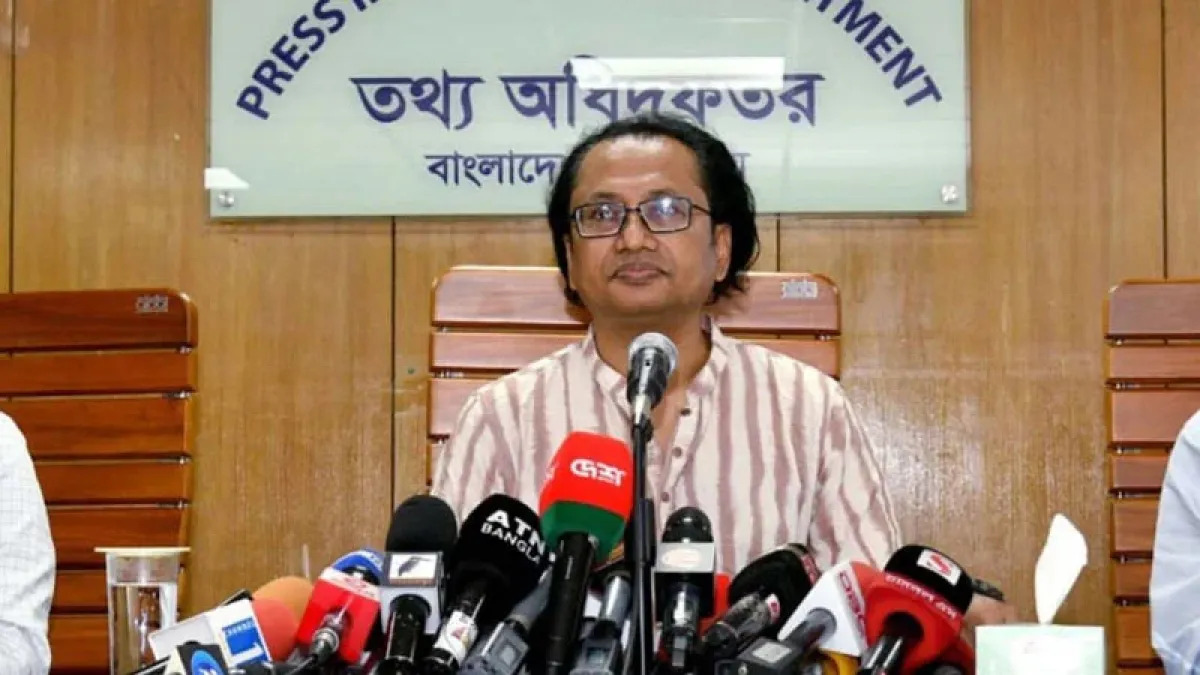
Bangladesh is seeking a balanced and respectful partnership with India, urging New Delhi to reciprocate its desire for stronger bilateral ties, according to Foreign Affairs Adviser Md Touhid Hossain.
In an opinion piece for The Indian Express on Thursday (February 5), Touhid stated that he and Dr Muhammad Yunus, Chief Adviser of Bangladesh’s interim government, were committed to working sincerely to enhance the positive aspects of Bangladesh-India relations while pragmatically addressing areas of tension and misunderstanding.
Touhid acknowledged that relations between Dhaka and New Delhi had reached a ‘critical juncture’ following the removal of the Awami League government in a student-led mass uprising last year. He suggested that the Indian establishment had not anticipated Sheikh Hasina’s fall from power but emphasized the importance of focusing on common interests and opportunities for collaboration.
‘Our position has been clear from the outset: We want a good working relationship with India based on mutual respect,’ Touhid wrote, adding, ‘We hope and expect that our counterparts in India will reciprocate our desire. The December visit of Foreign Secretary Vikram Misri to Dhaka was a step in the right direction.’
Addressing Concerns Over Treatment of Hindus
Touhid also responded to concerns in India about the treatment of Hindus in Bangladesh, acknowledging that law and order had briefly deteriorated following the fall of the previous regime. While incidents primarily affected individuals linked to the former government—most of them Muslims—some Hindus were also impacted, he said.
The interim government, he noted, swiftly took action against perpetrators, and citizens across Bangladesh courageously protected Hindu families and temples. However, he expressed concern that Indian media and online platforms continued to spread exaggerated and false narratives, fueling negative perceptions.
To counter misinformation, Touhid invited Indian journalists to visit Bangladesh and report freely on the ground reality, emphasizing that unbiased investigations would allow the Indian public to see the truth firsthand.
Calls for Positive Engagement
Dhaka has also been pushing to revive the South Asian Association for Regional Cooperation (SAARC), but Touhid stated that India’s response to this effort had not been encouraging. He argued that Bangladesh saw no reason for New Delhi to fear regional cooperation.
Despite challenges, there have been signs of progress in Bangladesh-India ties, including a fishermen’s exchange program and a trilateral agreement allowing Bangladesh limited access to Nepal’s hydroelectric power.
Touhid called on India to build on these advancements by fostering a mutually beneficial partnership, starting with an end to border killings. “Our peoples have too much to gain from positive and pragmatic engagement for us not to seize this opportunity,” he stated.
Looking Ahead
With relations at a crossroads, Bangladesh’s interim government is signaling its commitment to strengthening ties with India through diplomatic dialogue and cooperative efforts. The ball is now in India’s court to respond positively to Dhaka’s outreach and work towards a partnership built on mutual respect and shared interests.
BOB Post