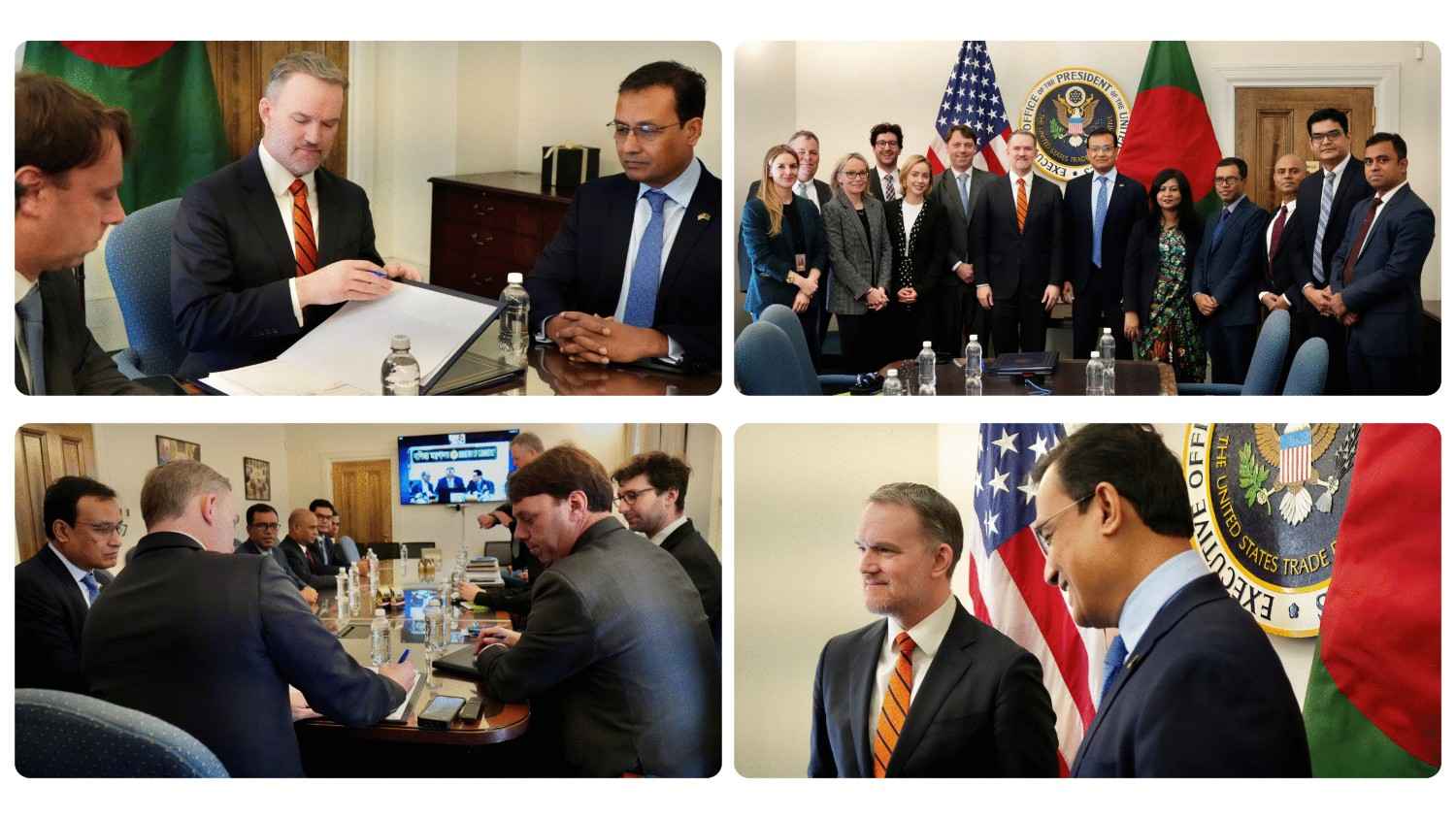
Bangladesh and the United States on Monday (February 9) signed an Agreement on Reciprocal Tariff in Washington, reducing the tariff rate on Bangladeshi exports to the US market from 20 per cent to 19 per cent, marking a modest but significant step in bilateral trade relations.
According to a press release issued by the Chief Adviser’s press wing from Washington, the reciprocal tariff had initially been fixed at 37 percent before being lowered to 20 per cent in August last year. Under the new agreement, the US has agreed to further cut the rate by one percentage point.
The agreement also includes a commitment by the United States to establish a special mechanism under which certain textile and apparel products from Bangladesh manufactured using US-produced cotton and man-made fiber will enjoy zero reciprocal tariff access to the US market, according to New Age.

Commerce adviser Sheikh Bashir Uddin and national security adviser Khalilur Rahman signed the agreement on behalf of Bangladesh, while US trade representative Ambassador Jamieson Greer signed for the United States. The negotiations for the agreement continued for more than nine months, beginning in April last year.
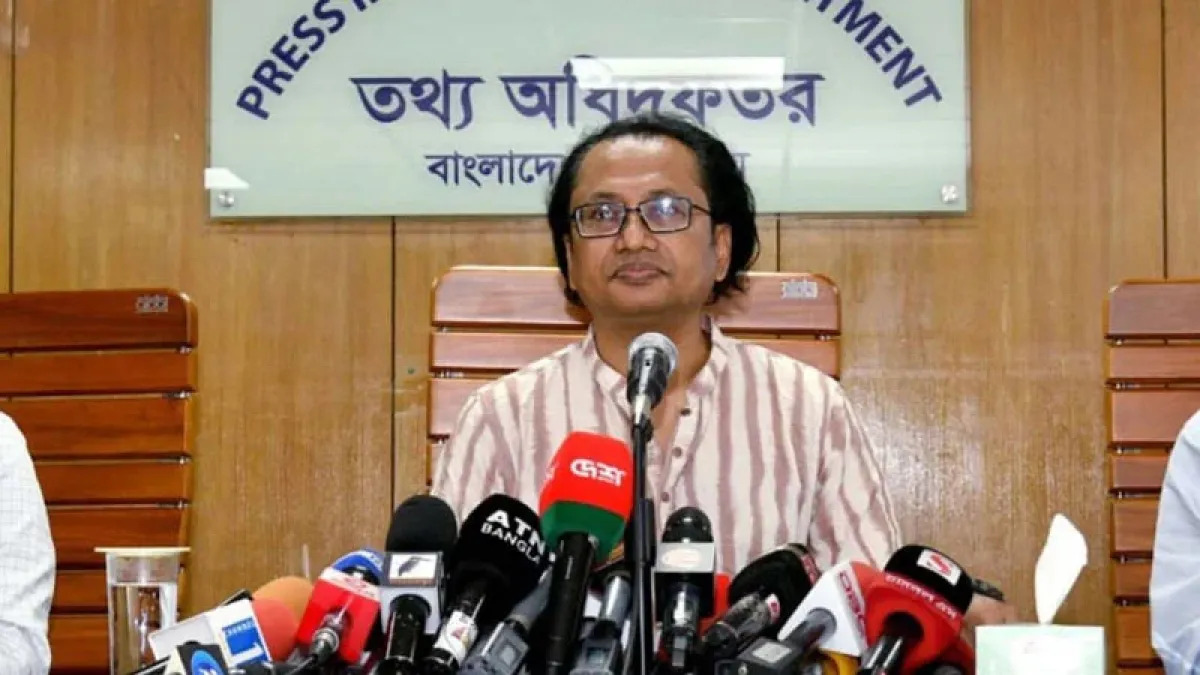
Calling the deal, a milestone, commerce adviser Sheikh Bashir Uddin said it marked “a historically new level” in economic and trade relations between the two countries and would significantly improve mutual market access.
National security adviser Khalilur Rahman, who led the negotiations for Bangladesh, said the reduced tariff would provide additional competitiveness to Bangladeshi exporters, while duty-free access for selected garment items would give a strong boost to the country’s apparel sector.
The agreement received approval from the Council of Advisers on Monday and will come into force once both sides issue the necessary official notifications.
Commerce Secretary Mahbubur Rahman and Assistant US Trade Representative Brendan Lynch were also present at the signing ceremony.
BOB Post