In a compelling appeal to the Muslim world, Bangladesh's Foreign Adviser Md Touhid Hossain today called on the Organisation of Islamic Cooperation (OIC) to adopt a stronger, coordinated, and results-driven approach to ensure justice and safe repatriation for the persecuted Rohingya population, as Bangladesh faces mounting humanitarian, economic, and security challenges due to the prolonged crisis.
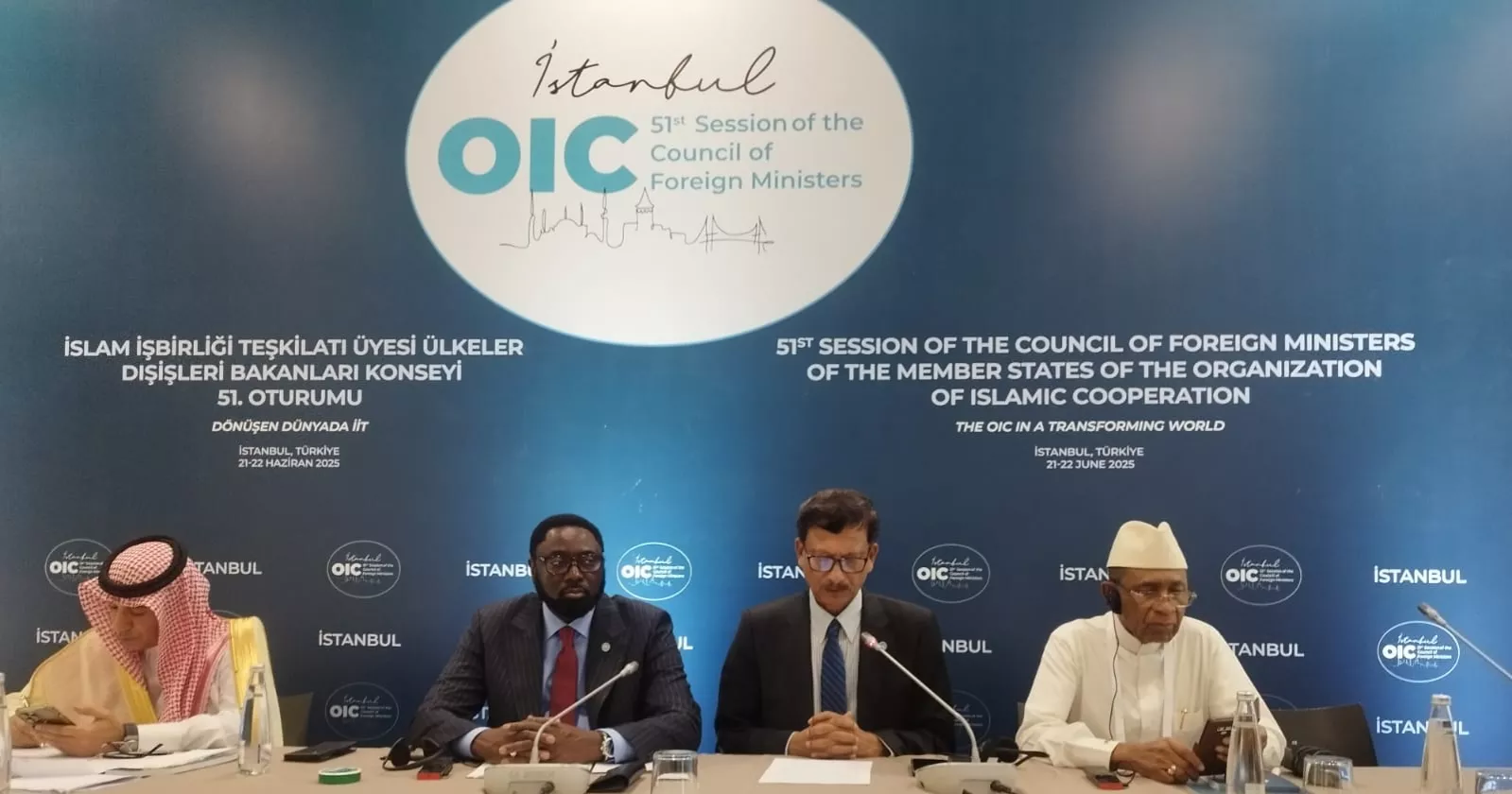
Speaking at the OIC Ad Hoc Ministerial Committee meeting on accountability for human rights violations against Rohingyas, held in Istanbul, Adviser Hossain emphasized that the burden on Bangladesh has reached an unsustainable level. Despite its limited resources, the country continues to shelter over 1.3 million forcibly displaced Rohingyas, who fled genocidal violence in Myanmar since 2017.

“The Ummah’s solidarity with the Rohingyas – one of the most persecuted Muslim minorities in the world – is both a moral and historical imperative,” he said. He also expressed gratitude for the OIC’s longstanding support, particularly for adopting a resolution on the Rohingya plight, but warned that the situation in both Bangladesh and Myanmar is deteriorating fast.
Hossain highlighted that since November 2023, renewed violence in Myanmar has driven over 118,000 new arrivals into Bangladesh. As of May 2025, more than 587,000 people remain internally displaced within Rakhine State, while thousands continue to cross the border into Bangladesh, escaping from the intensified conflict now dominated by the Arakan Army.
“This crisis has become an unbearable burden for Bangladesh,” he declared. “The pressure on our economy, environment, and local communities is beyond sustainable limits. We are now confronting escalating humanitarian, developmental, and security-related risks.”

He painted a grim picture of the current humanitarian response, revealing that only 68% of the UN’s required funding for the Rohingya response in 2024 was met. As a direct consequence, UNICEF has closed its educational facilities in the camps since June 3, while the World Food Program has been forced to cut food rations twice, endangering the survival and dignity of the displaced population.
Amid these challenges, Hossain reiterated Dhaka’s unwavering commitment to a peaceful and dignified repatriation of the Rohingyas. However, he firmly placed the onus on the international community — and particularly the OIC — to rise to the occasion.
“The solution lies in Myanmar — and justice is a prerequisite for return,” he said. He urged the OIC to intensify its legal and diplomatic initiatives, including robust support for The Gambia’s case against Myanmar at the International Court of Justice (ICJ). “Now is the time to show full solidarity with The Gambia. The OIC must help mobilize financial resources to sustain the legal proceedings at the ICJ. Justice will restore the Rohingyas’ faith in returning to their homeland.”
The Adviser also proposed that the OIC strengthen cooperation with ASEAN, particularly under Malaysia’s current chairmanship, to pressure Myanmar into halting atrocities and creating the conditions necessary for repatriation.
As a next step, Bangladesh will co-host a High-Level Conference on the Situation of Rohingya Muslims and Other Minorities in Myanmar on September 30, 2025, on the sidelines of the UN General Assembly in New York. Dhaka expects significant participation from OIC countries and other international stakeholders.
“For the Rohingya community, Bangladesh has done its part – perhaps more than its share,” Hossain said in his closing remarks. “We now look to the OIC and the international community to uphold their moral and legal responsibilities. Our call today is not just for charity, but for justice, solidarity, and shared accountability.”
The message from Dhaka is clear: the humanitarian limits have been breached. The time for rhetoric is over — it is now time for action, responsibility, and decisive international engagement.
BOB Post