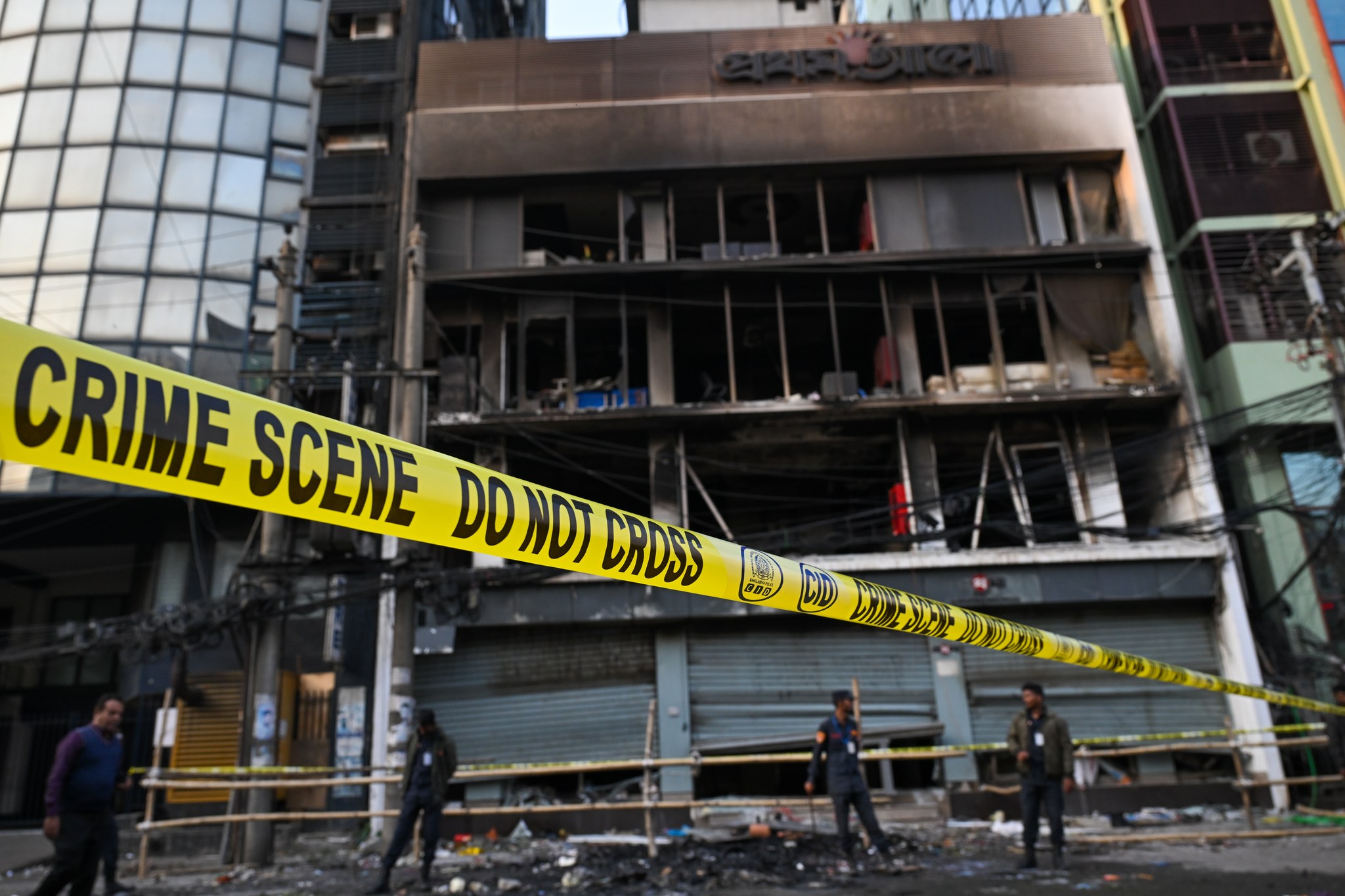
It started with a few provocative clips on a smartphone screen and ended with the smell of smoke and the sound of breaking glass in the heart of Dhaka. This week, following the death of Osman Hadi, the city witnessed a series of deeply unsettling events that felt less like spontaneous protest and more like a targeted assault on the truth. The offices of Prothom Alo and The Daily Star long considered the pillars of Bangladeshi journalism were ransacked and set ablaze, marking a new and dangerous chapter where digital vitriol spills over into physical carnage.
According to multiple reports, groups of protesters vandalised and set fire to the Prothom Alo office at Karwan Bazar and later attacked The Daily Star office in Dhaka. Journalists and staff were trapped inside the buildings as mobs broke gates, smashed windows, and torched property, forcing emergency services to intervene. Both newspapers were compelled to suspend print and online operations temporarily due to the extent of the damage.

While the initial protests were linked to public anger and grief surrounding Osman Hadi’s death, observers and media watchdogs say the situation quickly escalated beyond peaceful demonstration. Investigations and media reports indicate that provocative messaging on social media played a key role in mobilizing the mobs. Certain expatriate YouTubers and online commentators, including Elias Hossain, were named in local media reports as having allegedly incited violence by spreading misleading and inflammatory content from abroad.

The attacks drew strong condemnation from international and national organizations. The Committee to Protect Journalists (CPJ) described the assaults as a direct threat to journalist safety and urged authorities to ensure accountability. The International Press Institute (IPI) said arson and vandalism against media houses constitute a grave violation of press freedom and warned that such impunity could encourage further violence against journalists. Media rights groups stressed that independent journalism must not be scapegoated or punished for covering sensitive or controversial events.
Editors and media analysts noted that a dangerous narrative has been gaining traction online, portraying independent newspapers as enemies or conspirators, a claim they say is baseless and harmful. They warned that exploiting public emotion through social media for personal or political gain risks fueling extremism and undermining social stability. Analysts also cautioned that unchecked digital incitement could push disaffected groups toward more radical and violent actions.
Law enforcement agencies have said investigations are ongoing to identify those responsible for the attacks and the instigators behind them. Meanwhile, civil society leaders have called for restraint, urging citizens to distinguish between legitimate protest and criminal violence, and to reject calls for destruction and intimidation.
The assaults on Prothom Alo and The Daily Star have reignited a broader debate in Bangladesh about the responsibility of digital content creators, the impact of disinformation, and the urgent need to protect independent media as a pillar of democracy. As condemnation continues at home and abroad, rights groups stress that safeguarding journalists and countering violent narratives are essential to preserving the rule of law and democratic space in the country.
Where we go from here is the question on everyone’s mind, and frankly, the outlook feels precarious. If this "unruly narrative" is allowed to become the new normal, we aren't just looking at broken windows; we're looking at a future where extremist rhetoric and mob rule become the primary ways of settling scores. As Bangladesh tries to find its footing during this transition, the charred remains of these newsrooms serve as a loud, smoking reminder: when we let a few digital agitators burn down the institutions that hold us together, we’re all left standing in the dark.
BOB Post