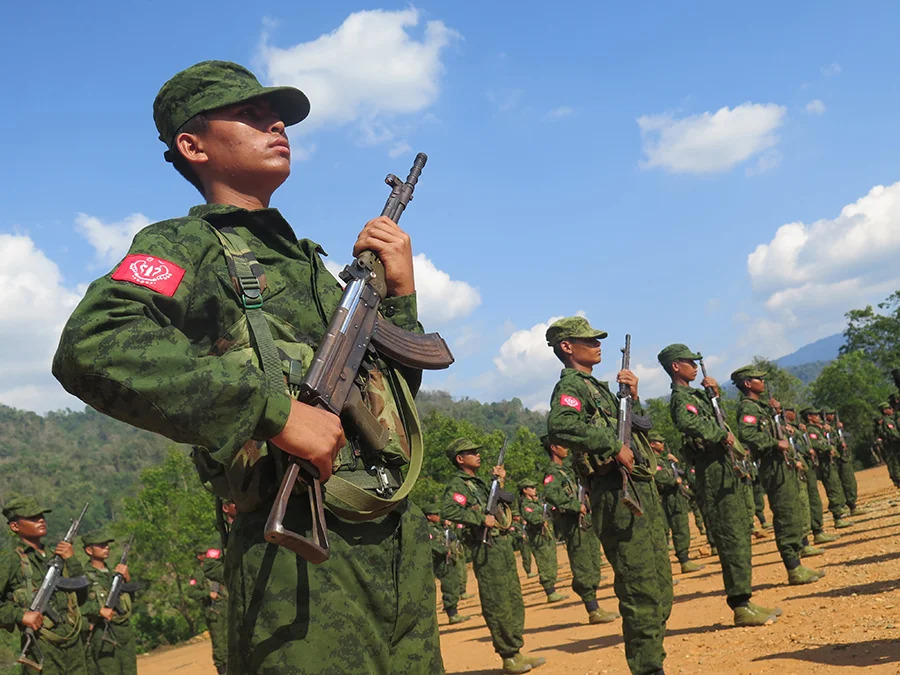
The Arakan Army (AA) has intensified its campaign of repression against the Rohingya community in Arakan State by confiscating telephones and SIM cards, issuing threats, and imposing severe restrictions. These actions have contributed to the ongoing oppression of the Rohingya people, worsening their humanitarian crisis.
On January 18, the AA conducted operations in several villages in southern Buthidaung, including Fuimali, Titupaut, Miyandafara, Nowyafara, Zummafara, Wariyoung, and Shafar Fara. Villagers were ordered to surrender all communication devices, with severe consequences threatened for those who refused.
“They’ve already taken many phones and SIM cards, and they’re using intimidation to suppress us,” said a resident of Fuimali, speaking under the condition of anonymity.
The confiscation of communication devices is part of broader restrictions imposed by the AA. Villagers face prohibitions on leaving their areas, bans on gatherings of more than three people, and are forced to form security groups to guard their communities. These measures have heightened the vulnerability of the Rohingya, isolating them further and exacerbating the already dire conditions they face.
The AA’s operations have expanded to northern Buthidaung, including areas such as Sein Nyin Par and Nyaung Chaung, once seen as safer havens for displaced families. The extended campaign has left communities feeling isolated and fearful, compounding their suffering.
Human rights organizations have condemned the AA’s actions, describing them as deliberate tactics to isolate, control, and silence the Rohingya population. “The confiscation of communication devices and severe movement restrictions are not just about control—they’re about erasing the Rohingya’s ability to communicate, organize, and report the violence they endure,” said a human rights expert monitoring the region.
Critics have also voiced concerns that the Arakan Army’s approach is straying from its original goals of representing and defending the Rakhine people. By targeting an already vulnerable and oppressed minority, the AA risks undermining its legitimacy and drawing parallels to the very forces it claims to oppose. Analysts warn that such actions may tarnish the AA’s reputation internationally and deepen divisions within Arakan State.
The Rohingya, long recognized as one of the world’s most persecuted minorities, continue to endure systematic oppression, violence, and displacement. The international community is urging immediate action to hold perpetrators accountable and ensure the safety and rights of the Rohingya people. Sustained attention and intervention remain critical to prevent further suffering and to achieve justice for this persecuted community.
BOB Post