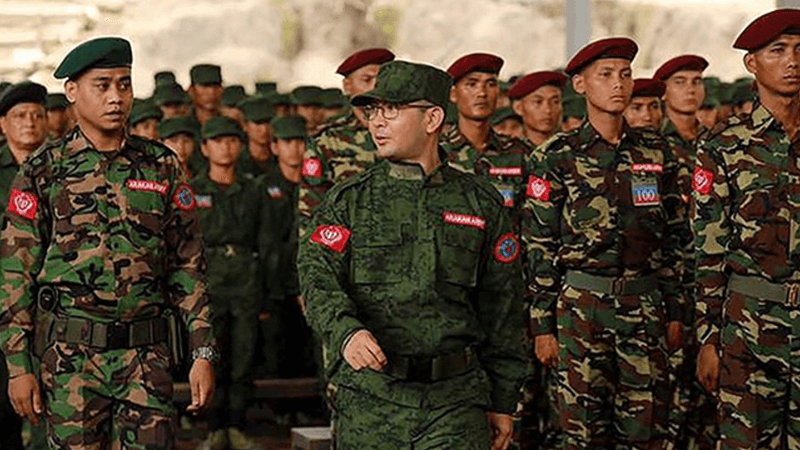
More than 600 Rohingya civilians were reportedly killed by the Arakan Army (AA) in Htan Shauk Kan village (locally known as Honya Seeri) in Buthidaung Township on May 2, 2024, according to survivors and new visual evidence. The victims included women, children, elderly people, pregnant women, and persons with disabilities.
Eyewitnesses said the killings occurred suddenly, without provocation or warning. Some bodies were allegedly burned using gasoline in what appeared to be an effort to destroy evidence. However, photos taken months later recently received from survivors who fled to Bangladesh show human remains lying in waterlogged fields, overgrown with vegetation.
“There is no escape from justice. The dead cry out for accountability,” said a local Rohingya community leader, who requested anonymity for safety reasons.

Rohingya rights advocate Nay San Lwin confirmed that he spoke with several survivors, noting that the death toll could be even higher, as nearly the entire village population was wiped out. “Only a handful of survivors remain. Entire families were erased,” he said.
Arakan Army’s Pattern of Abuses
The massacre in Htan Shauk Kan reflects a broader pattern of violence and extortion by the Arakan Army in Rohingya areas. Over the past year, the AA has been accused of looting property, extorting food and money, and restricting civilian movement. Many Rohingya residents have reported being forced to abandon their homes under threat of violence.
Although the AA positions itself as a resistance group fighting the military junta, rights groups warn it is increasingly acting like an occupying force in Rohingya-majority zones. “What’s happening looks more like ethnic domination than a liberation struggle,” said a regional analyst familiar with the conflict.

Despite mounting evidence of war crimes, there has been no international investigation into the May 2024 massacre or AA’s broader human rights record. Humanitarian access remains limited, and regional bodies like ASEAN have remained largely silent.
As Myanmar’s civil war deepens, the Rohingya community finds itself trapped targeted both by the junta and by ethnic armed groups that claim to fight for justice.
Unless there is swift international response, observers warn that the victims of Htan Shauk Kan risk being forgotten, just like the countless others who have died nameless in Myanmar’s ongoing conflict.
BOB Post