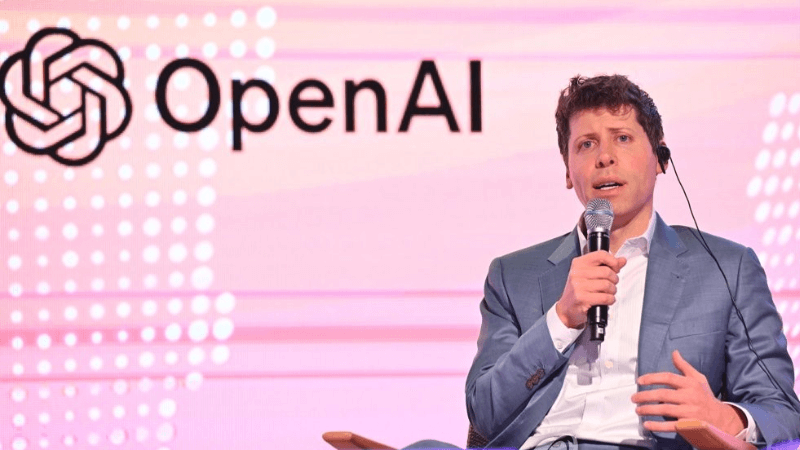
Sam Altman, the chief executive of OpenAI, has initiated an ambitious global tour to secure the immense financial and manufacturing resources required to fuel the next wave of artificial intelligence. Traveling across East Asia and the Middle East, Altman is engaging with top investors, chip manufacturers, and government officials to build a colossal infrastructure network for future AI technologies, a move prompted by the voracious computational demands of systems like ChatGPT.
The international campaign, which began in late September, has seen Altman hold high-stakes meetings with semiconductor giants in Taiwan, South Korea, and Japan. According to reports, discussions have taken place with industry leaders including Taiwan Semiconductor Manufacturing Co. (TSMC), Samsung Electronics, SK Hynix, and Foxconn. The primary goal is to secure priority access to advanced AI chips and forge collaborations to build dedicated manufacturing facilities, thereby mitigating the effects of persistent global supply bottlenecks.

This strategic push into Asia’s manufacturing heartland aims to diversify OpenAI’s supply chain, reducing its heavy reliance on U.S. chipmaker Nvidia, which currently dominates the AI market but faces its own capacity and export limitations. Sources familiar with the talks suggest Altman is seeking not just components, but significant financing to scale up production lines specifically for OpenAI’s needs.
Following his tour of Asia, Altman has turned his attention to the Middle East, with meetings scheduled with major investors in the United Arab Emirates. This leg of the journey is focused on raising billions in capital from sovereign wealth funds to finance a massive expansion of infrastructure, including next-generation data centers and specialized hardware. The financial scale of this vision is staggering, with OpenAI reportedly projecting its server-related spending to grow from an estimated $16 billion in 2025 to as much as $400 billion by 2029.
Industry analysts view this multi-faceted global outreach as a pivotal moment in OpenAI's transformation from a leading research lab into an infrastructure powerhouse. By creating a vertically integrated ecosystem of funding, manufacturing, and hardware, the company aims to solidify its leadership in a field where computational power is the most critical resource.
However, the ambitious plan is not without its challenges. Altman must navigate a complex landscape of geopolitical tensions, particularly U.S.-China trade frictions that could disrupt supply chains. Furthermore, the massive energy consumption required for such large-scale AI operations is drawing increasing regulatory and environmental scrutiny.
Despite these risks, the fundraising blitz signals a new era for the development of artificial intelligence, where its future hinges on unprecedented levels of global cooperation and capital investment. If successful, Sam Altman's campaign could redefine the technological landscape and position OpenAI to outpace its rivals in the ongoing race for AI supremacy.
BOB Post