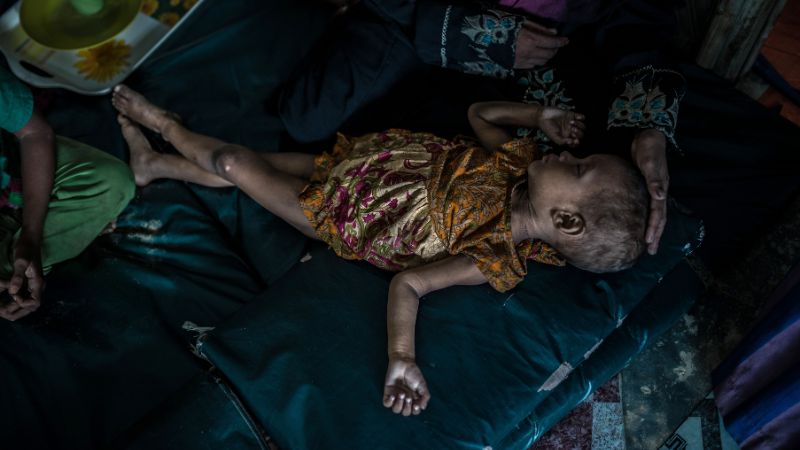
The number of Rohingya children in need of emergency treatment for severe acute malnutrition has surged by 27% in February 2025 compared to the same month last year, according to new data released by UNICEF. The alarming rise highlights a deepening crisis in the world’s largest refugee settlement in Cox’s Bazar, home to over one million refugees, including more than half a million children.
More than 15% of children in the camps are now malnourished — the highest level recorded since the mass displacement of Rohingya people in 2017. UNICEF treated nearly 12,000 children under five for severe acute malnutrition in 2024, with a 92% recovery rate. However, experts warn that without urgent and sustained support, many more lives remain at risk.
The spike in malnutrition cases reflects a dangerous upward trend. January 2025 saw a 25% increase in cases compared to the previous year, rising from 819 to 1,021. February’s increase was even more stark, with cases climbing from 836 to 1,062 — a 27% jump.
Multiple factors are driving the crisis, including prolonged monsoon rains in 2024 that worsened sanitation and sparked outbreaks of diarrhea, cholera, and dengue. Intermittent food ration cuts over the past two years have left families struggling to feed their children, while an influx of new arrivals fleeing violence has further strained resources.
“For now, we can provide the services that Rohingya mothers come seeking, and that very sick children need,” said Rana Flowers, UNICEF Representative in Bangladesh. “But as needs keep rising and funding declines, families are terrified of what will happen to their babies if further cuts occur.”
UNICEF estimates that 14,200 children could suffer from severe acute malnutrition in 2025. Without adequate food, clean water, and healthcare, that number could climb. Children suffering from the condition are 11 times more likely to die than their well-nourished peers if left untreated.
“These families cannot yet safely return home, and they have no legal right to work,” Flowers added. “Sustained humanitarian support is not optional – it is essential. UNICEF is committed to staying and delivering for children, but critical services remain at risk without guaranteed funding.”