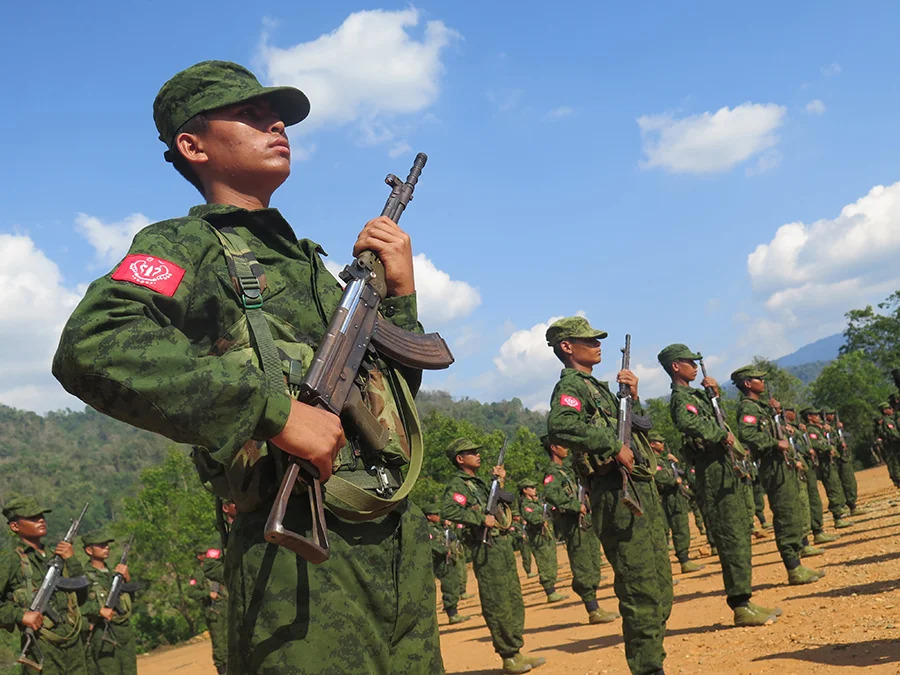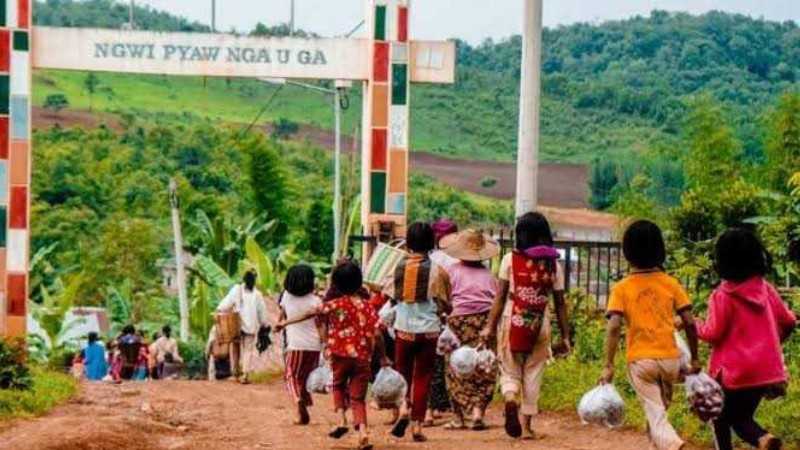
The humanitarian crisis in Myanmar’s Arakan State has taken a troubling turn as the Arakan Army (AA) escalates its efforts to forcibly relocate Rohingya communities. Following the AA’s seizure of control in key towns across Buthidaung and Maungdaw Township, reports reveal the dismantling of Rohingya villages and the confinement of displaced civilians in an internally displaced persons (IDP) camp in northern Buthidaung.
𝐅𝐨𝐫𝐜𝐞𝐝 𝐑𝐞𝐥𝐨𝐜𝐚𝐭𝐢𝐨𝐧 𝐌𝐢𝐫𝐫𝐨𝐫𝐬 𝐉𝐮𝐧𝐭𝐚’𝐬 𝐁𝐫𝐮𝐭𝐚𝐥 𝐓𝐚𝐜𝐭𝐢𝐜𝐬
Between February 20 and 21, AA militants reportedly ordered residents of Gyi Naut Thee village to relocate to Nga Yant Chaung, with subsequent destruction of homes by around 200 AA fighters. Belongings were seized and redistributed to Rakhine and Hindu communities in Taung Bazar, while the displaced Rohingya were forced into a restricted settlement west of Nga Yant Chaung, where a poorly equipped camp is under construction. Conditions within the camp are dire, offering limited access to humanitarian aid and placing severe restrictions on residents’ movements.
Observers note that the AA’s tactics increasingly resemble those of the Myanmar military junta, which has long been accused of systemic oppression, segregation, and human rights abuses against the Rohingya. Human rights groups have raised alarms, suggesting that the AA is perpetuating the same cycle of displacement and persecution under the guise of regional autonomy.
𝐖𝐨𝐫𝐬𝐞𝐧𝐢𝐧𝐠 𝐇𝐮𝐦𝐚𝐧𝐢𝐭𝐚𝐫𝐢𝐚𝐧 𝐂𝐨𝐧𝐝𝐢𝐭𝐢𝐨𝐧𝐬
The latest wave of forced relocations is occurring amidst a wider surge in violence throughout Arakan State, with reports of arbitrary detentions, forced labor, and severe movement restrictions targeting Rohingya civilians. Human rights organizations have condemned the AA’s actions, warning that such policies deepen the humanitarian crisis while drawing disturbing parallels with the junta’s oppressive measures.
𝐁𝐚𝐧𝐠𝐥𝐚𝐝𝐞𝐬𝐡𝐢 𝐅𝐢𝐬𝐡𝐞𝐫𝐦𝐞𝐧 𝐃𝐞𝐭𝐚𝐢𝐧𝐞𝐝
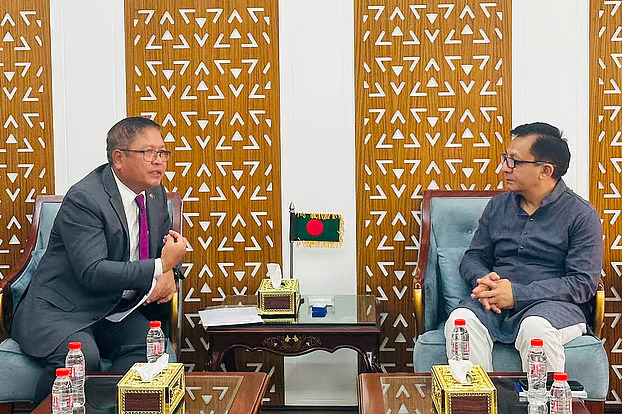
In a separate incident on February 20, AA militants detained 19 Bangladeshi fishermen near the Naf River along the Myanmar-Bangladesh border. The fishermen, along with four boats, were accused of illegal fishing activities. The Bangladeshi government has initiated diplomatic discussions with the AA to secure their release, as the families of the detained remain in distress with little information about their fate.
𝐂𝐚𝐥𝐥𝐬 𝐟𝐨𝐫 𝐆𝐥𝐨𝐛𝐚𝐥 𝐈𝐧𝐭𝐞𝐫𝐯𝐞𝐧𝐭𝐢𝐨𝐧 𝐆𝐫𝐨𝐰
As the situation deteriorates, international pressure is mounting. Regional bodies like ASEAN and global institutions including the United Nations are being urged to take immediate action to halt the AA’s forced relocations and safeguard the rights of Rohingya civilians. At the same time, diplomatic efforts are intensifying to ensure the release of the detained fishermen.
With the Rohingya facing yet another wave of displacement and uncertainty, the need for meaningful international intervention and accountability for ongoing human rights abuses in Myanmar has never been more urgent.