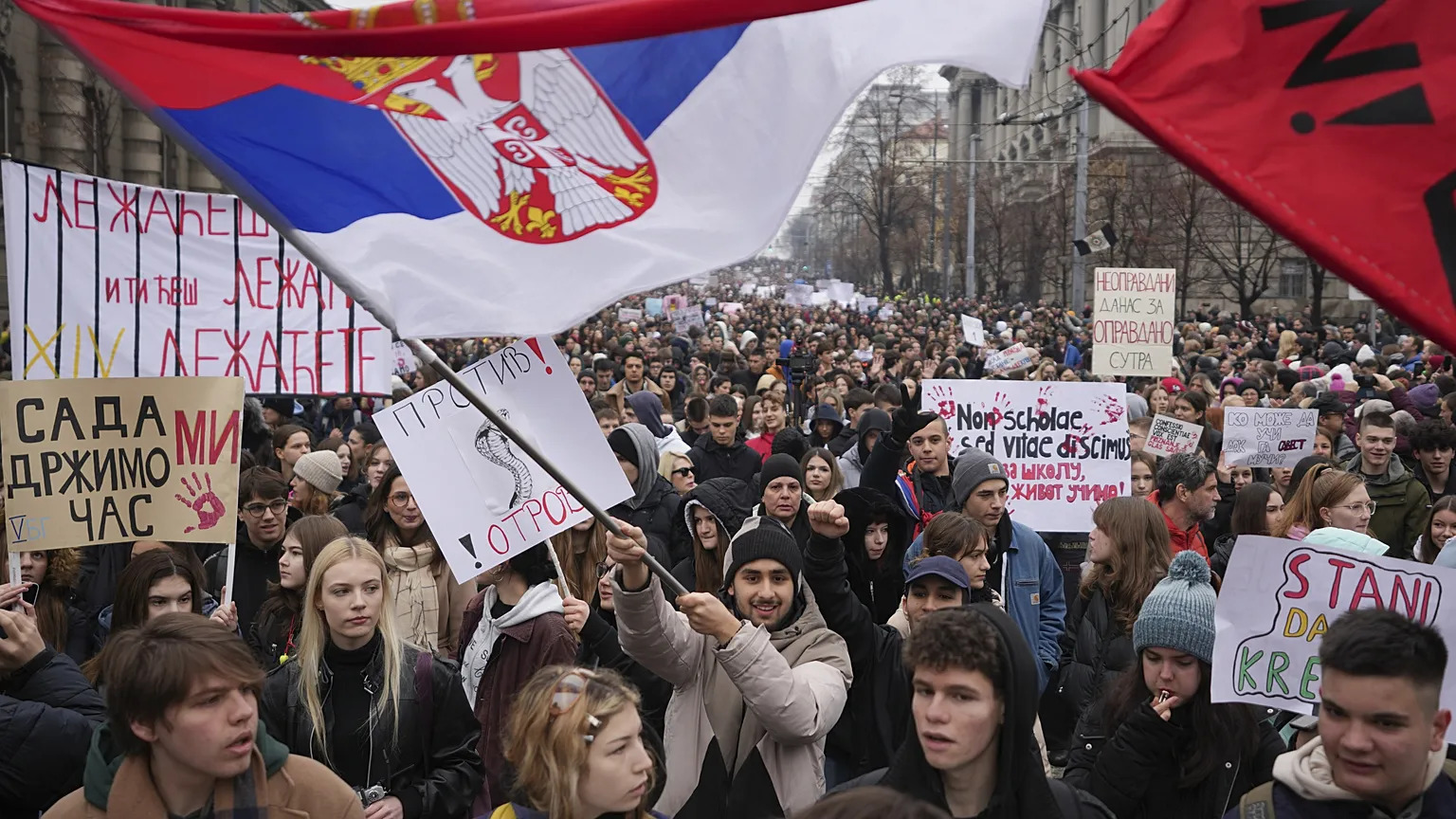
A government can stay in power for years and still lose touch with the people it governs. Serbia’s reported election result is a reminder of how quickly that gap can turn into a political crisis. A student-led movement has reportedly won 141 of the 250 seats in parliament, bringing Aleksandar Vučić’s 12-year rule to an end. For a political establishment accustomed to holding power, the defeat is more than an electoral setback. It shows what can happen when public frustration grows beyond the reach of familiar political parties and official narratives.
The roots of Serbia’s upheaval lie in a tragedy. The collapse of a railway station roof in Novi Sad in November 2024 killed 16 people and raised questions about corruption, construction standards and public accountability. The government denied allegations of wrongdoing, but the disaster became a rallying point for students who believed that those responsible for public safety could no longer escape scrutiny. Their protests gradually widened into a challenge to the government and the institutions surrounding it.
The movement’s strength came partly from its refusal to follow the usual political script. Rather than placing one prominent figure at its centre, students built a collective campaign around accountability and political change. Their message found support among people who had grown frustrated with the established opposition as well as the government. A tragedy that might otherwise have faded from public attention became the starting point for a national political challenge.
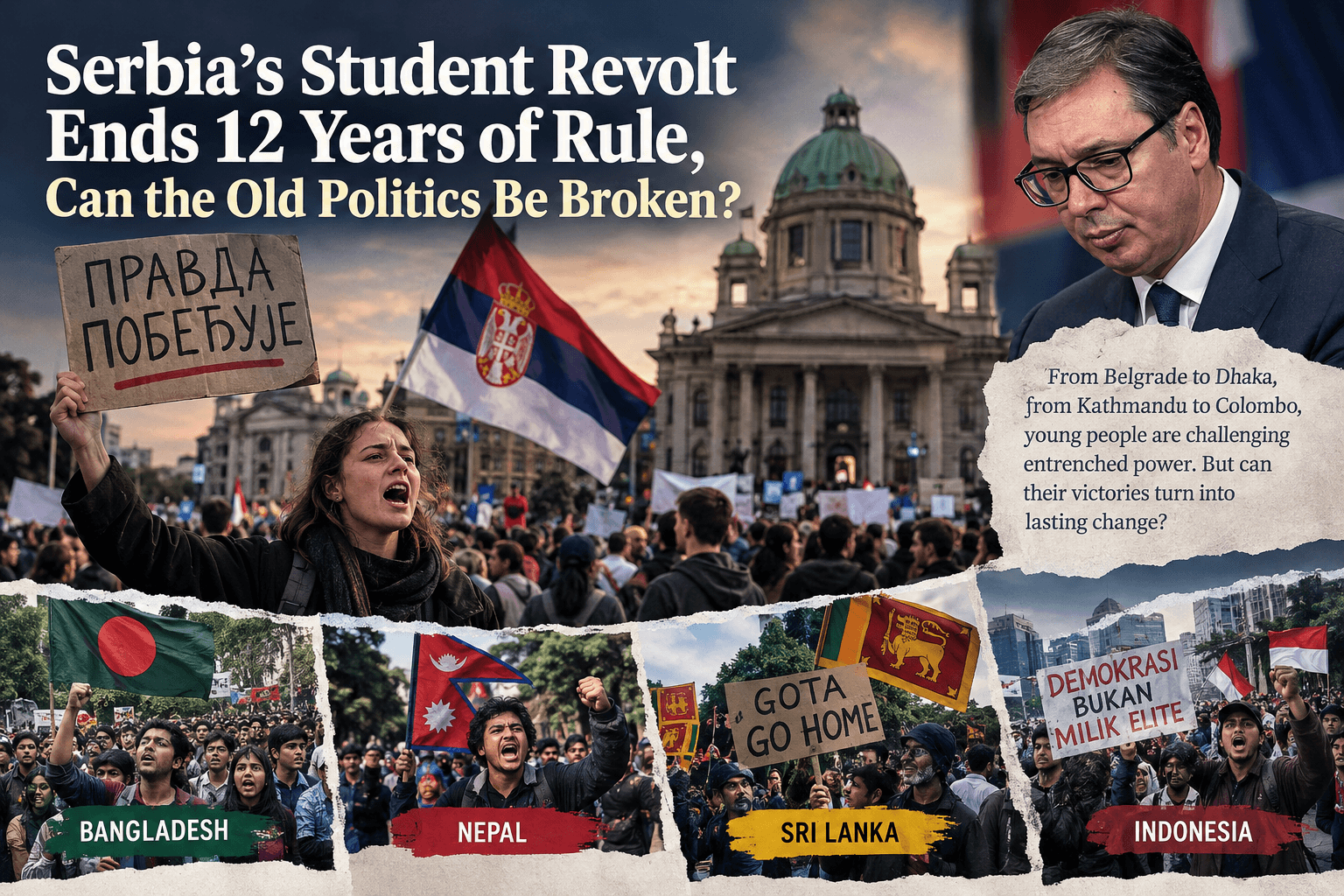
There are clear parallels with Bangladesh’s July–August 2024 uprising. What began as a student protest against public-sector job quotas grew into a mass movement against Sheikh Hasina’s government, fuelled by wider anger over political repression, electoral credibility and allegations of corruption. The government’s fall showed how a specific grievance can bring together people with different political views when it speaks to a much deeper sense of injustice.
Nepal’s youth-led protests in September 2025 followed a different course but exposed a similar divide. Anger over a social media ban, corruption and political privilege brought young demonstrators into confrontation with an established political class. Sri Lanka’s Aragalaya movement in 2022, meanwhile, united citizens against economic collapse and political mismanagement, eventually forcing President Gotabaya Rajapaksa to leave office and resign. In Indonesia, student protests have repeatedly challenged political privileges and government decisions seen as threats to democratic safeguards.
These countries are not identical, and their movements should not be treated as copies of one another. But the recurring pattern is difficult to ignore: young people take to the streets over a specific issue, public anger spreads, and a government discovers that its political strength may be less secure than it appeared. Students often provide the initial momentum, while wider public participation turns a protest into a national crisis.
Yet forcing leaders from office does not automatically fix the systems that allowed public anger to build. Bangladesh’s experience has made that distinction particularly important. Political change creates expectations of fairer institutions, greater accountability and a different relationship between citizens and the state. Meeting those expectations is much harder than bringing down a government. Without credible reforms, the frustrations that fuelled an uprising can survive the departure of the people who once held power.
Serbia’s student movement now faces that test. Its collective structure helped it unite people against Vučić, but governing requires difficult decisions, clear responsibilities and the ability to manage competing demands. The new parliamentary majority will need to demonstrate that it can strengthen judicial independence, protect media freedom and investigate alleged wrongdoing fairly. It must also resist the temptation to treat political opponents as enemies who have no legitimate place in public life.
There is a wider warning here for movements that emerge from popular anger. Political outsiders do not automatically govern better than established politicians, and student activists are no exception. Once they enter government, they face pressure to compromise, distribute power and deliver results. If they fail, public enthusiasm can quickly turn into disappointment. The credibility of Serbia’s new political force will depend on whether it applies the standards of accountability it demanded from the government it defeated.
For Bangladesh, Nepal, Sri Lanka and Indonesia, Serbia’s reported result is not a guarantee that student movements will succeed everywhere. It is evidence that entrenched political power can be challenged when people stop believing that the existing system will correct itself. But an election victory, a leader’s resignation or the fall of a government is only the beginning of political change.
The real measure of Serbia’s victory will be what ordinary people notice after the celebrations end. Can they question those in power without fear? Can public money be spent without suspicion of political favouritism? Can institutions hold powerful people accountable, whoever they are? Those are the questions that matter in Belgrade, just as they do in Dhaka, Kathmandu, Colombo and Jakarta. Removing a government may take a historic wave of public anger. Building a country where another government cannot repeat the same mistakes takes something more enduring: institutions that answer to the public, not the people who control them.
BOB Post