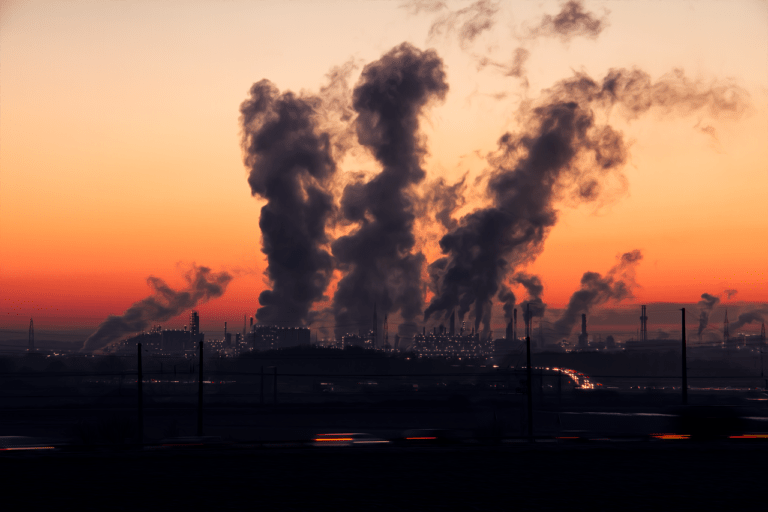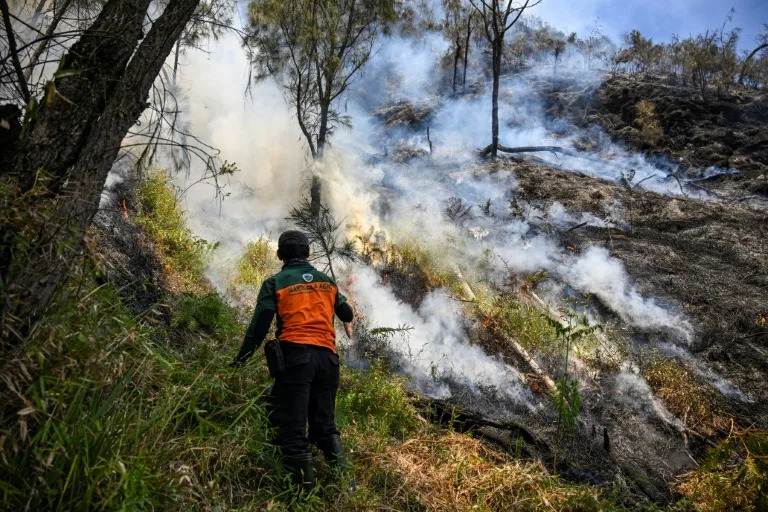
Indonesia is stepping up efforts to contain a growing wave of forest and land fires as thick haze begins affecting neighbouring parts of Southeast Asia, raising fresh concerns over cross-border air pollution during an increasingly severe dry season.
Authorities have placed six provinces on high alert and deployed dozens of aircraft and helicopters, while cloud-seeding operations are being used in an attempt to trigger rainfall over fire-affected areas. The main focus is on Riau, Jambi and South Sumatra on Sumatra island, and West, Central and South Kalimantan on Borneo.
The scale of the fires has increased sharply this year. Indonesian Forestry Ministry data showed that about 107,465 hectares of land were affected by fires between January and June, more than double the area recorded during the same period in 2023, when El Nino also contributed to unusually dry conditions.
Chief Security Minister Djamari Chaniago said authorities were closely monitoring the situation as dry weather could allow relatively small fires to spread rapidly. He also indicated that El Nino conditions may have reached their strongest point in Indonesia, although the continued lack of rainfall remains a major concern.
The environmental impact is already being felt beyond Indonesia's borders. In Malaysia, 11 areas in Sarawak recorded unhealthy air quality on Tuesday, according to the country's Department of Environment. Sarawak authorities have also directed schools to suspend outdoor activities when air pollution readings rise above the prescribed threshold or temperatures become excessively high.
Pontianak, the capital of Indonesia's West Kalimantan province, has taken more immediate measures, with classes for all students shifted online after deteriorating air quality caused by haze.
According to Reuters, Indonesia has deployed 43 helicopters and 15 fixed-wing aircraft to battle the fires, while authorities are conducting cloud-seeding operations using salt flares to encourage rainfall. Officials, however, say the effort has been complicated by a shortage of suitable rain clouds.
The fires are not confined to the six priority provinces. Other outbreaks have been reported across Java, Papua and the Nusa Tenggara islands, underlining the wider geographical spread of the problem.
Environmental groups say the underlying causes go beyond weather conditions. Dana Prima Tarigan of Indonesian environmental group WALHI said deforestation for palm oil plantations, mining and other forms of land clearing have left large areas of land dry and particularly vulnerable to fire. The prolonged dry season associated with El Nino is further worsening those conditions.
The situation is also being closely watched across the maritime Southeast Asian region, where seasonal haze from Indonesia has repeatedly become a diplomatic and public-health concern. Smoke carried across national borders can disrupt transport, affect schools and outdoor activities, and put additional pressure on already polluted urban areas.
On Java, authorities have separately brought a major fire at Mount Bromo National Park in East Java largely under control. The blaze damaged at least 899 hectares of land, according to local disaster management chief Gatot Soebroto.
With the dry season continuing, Indonesian authorities are now racing to prevent scattered fires from developing into larger outbreaks, while neighbouring countries remain alert to the possibility that worsening haze could spread further across the region.
BOB Post