Vietnam has overtaken Thailand to become Southeast Asia’s second-largest commercial aviation market, even as airline seat capacity across the region contracted in July amid higher fuel costs and disruptions linked to tensions in the Middle East.
According to UK-based aviation data provider OAG, total airline capacity across Southeast Asia fell 1.2 percent year on year to 50.4 million seats in July 2026. Domestic capacity declined 1.3 percent, accounting for 45 percent of the region’s total market, while international capacity dropped 1.5 percent and represented the remaining 55 percent.
The overall decline came as airlines faced higher operating costs following a sharp rise in jet fuel prices linked to escalating tensions in the Middle East. Several carriers also reduced international services as disruptions affected routes connecting Southeast Asia with the region.
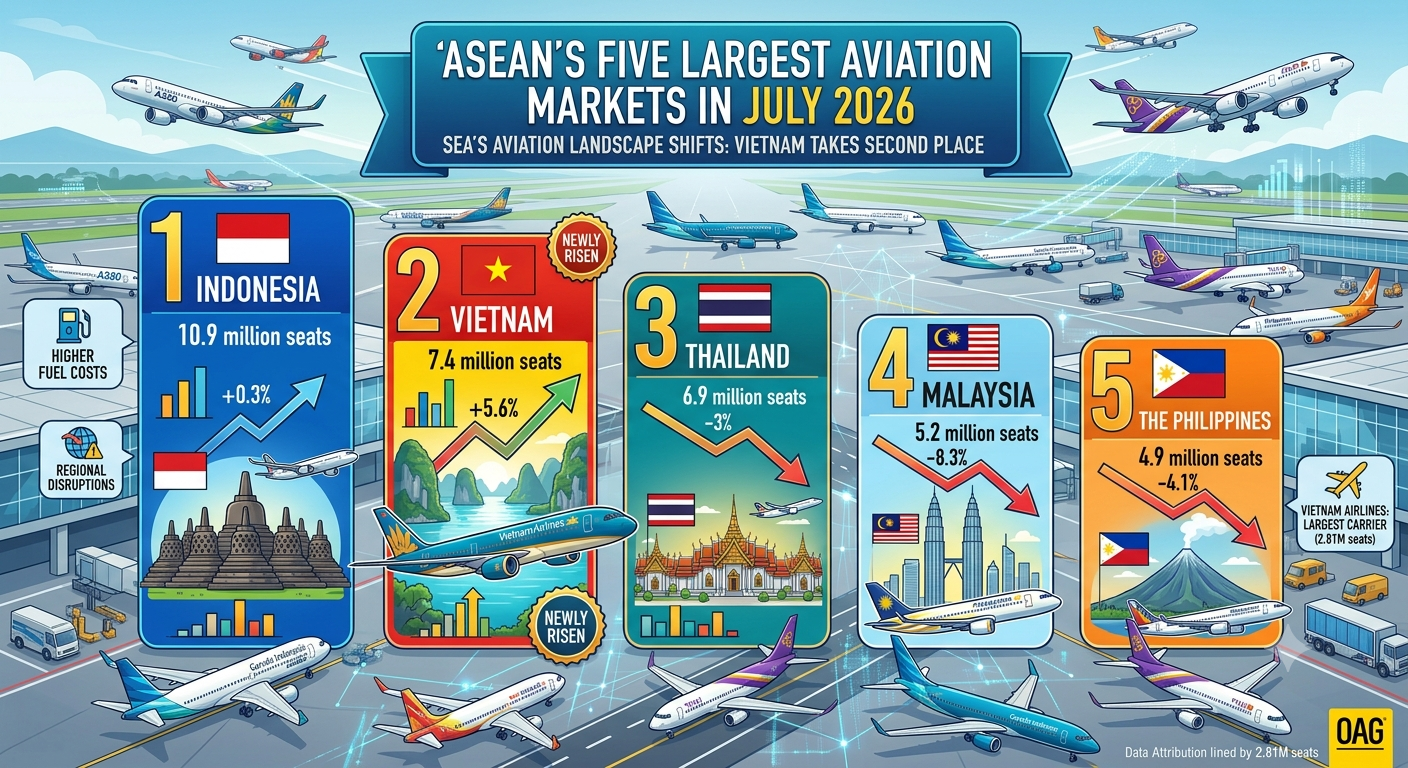
Indonesia remained Southeast Asia’s largest commercial aviation market, recording 10.9 million seats in July, a 0.3 percent increase from the same month last year.
Vietnam moved into second place with 7.4 million seats, marking a 5.6 percent year-on-year increase. The growth pushed the country ahead of Thailand, which had previously held the second position.
According to ANN, Vietnam’s rise reflects the continued expansion of its aviation sector as passenger demand and airline capacity remain comparatively resilient despite broader regional pressures.
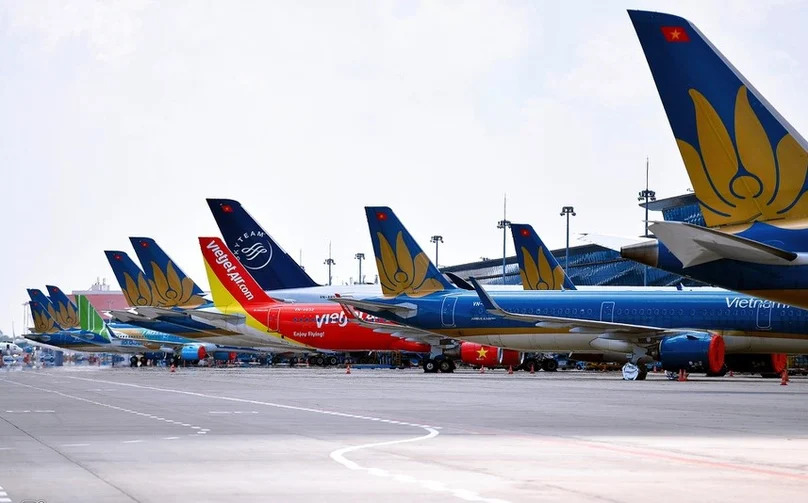
Vietnam Airlines, the country’s national full-service carrier, also emerged as Southeast Asia’s largest airline by seat capacity in July. The carrier offered 2.81 million seats during the month, representing a 0.1 percent increase from July 2025.
Thailand ranked third with 6.9 million seats, down 3 percent year on year. Malaysia followed in fourth place with 5.2 million seats, recording a sharper 8.3 percent decline, while the Philippines ranked fifth with 4.9 million seats, down 4.1 percent.
The capacity declines in Thailand, Malaysia and the Philippines came amid continuing disruption associated with the conflict involving Iran and the United States and renewed tensions around the Strait of Hormuz.
The instability pushed jet fuel prices higher, putting additional pressure on airlines already facing elevated operating costs. Some carriers subsequently reduced or suspended direct and connecting services between the Middle East and Southeast Asian destinations.
Despite the regional contraction, Vietnam’s expansion highlights a shift in Southeast Asia’s aviation landscape, with the country strengthening its position as a major regional travel and connectivity hub while Thailand and Malaysia face mounting pressure from higher costs and weaker capacity.
BOB Post