The Shenzhen APEC summit projected an image of renewed great-power cooperation, but its diplomatic promises raised difficult questions about who gets to shape the global order. As China, the United States and Russia signalled agreement on nuclear risks and international governance, the interests of smaller nations and existing international institutions remained uncertain.
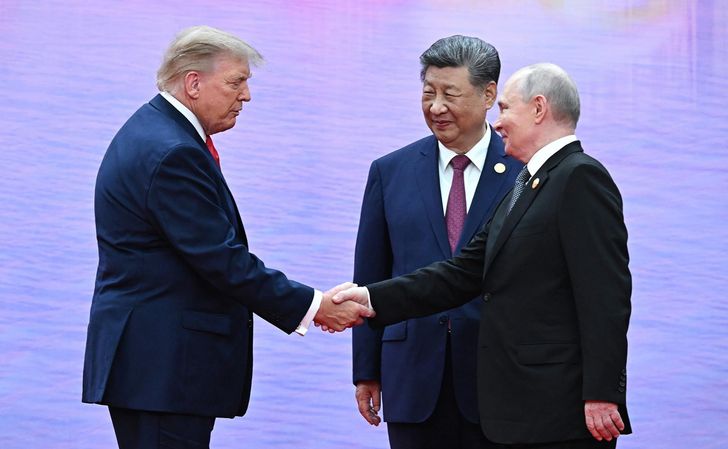
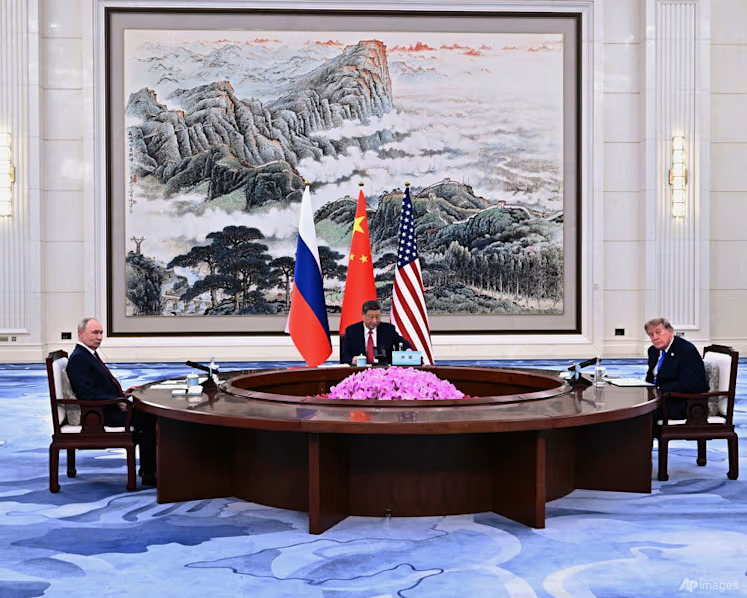
The 33rd APEC Economic Leaders’ Meeting, held in Shenzhen on November 18–19, brought together leaders from across the Asia-Pacific region. Its most striking development was a trilateral meeting between Chinese President Xi Jinping, US President Donald Trump and Russian President Vladimir Putin.
The three leaders issued a joint declaration calling for United Nations reform, stable global energy supplies, reduced nuclear risks and stronger efforts to prevent nuclear proliferation. They also raised concerns about the jurisdiction of the International Criminal Court (ICC) and similar institutions.
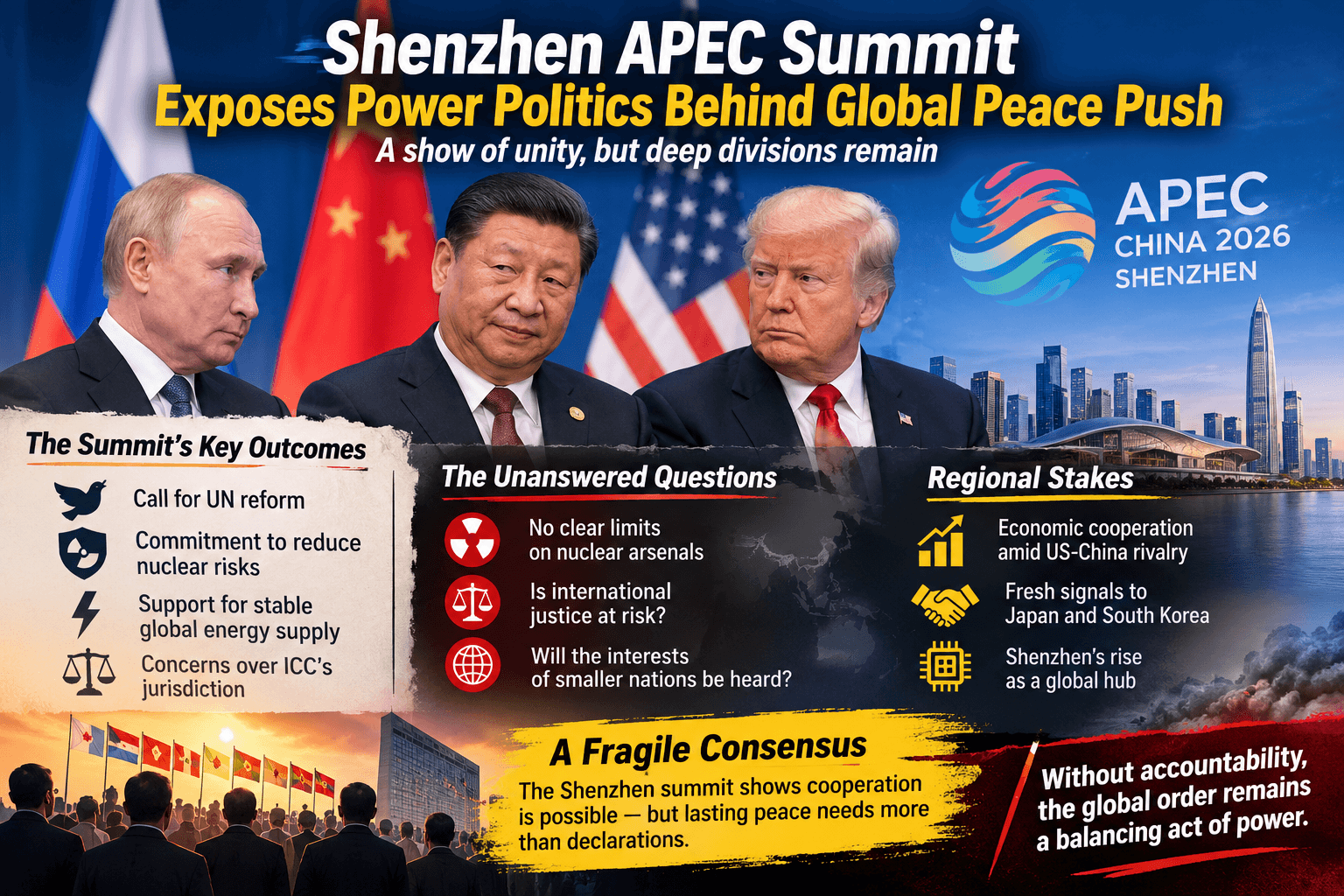
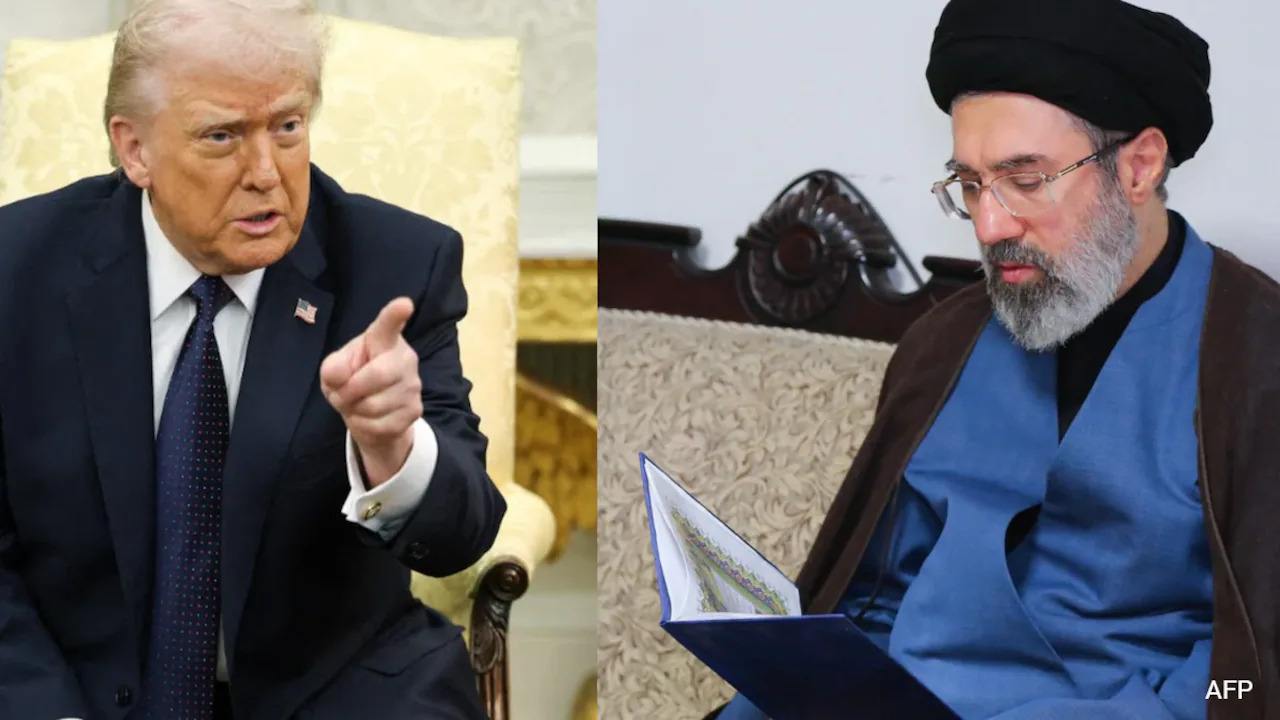
The nuclear consensus came at a time when the Russia-Ukraine war remained unresolved and tensions involving the United States and Iran continued. However, the declaration offered no specific limits on nuclear arsenals or concrete mechanism to prevent escalation. Its political significance was clear, but its practical impact remained uncertain.
More controversially, the declaration's emphasis on preventing the abuse of international judicial authority raised questions about accountability. Critics could view such language as a challenge to international institutions investigating alleged crimes involving powerful state leaders. The position also highlighted a persistent contradiction in global diplomacy: major powers often support international law while resisting scrutiny when their own interests are at stake.
According to Macau Business Daily, the summit also carried wider implications for regional economic cooperation, Sino-Japanese and Sino-South Korean relations, and Shenzhen's emergence as an international diplomatic hub.
The meeting's economic agenda focused on openness, innovation, and cooperation. These priorities contrasted with Washington's reciprocal tariff policies and the growing security competition in the Indo-Pacific. While the Quad leaders had discussed maritime security and strategic infrastructure in Manila shortly before the APEC gathering, Beijing used the Shenzhen summit to promote trade, investment and technological collaboration.
Yet economic cooperation did not erase strategic rivalry. The US-China technology competition remained a major obstacle, particularly in artificial intelligence, electric vehicles and advanced manufacturing. Shenzhen's technological growth offered opportunities for international investment, but the broader question of access to technology and supply chains remained politically sensitive.
The summit also produced diplomatic signals towards Japan and South Korea. Xi's meeting with Japanese Prime Minister Sanae Takaichi offered a possible opening after tensions over Taiwan. Meanwhile, discussions with South Korean President Lee Jae-myung reportedly brought progress towards concluding the second phase of China-South Korea free trade negotiations, covering services, investment, supply chains and artificial intelligence.
However, the gathering exposed another unresolved issue: the future of regional security cannot be determined solely through agreements among major powers. European concerns over Ukraine were evident as German Chancellor Friedrich Merz called for Europe to be included in any peace negotiations. The parallel diplomatic activity in Berlin underlined the limits of a great-power arrangement that could sideline countries directly affected by conflict.
Shenzhen's transformation into a major economic and technological center also became a central part of China's diplomatic messaging. The city was presented as a symbol of modernization and as a driving force for the Greater Bay Area, linking Shenzhen with Hong Kong, Macau and Guangzhou. Hong Kong Chief Executive John Lee also held meetings with several regional and international leaders, expanding the city's economic and diplomatic engagement.
Ultimately, the Shenzhen summit demonstrated that cooperation among powerful states is possible when their strategic interests converge. But a declaration on peace is not the same as a credible commitment to peace. Without meaningful accountability, broader participation and concrete action, the emerging consensus risks becoming another diplomatic arrangement shaped more by the calculations of powerful governments than by the security and rights of the wider international community.
BOB Post