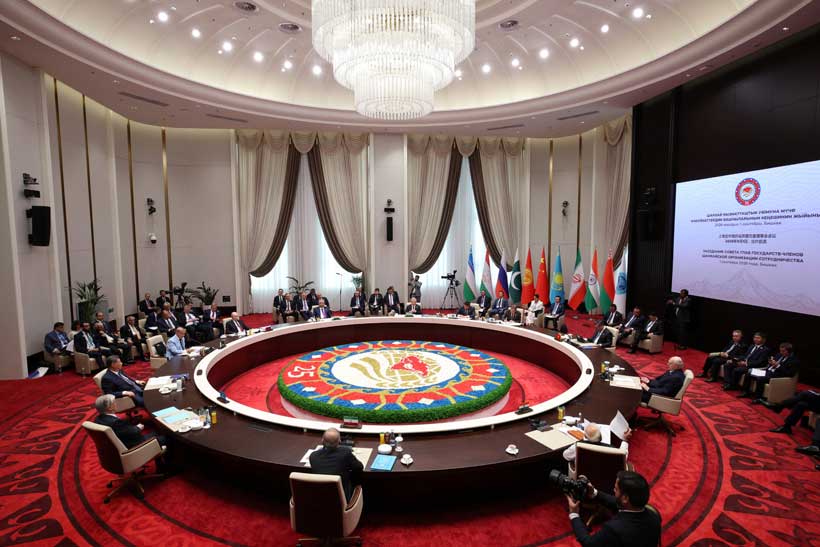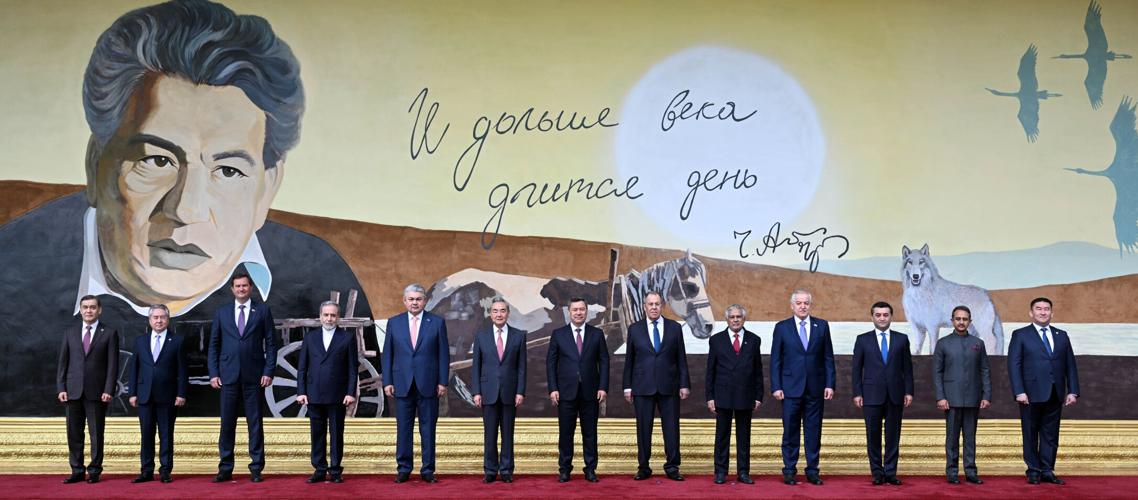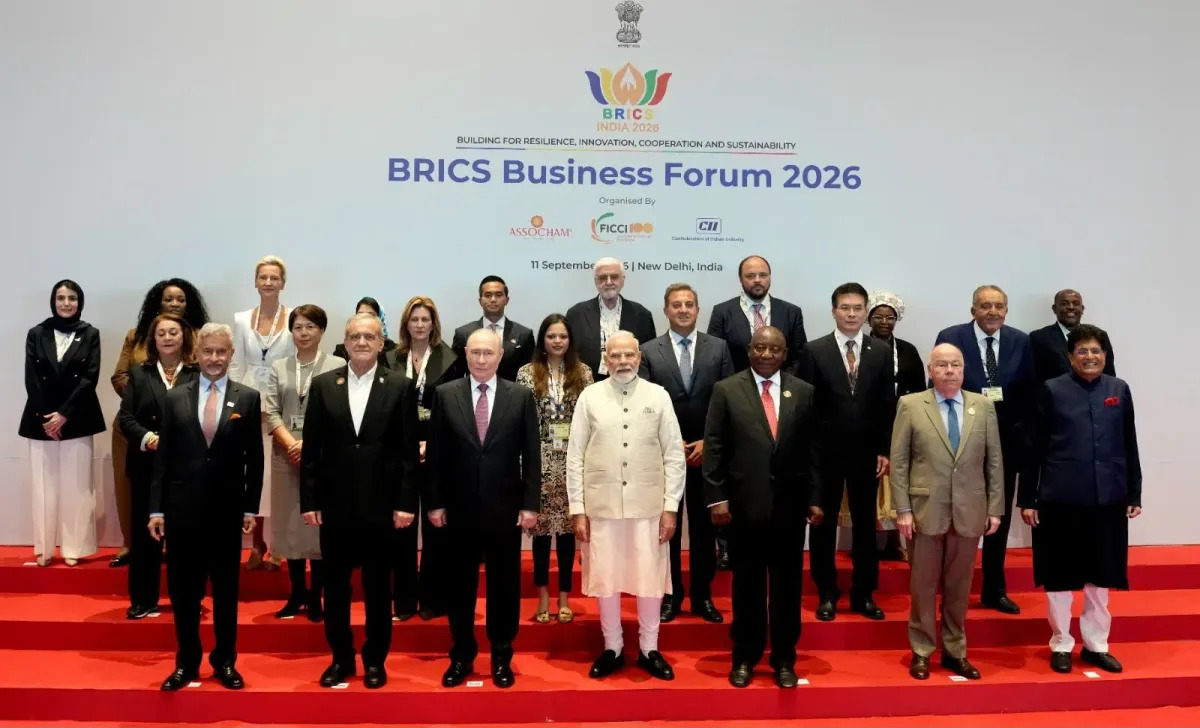
BRICS leaders are set to gather in New Delhi this weekend for a summit that will put the expanding group’s unity under pressure, with the wars in Ukraine and the Middle East, growing US-China rivalry and competing interests among members dominating the agenda.
Indian Prime Minister Narendra Modi is expected to use the summit to reinforce New Delhi’s longstanding policy of strategic autonomy, balancing its deep political and economic ties with Russia and China with increasingly close partnerships with the United States, Europe and other Western powers.
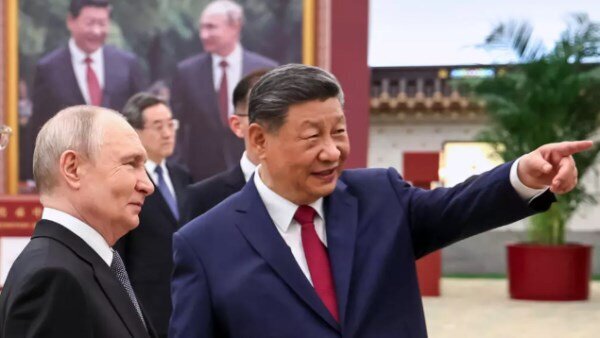
Russian President Vladimir Putin, Chinese President Xi Jinping and Iranian President Masoud Pezeshkian are among the leaders expected to attend the meeting.
Originally formed by Brazil, Russia, India and China, with South Africa joining later, BRICS has expanded to 11 members. The enlarged grouping now represents nearly half of the world’s population and accounts for a significant share of global economic output, energy supplies and natural resources.
But its growing influence has also brought sharper differences to the surface. Members share an interest in reshaping a global order they see as dominated by Western institutions, yet their positions on security, trade and regional conflicts frequently diverge.
According to AP, the New Delhi summit comes at a particularly difficult moment for the bloc, with disagreements over major international conflicts highlighting the limits of BRICS’ ability to formulate a common foreign-policy position.
The Ukraine war is one of the clearest examples. Russia remains a central power within BRICS, while China has maintained close strategic ties with Moscow. India, however, has resisted pressure to condemn Russia outright, instead repeatedly calling for dialogue and diplomacy while simultaneously strengthening its relationship with Washington and European capitals.
The Middle East presents an equally complicated challenge. Iran is now part of the expanded BRICS grouping, while Saudi Arabia and the United Arab Emirates also maintain membership and have their own strategic calculations regarding Tehran. China and Russia have generally maintained closer positions with Iran, whereas India has sought to preserve working relationships with all sides.
The result is a bloc whose members increasingly carry diplomatic weight but do not necessarily share the same view of the world.
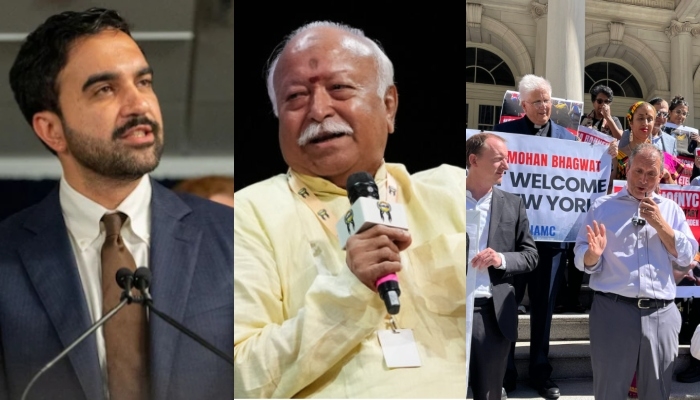
The Global South itself is too diverse to be treated as a single political constituency, said Praveen Donthi, a senior analyst at the International Crisis Group. He argued that the competing interests of BRICS members make collective mediation on major conflicts particularly difficult.
For India, however, the summit offers an important diplomatic opening with China. Xi’s expected visit to New Delhi would be his first in seven years and follows efforts by the two Asian powers to ease tensions that intensified after a deadly border confrontation in 2020.
The diplomatic thaw has reduced some immediate tensions, although major disagreements remain over their border, trade and broader strategic competition.
India is also keen to ensure that BRICS does not evolve into a formal anti-Western alliance. New Delhi has expanded cooperation with the United States, Japan, Australia, Israel and Europe while retaining its close relationship with Moscow.
The summit is therefore likely to underline India’s attempt to remain part of a non-Western platform without allowing that platform to dictate its wider foreign policy.
Reducing dependence on the US dollar is another major issue confronting BRICS. Member states have explored greater use of national currencies in trade and alternative payment mechanisms, particularly as Western sanctions have demonstrated the vulnerability of countries heavily dependent on dollar-based financial networks.
Yet a rapid shift away from the dollar remains difficult. BRICS economies operate with different currencies, banking systems and monetary policies, while the dollar remains deeply embedded in international trade and finance.
Retired Indian diplomat Mahesh Sachdev said the objective was better understood as reducing exposure to the existing financial system rather than directly confronting the dollar.
BRICS has also pushed for reforms to institutions such as the International Monetary Fund and World Bank, arguing that developing economies deserve greater representation in global decision-making.
Whether the group can translate those demands into concrete initiatives may determine how much influence its expansion ultimately brings.
For India, success at the summit may therefore be measured less by dramatic declarations than by incremental progress keeping the enlarged membership together, improving relations with China, expanding trade and financial cooperation, and preserving BRICS as a platform where developing countries can pursue their interests without being forced into either a Western or non-Western camp.
The challenge for New Delhi will be to demonstrate that BRICS can remain influential despite its internal contradictions, rather than becoming another forum where geopolitical rivalries overshadow practical cooperation.
BOB Post