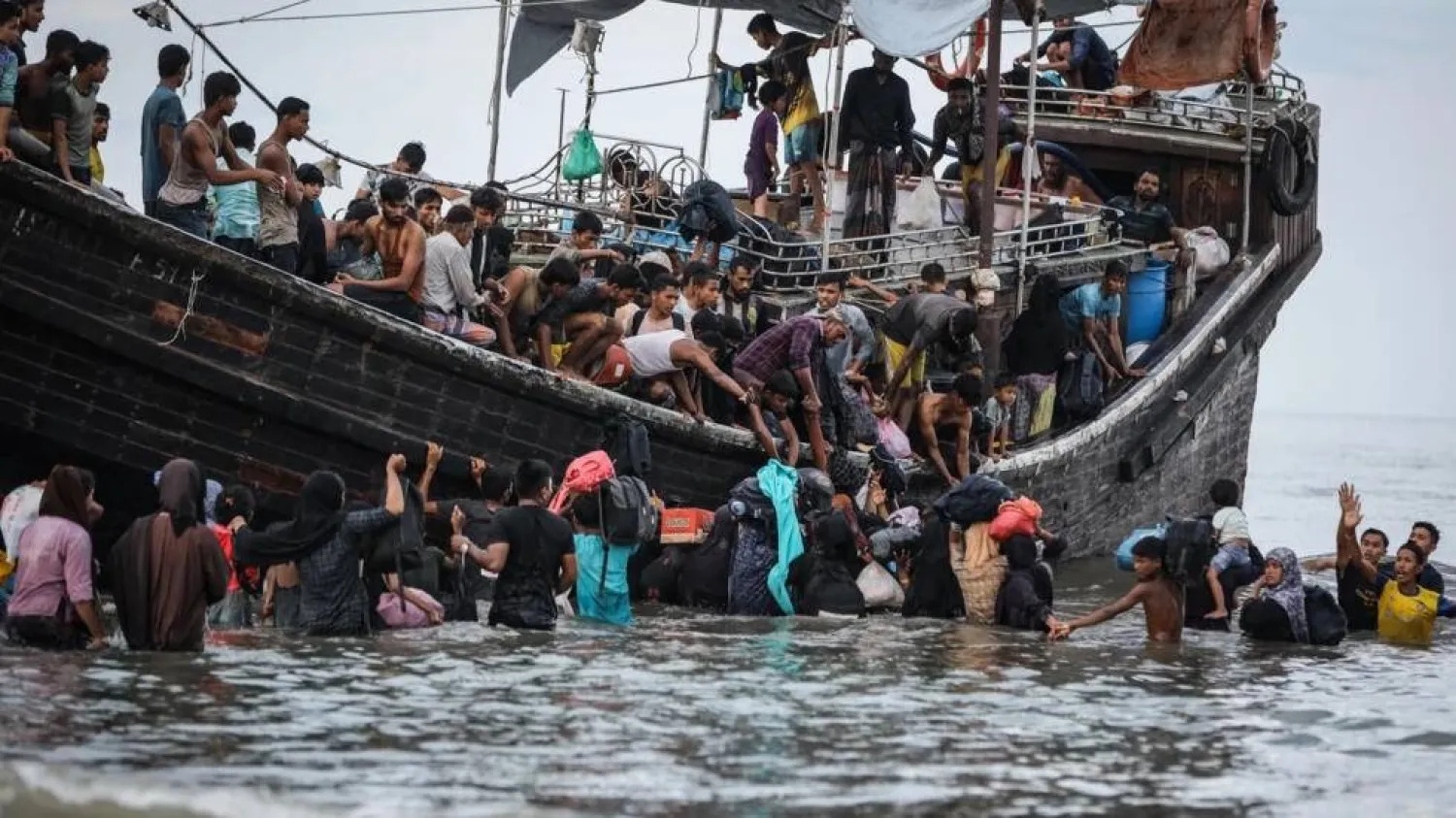
More than 500 people are feared to have died after two boats carrying Rohingya refugees reportedly capsized off Myanmar's coast, prompting the United Nations to warn of one of the deadliest maritime tragedies involving the persecuted minority in recent years.
In a joint statement issued on Thursday, the International Organization for Migration (IOM) and the UN Refugee Agency (UNHCR) said they were deeply alarmed by reports that two vessels carrying more than 500 people may have sunk after departing Myanmar's conflict-ridden Rakhine State in late June. According to AFP, the passengers were believed to be predominantly Rohingya, with some reportedly travelling from the refugee camps in Cox's Bazar, Bangladesh.
The UN agencies said one boat, believed to have been carrying around 250 people, lost contact shortly after setting sail. A second vessel, reportedly carrying about 280 passengers, is believed to have sunk off Myanmar's Ayeyarwady coast on July 8.
Although the incidents and the number of casualties have not yet been officially confirmed, the agencies warned that the potential loss of life could be devastating. They noted that the journeys took place outside the regular sailing season, when rough seas and severe weather significantly increase the risks of maritime travel. Recent torrential rain and widespread flooding across the region are also believed to have worsened conditions.
If confirmed, the two incidents would raise the number of people reported dead or missing in the Andaman Sea and Bay of Bengal this year to nearly 800, including Rohingya refugees and Bangladeshi nationals, according to UN estimates.
The latest reports highlight the worsening humanitarian crisis facing the Rohingya, many of whom continue to flee conflict, persecution and economic hardship in search of safety. More than one million Rohingya refugees remain in overcrowded camps in Bangladesh, while fighting in Myanmar's Rakhine State has further diminished prospects for a safe and voluntary return.
The UN agencies said the tragedies underscore the absence of durable solutions for displaced Rohingya communities and warned that human smuggling and trafficking networks continue to exploit vulnerable people seeking protection.
UNHCR and IOM renewed their call for stronger regional cooperation, including enhanced search-and-rescue operations, greater access to asylum and protection, and tougher action against trafficking syndicates operating across the Bay of Bengal and Andaman Sea.
The agencies also praised Bangladesh for continuing to host large numbers of Rohingya refugees despite mounting humanitarian and economic pressures, while urging the international community to provide sustained support for both refugees and host communities and to address the root causes of displacement in Myanmar.
BOB Post