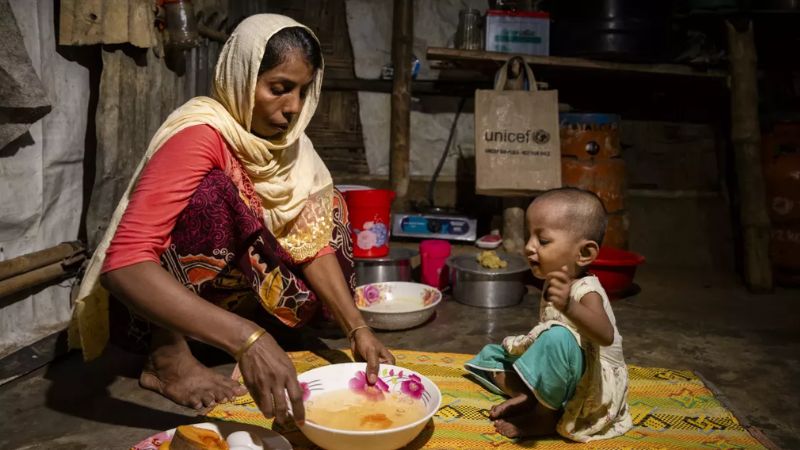
The World Food Programme (WFP) has issued a dire warning about an imminent funding crisis that could drastically reduce food assistance for over one million Rohingya refugees in Bangladesh. With urgent new funds lacking, monthly rations are set to be slashed from $12.50 per person to just $6—posing a severe threat to the already vulnerable refugee population.
The cutbacks come at a critical time, coinciding with the holy month of Ramadan and the upcoming Eid celebrations. Refugees in the camps, who rely entirely on humanitarian aid, will be left to battle worsening hunger, malnutrition, and desperate survival strategies.
Desperate Measures as Hunger Deepens
WFP estimates that $15 million is required immediately to sustain full rations for April, with $81 million needed to maintain food assistance until the end of 2025. Without this support, the reduction in food supplies could push refugees into extreme hunger and force them to resort to desperate measures.
"The Rohingya crisis remains one of the world’s largest and most protracted. Any reduction in food assistance will deepen hunger and push refugees into dangerous survival tactics," warned Dom Scalpelli, WFP’s country director in Bangladesh.
Previous funding shortages in 2023 led to similar ration cuts, triggering a sharp rise in malnutrition among children, with rates exceeding 15%—above the emergency threshold. Malnourished children, pregnant women, and the elderly will bear the brunt of the latest cuts, increasing risks of disease and long-term health complications.
Rising Security and Protection Risks
For a population already deprived of legal status, freedom of movement, and sustainable livelihoods, reduced food aid will further expose Rohingya refugees—particularly women and children—to exploitation, trafficking, and violence.
With fewer resources for survival, young girls could be married off at an early age, while boys may be forced into child labor. Women and girls, already vulnerable to exploitation, may face increased risks of trafficking and sexual violence as families struggle to cope with the crisis.
Additionally, new waves of Rohingya refugees fleeing escalating violence in Myanmar—potentially exceeding 100,000 people—are adding further pressure on Bangladesh’s already overstretched resources. The worsening humanitarian crisis highlights the urgent need for international donors to step forward and prevent further suffering.
Global Apathy: A Death Sentence for Rohingya Refugees?
Despite being among the most vulnerable populations in the world, refugee communities, including the Rohingya, are often the first to suffer from aid cuts. The international community's dwindling financial commitments to humanitarian efforts are now putting lives at immediate risk.
"Now more than ever, the Rohingya need us to stand with them," Scalpelli emphasized. "WFP’s food aid is the difference between survival and despair. Immediate support is needed to prevent this crisis from escalating further."
As global aid declines and humanitarian needs grow, the fate of over one million Rohingya refugees in Bangladesh hangs in the balance. Without urgent funding, the world risks watching yet another preventable humanitarian catastrophe unfold—one that could have devastating long-term consequences for a stateless and forsaken people.
BOB Post