In a striking announcement at the United Nations General Assembly on June 10, the United States emphasized the need for inclusive dialogue in the repatriation of Rohingya refugees — notably calling for the involvement of the Arakan Army (AA), which now controls most of Rakhine State. However, while the AA is increasingly seen as a key stakeholder, human rights observers warn that the armed group has itself been implicated in recent atrocities that mirror patterns of abuse historically committed by the Myanmar military.
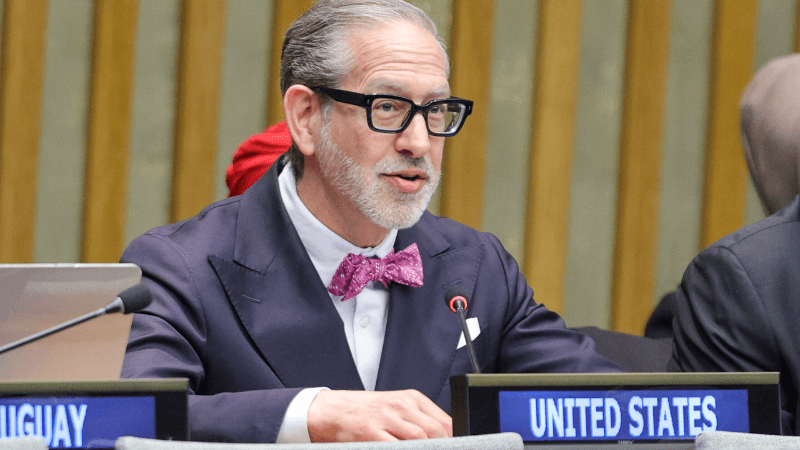
At a UN briefing by the Secretary-General's Special Envoy for Myanmar, Ms. Julie Bishop, U.S. Ambassador Jonathan Shrier called for a comprehensive and inclusive solution for the safe and voluntary return of Rohingya refugees. He underscored that this must involve “all parties,” including the AA, given their expanding territorial control in Rakhine.

Yet, Shrier's statement arrives amid mounting reports that the AA has committed serious violations of human rights in recent months. Local monitors and displaced civilians have accused the group of forced recruitment, extortion, arbitrary detentions, and targeting of minority communities — including Rohingyas. Though the AA has positioned itself as a resistance force against the Myanmar military, its growing power has not translated into protection for civilians in the areas it now rules.
"The Arakan Army’s rising influence does not absolve them of accountability," said a Rakhine-based rights monitor. "We are seeing troubling signs — displacement, violence, and threats against those who question their authority."

The United States condemned atrocities from all sides in Rakhine, including the Myanmar military’s continued campaign of terror: bombing civilians, destroying schools and mosques, and using telecommunications blackouts to obscure their crimes. Shrier specifically urged both the Myanmar military and the AA to safeguard civilians and restore access to humanitarian aid and communication.
“The need for emergency assistance is dire, and the military’s blockade is worsening the humanitarian crisis,” Shrier noted, stressing the importance of hearing Rohingya voices from inside Rakhine, refugee camps in Bangladesh, and the diaspora in third countries.
Despite its harsh criticism of the Myanmar junta, the United States' appeal for inclusive dialogue implicitly puts pressure on the AA to uphold human rights standards and move beyond militarized governance. Critics argue that without real reforms and transparency, the AA's participation in repatriation processes could become another obstacle rather than a solution.
As the humanitarian crisis deepens in Rakhine, calls grow louder for accountability and genuine civilian protection — not just from the military regime, but from all actors claiming authority in the region.
BOB Post