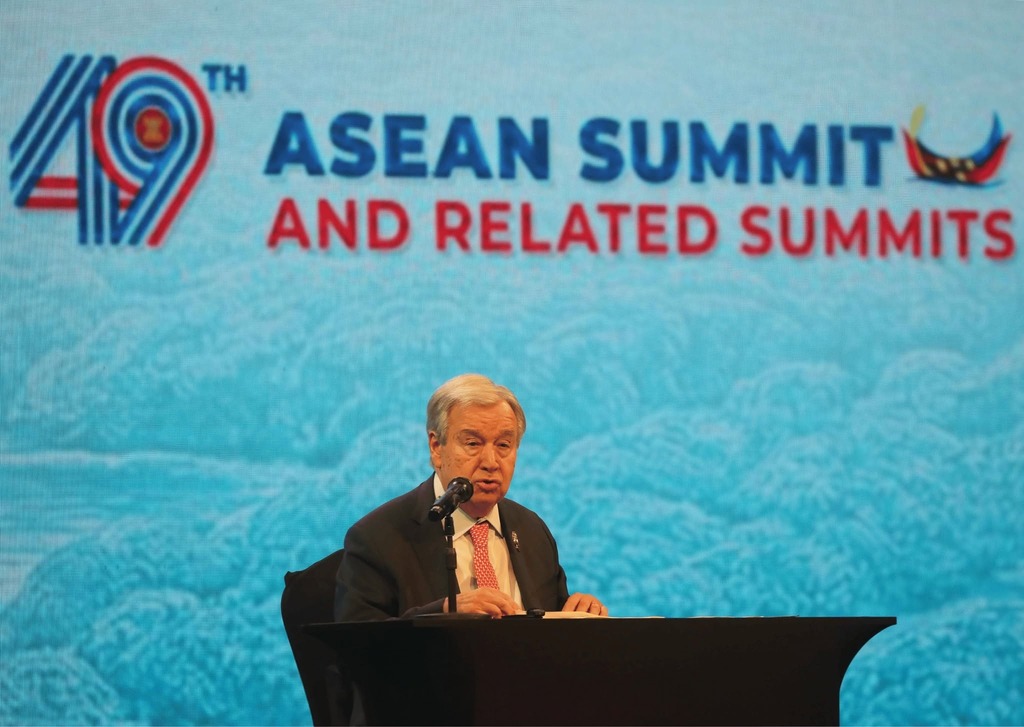
United Nations Secretary-General Antonio Guterres has described Myanmar’s worsening humanitarian crisis as ‘intolerable,’ urging an immediate end to violence and human rights abuses as millions remain displaced by the country’s ongoing conflict.
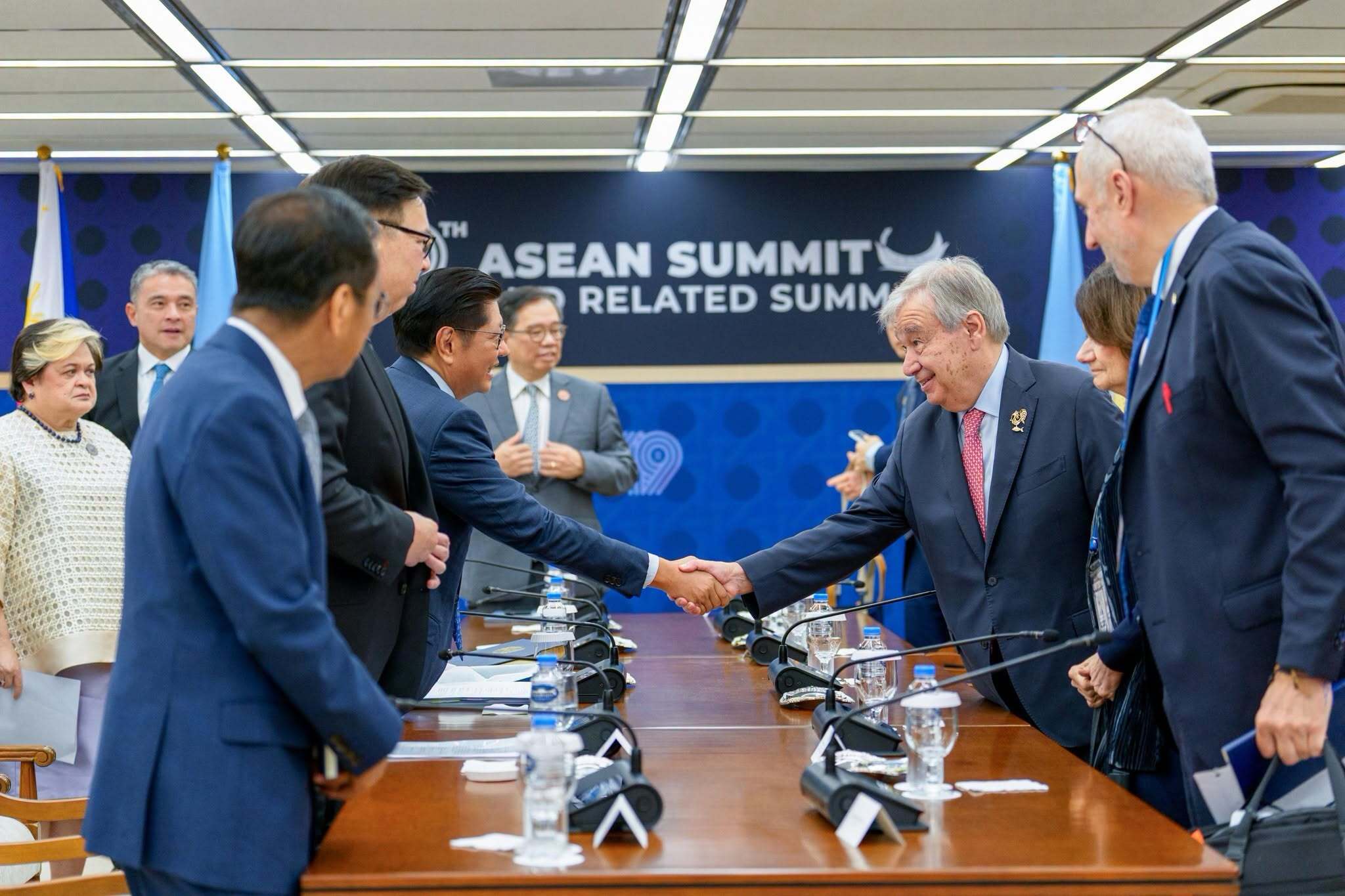
More than 16 million people in Myanmar require humanitarian assistance, while over four million have been forced from their homes, Guterres told reporters on the sidelines of the ASEAN Summit in Manila on November 16.
He identified aerial bombardment as the leading cause of civilian casualties, underscoring the growing threat to civilians as fighting continues across the country.
“The violence must stop. Impunity must end, and humanitarian assistance must flow to people in need, irrespective of territorial control, immediately and unconditionally,” Guterres said.
His remarks came as ASEAN leaders agreed to consider a gradual, conditional restoration of Myanmar’s political representation at high-level regional meetings, provided there is measurable progress in ending violence and implementing the bloc’s Five-Point Consensus.
Myanmar’s military-backed leadership has been excluded from political representation at ASEAN summits and foreign ministers’ meetings since the 2021 military coup.
According to Asia News Network, Philippine Foreign Secretary Ma. Theresa Lazaro said ASEAN would pursue a “calibrated engagement, step-by-step and progress-based approach," with an end to violence serving as a key condition for further engagement.
However, the proposed shift has raised concerns that renewed diplomatic engagement could weaken pressure on Myanmar’s military leadership without concrete improvements on the ground.
“Engagement is not appeasement,” Guterres warned, stressing that accountability for human rights violations must remain central to international efforts. He also called for humanitarian access and the release of people arbitrarily detained.
Analysts have cautioned ASEAN against restoring Myanmar’s full political participation before securing meaningful concessions. Singapore Institute of International Affairs chairman Simon Tay said political acceptance should follow progress rather than precede it, warning that ASEAN could lose one of its few remaining diplomatic leverage points.
The crisis also poses a major challenge for Singapore, which will take over the ASEAN chairmanship in 2027. Regional leaders are expected to pursue clearer benchmarks on reducing violence, expanding humanitarian access and facilitating inclusive dialogue.
Despite years of diplomatic initiatives, Myanmar's conflict continues to deepen, with civilians bearing the brunt of airstrikes, displacement and deteriorating humanitarian conditions.
BOB Post