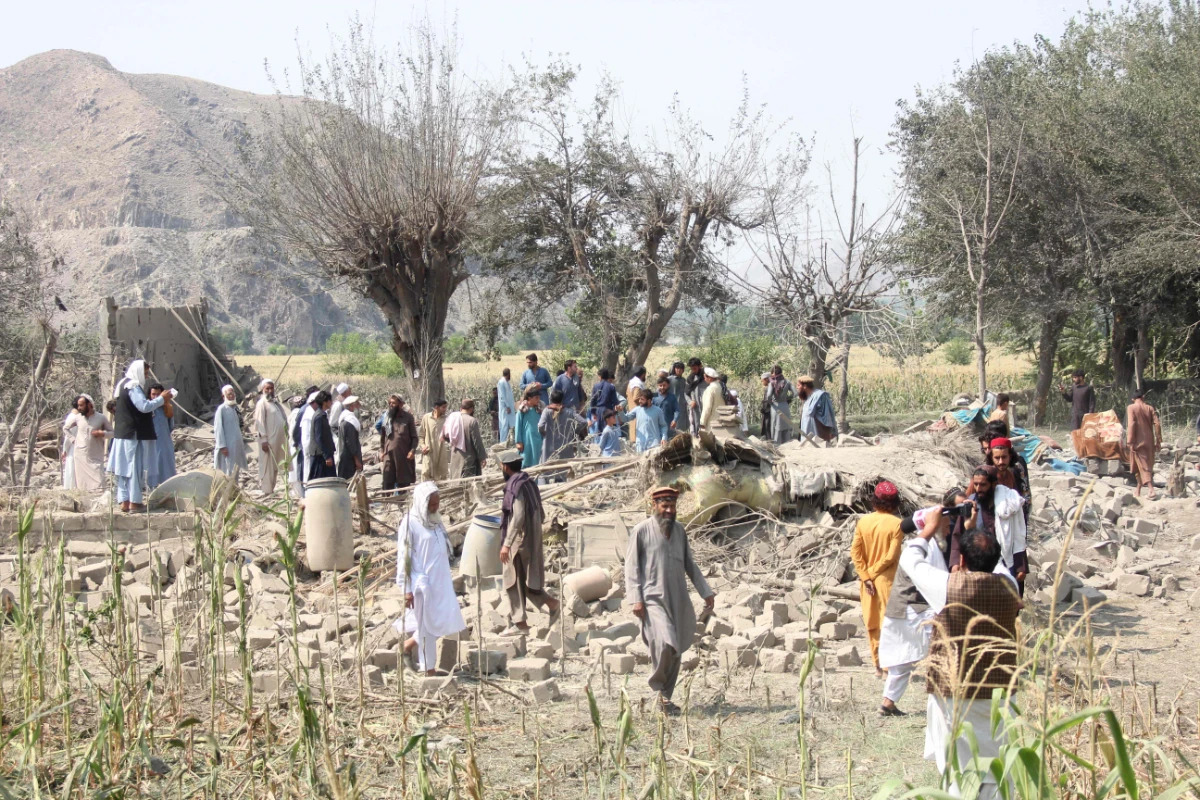
Nine years after fleeing violence in Myanmar, Rohingya in Bangladesh are asking the international community to move beyond solidarity statements and set out a clear path for their return home.
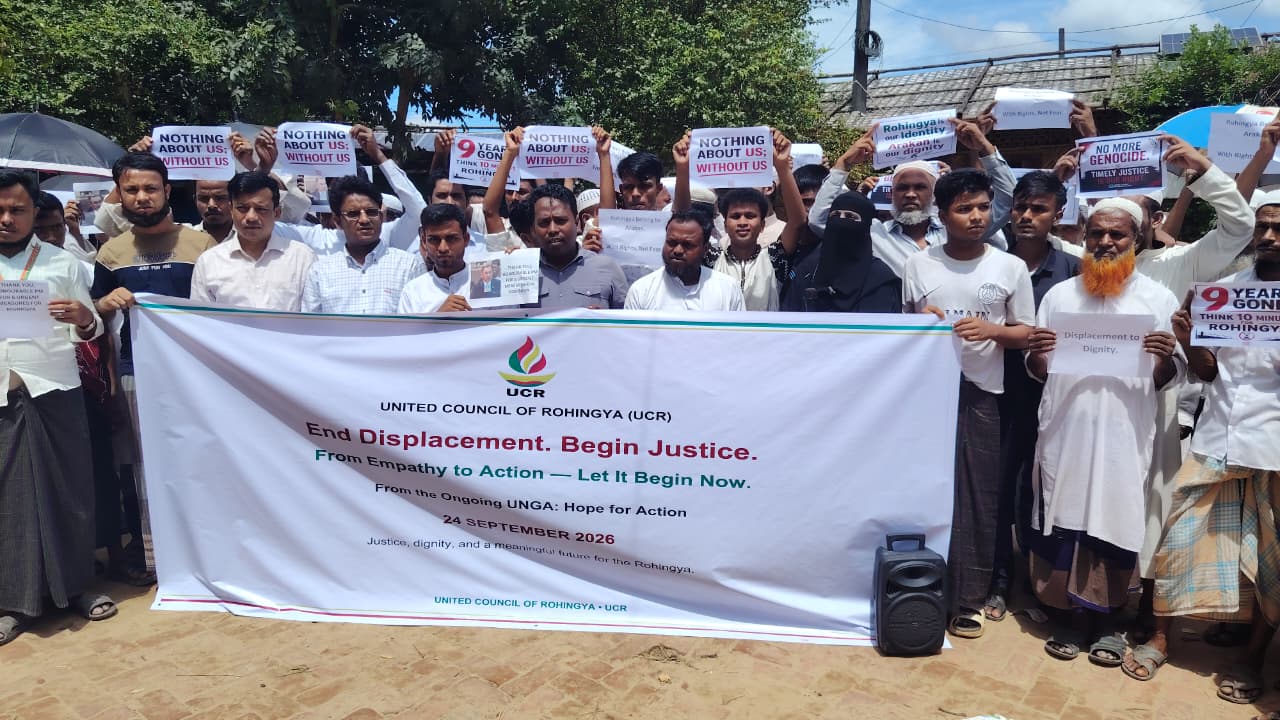
The demand came at a human chain and rally organised by the United Council of Rohingya (UCR) at Jamtholi in Ukhiya’s Camp 15 on Thursday, ahead of the 81st session of the United Nations General Assembly.
“Nine years is too long. There should be no more indefinite displacement,” UCR leaders said, calling for a credible, time-bound roadmap for the safe, voluntary, dignified and sustainable repatriation of Rohingyas to Myanmar.
For the refugees, the passage of time has not brought them closer to home. Instead, generations have grown up in camps in Cox’s Bazar, dependent on humanitarian assistance while prospects for a safe return remain uncertain.
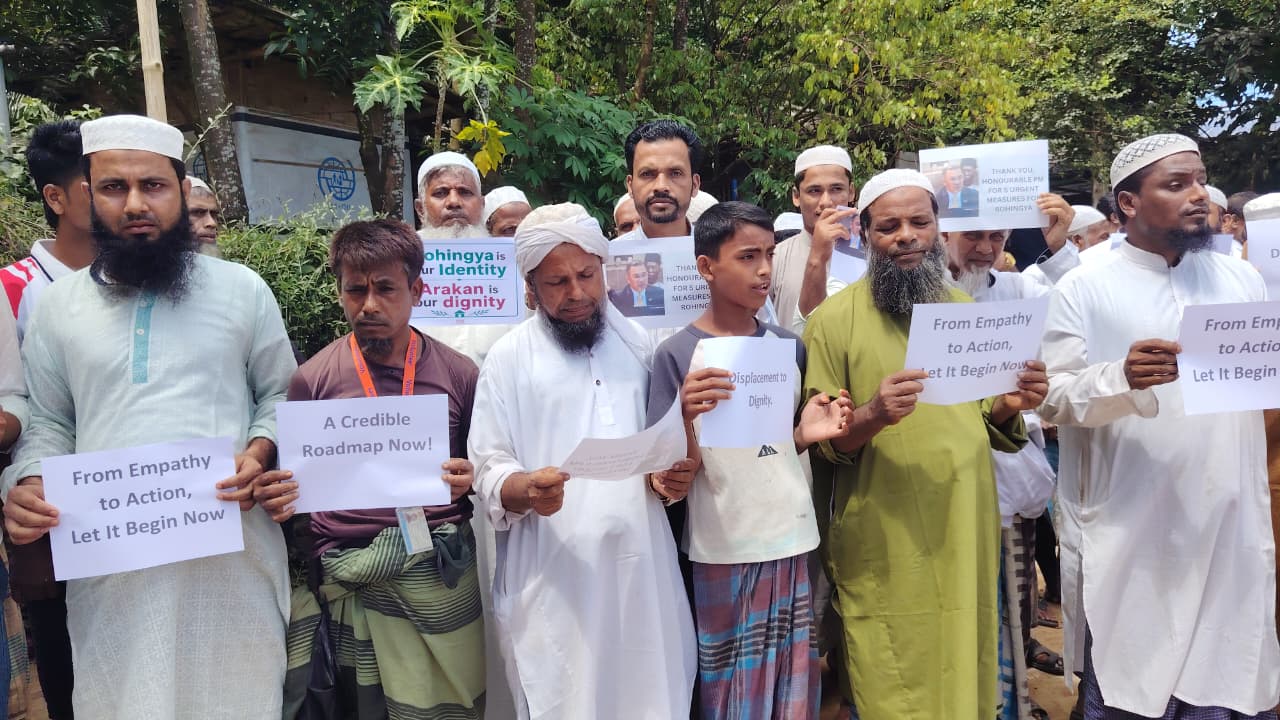
Rohingya leaders said the international community had repeatedly expressed concern over the crisis but had failed to translate those commitments into an effective process for ending the displacement.
They said the UN General Assembly offered an opportunity to put the issue back at the centre of international diplomacy and secure concrete commitments for repatriation.
The appeal came a day after Prime Minister Tarique Rahman called for a clear and credible roadmap for the early, safe, voluntary, dignified and sustainable return of Rohingyas to Myanmar at a high-level UN event in New York.
Rohingya leaders welcomed the call, saying the next step should be to turn the proposal into an international process with clear responsibilities, timelines and safeguards.
“The crisis began in Myanmar, so its sustainable solution must also be found in Myanmar,” they said.
They stressed that repatriation could not be reduced to physically transferring refugees across the border. Myanmar would need to provide security, basic rights, freedom of movement and conditions that would allow Rohingyas to rebuild their lives without fear of renewed persecution.
UCR founder and president Maulvi Said Ullah said Rohingyas had spent years relying on humanitarian assistance in the camps and that the international community now needed to take concrete decisions about their future.
“Rohingyas cannot remain in the camps indefinitely. It is time for a clear decision on their return,” he said.
Rohingya leader Master Mohammad Soib said discussions on repatriation had continued for years without producing a sustainable solution.
“Talks alone will not bring us home. An environment must first be created in Myanmar where Rohingyas can return with safety and dignity,” he said.
Another leader, Mohammad Rofiq, said the international community had repeatedly recognised the Rohingyas’ right to return but had yet to establish a workable mechanism.
“We are still in the camps. This time, there must be a specific and time-bound roadmap through the UN,” he said.
Rohingya women’s leader Sajida Begum said prolonged displacement had placed an additional burden on women and children, making a safe and dignified return increasingly urgent.
“We need an environment where Rohingya families can return without fear,” she said.
For refugees living in the camps, the demand is ultimately about returning to a place they still regard as home.
“We are grateful to Bangladesh for giving us shelter, but we want to return to our own country, our homes and our relatives,” said Nuruzzaman, a resident of Camp 15.
“We have been displaced for nine years. We want a safe way to go home.”
Rohingya leader Mohammad Saleh said prolonged camp life was depriving refugees of adequate opportunities in education, healthcare and other basic services.
He warned that continued displacement could have long-term consequences for younger generations growing up without a clear prospect of returning home.
Anwar Hossain, another Rohingya leader, urged Bangladesh to keep the issue high on the international agenda during the UN General Assembly.
He said Rohingyas themselves had limited access to international forums and called on Bangladesh to ensure that their concerns were directly conveyed to world leaders.
The UCR also called for accountability for alleged crimes committed against Rohingyas and urged stronger international efforts through judicial and accountability mechanisms.
The organisation said any repatriation process should include credible guarantees that the persecution and violence that forced Rohingyas from Myanmar would not be repeated.
The message from the camp was therefore not simply a demand to cross the border.
It was a demand for a return that is safe enough to last, dignified enough to be accepted and secure enough to prevent another cycle of displacement.
BOB Post