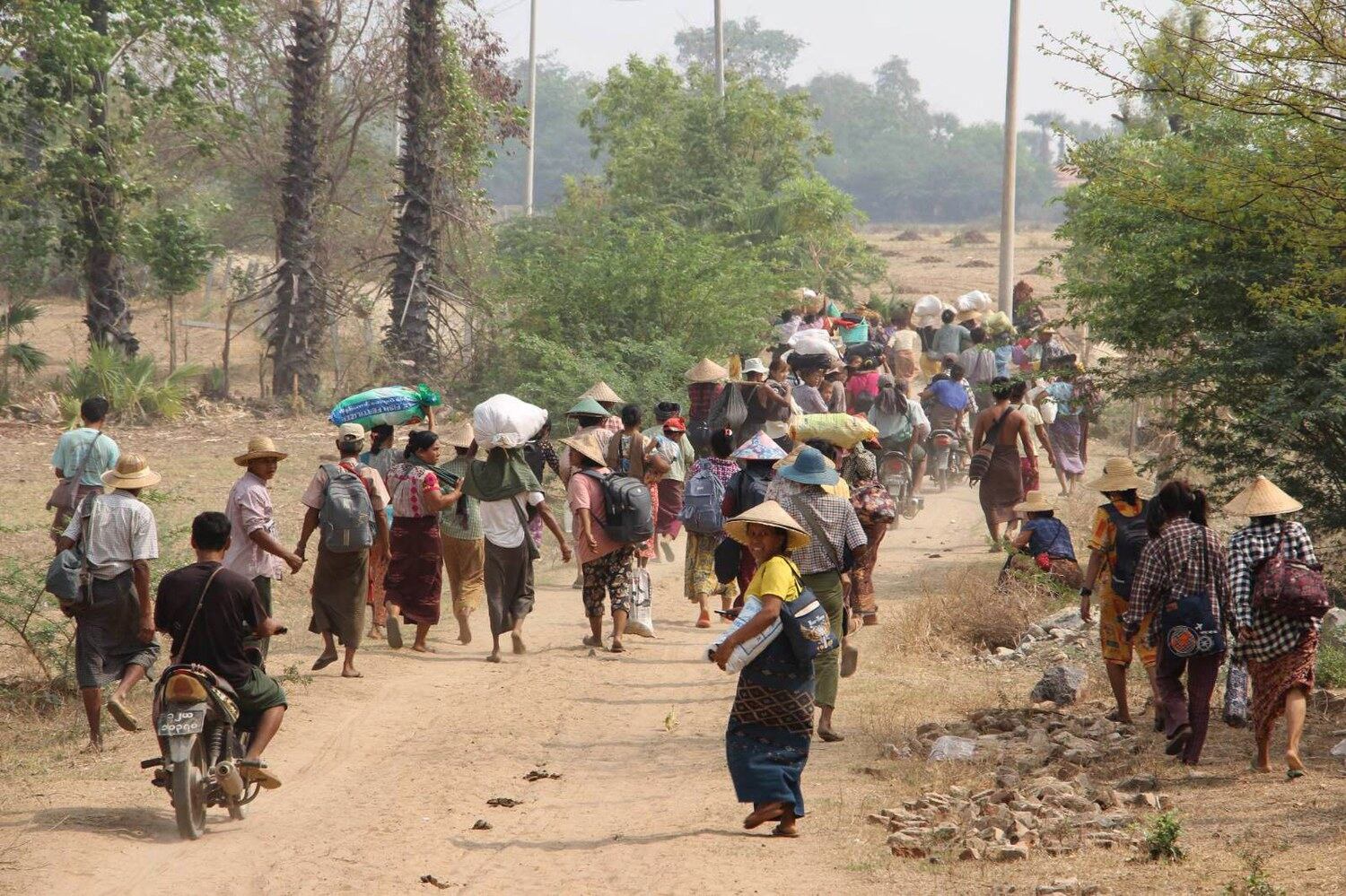
Nearly 3.8 million people were internally displaced across Myanmar by the end of June, as prolonged conflict, economic hardship and natural disasters continued to deepen the country’s humanitarian crisis, UNICEF said in a report released on September 16.
The UNICEF Myanmar Humanitarian Situation Report for January-June 2026 put the number of internally displaced people at 3,793,800 as of June 29, an increase of 154,400 from the end of 2025. The agency said 16.2 million people, including 4.9 million children, required humanitarian assistance in 2026.
The scale of displacement increased further after the reporting period. UNHCR’s Myanmar data portal recorded 4.031 million internally displaced people as of August 10, with Sagaing Region accounting for 1.346 million, the largest regional concentration. Rakhine State had about 498,000 internally displaced people, while Magway had 472,100.
More than 1.8 million people remained displaced across northwestern Myanmar during the first half of the year, UNICEF said. More than 100,000 people were displaced across four townships in Magway Region since mid-May as fighting and military operations intensified. In Kachin State, more than 228,000 people were displaced during the reporting period.
The worsening displacement comes as Myanmar’s conflict continues to affect civilians across several regions. According to Migrant Times, the number of displaced people was nearing four million as Thailand and Myanmar discussed border security in August, highlighting the growing regional dimension of the crisis.
The humanitarian situation has also been compounded by food insecurity and rising living costs. UNICEF said the average cost of a basic food basket in June was 20 percent higher than in February, while 12.4 million people were already facing food insecurity nationwide. It warned that between 3.5 million and 5 million additional people could become food insecure if the pressures continued.
Children have been particularly affected. UNICEF estimated that 3.4 million children were in urgent need of education support, with conflict damaging schools, disrupting learning and limiting access to teachers and educational materials.
Landmines and explosive remnants of war also remained a major threat. UNICEF recorded 327 incidents during the first half of 2026 that resulted in 487 civilian casualties, including 113 children.
The agency and its partners provided education support to 472,742 children and primary healthcare to 326,503 people between January and June. But humanitarian operations remained severely underfunded. UNICEF appealed for $267.2 million for its 2026 response and had received or secured $95.4 million by mid-year, leaving a funding gap of $171.7 million, or 64 percent.
The crisis has also extended beyond Myanmar’s borders. UNICEF said another 1.6 million people from Myanmar were refugees or asylum seekers in neighboring countries as of the end of May, separate from those displaced inside the country. Natural disasters have added another layer of pressure. By the end of August, flooding had affected an estimated 600,000 people in parts of northwestern Myanmar, Rakhine, Ayeyarwady and Kachin, damaging homes and infrastructure and displacing families. UNICEF also reported an acute watery diarrhoea outbreak among affected communities.
The latest figures point to a displacement crisis that has continued to expand beyond the levels recorded in the first half of the year, with conflict, food insecurity, funding shortages and climate-related emergencies placing additional pressure on millions of civilians across Myanmar.
BOB Post