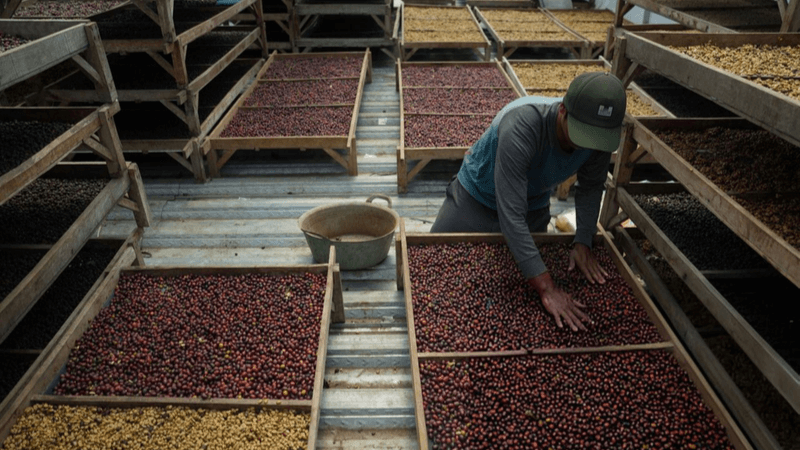
Indonesia has announced an ambitious national strategy to elevate its standing in the global coffee market, targeting the position of the world’s second-largest coffee producer. This strategic move was unveiled by Coordinating Minister for Food Affairs, Zulkifli Hasan, as part of a comprehensive effort to ramp up domestic production and sharpen the country’s competitive edge in international trade.
Currently the fourth-largest coffee producer globally, with an annual yield exceeding 700,000 tonnes, Indonesia is setting its sights on surpassing Vietnam and Colombia in the coffee rankings. The new strategy focuses not only on increasing output but also on enhancing the quality and branding of Indonesian coffee.

“Our goal is not just to produce more, but to produce better,” Minister Hasan stated. “By modernising our farming, processing, and marketing systems, we aim to redefine Indonesia’s coffee identity on the world stage.”
The multi-faceted plan involves distributing high-yield seedlings, adopting advanced post-harvest technologies, and improving packaging and branding to boost the global appeal of Indonesian coffee. Central to the initiative is a strong partnership model between the government, farmers, cooperatives, and private sector stakeholders.
The government is also investing in infrastructure and training to support smallholder farmers, who make up the majority of Indonesia’s coffee producers. This, officials say, will ensure a more inclusive and sustainable path to growth.
According to the Central Statistics Agency, Indonesia exported 342,220 tonnes of coffee worth US$1.49 billion between January and September 2024. The government hopes this figure will rise significantly as the strategy unfolds over the coming years.
Industry analysts view Indonesia’s push as timely, given the rising global demand for premium coffee and the country’s diverse growing regions that offer unique bean profiles.
If successful, the plan could not only boost Indonesia’s economy but also position it as a global coffee powerhouse, reshaping the landscape of the international coffee trade.
BOB Post