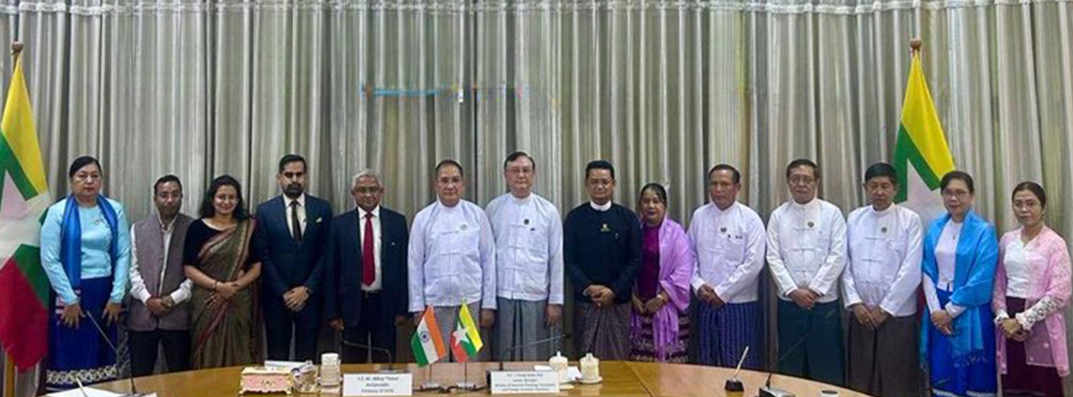
India and Myanmar have signed five agreements worth about US$247,502 to support local infrastructure, school facilities, technical training, sports and public-sector auditing in Myanmar for the 2026–27 financial year.
The memorandums of understanding (MoUs) were signed in Naypyitaw on Thursday, October 15, by representatives of the Indian Embassy and Myanmar’s relevant ministries, with officials from both countries attending the ceremony.
According to ANI, the projects fall under the Mekong-Ganga Cooperation (MGC) initiative, through which India supports small-scale development programmes intended to deliver practical benefits to local communities.
The agreements cover five areas. These include upgrading a village ring road at the National Races Village in Yangon, improving water, sanitation and hygiene facilities at earthquake-affected schools, upgrading a boiler operator training centre, constructing a futsal stadium at a boys’ training school in Mandalay, and purchasing data analytics software for Myanmar’s Office of the Union Auditor-General.
India’s Ambassador to Myanmar Abhay Thakur and Myanmar’s Union Minister for National Planning, Investment and Foreign Economic Relations U Aung Kyaw Hoe attended the signing ceremony. Amit Shreeansh, First Secretary at the Indian Embassy, signed the agreements on behalf of India.
Myanmar’s state media reported that India is supporting a total of 10 Quick Impact Projects in the country during the 2026–27 financial year, including the five covered by the latest agreements.
The Mekong-Ganga Cooperation initiative brings together India and five Southeast Asian countries: Cambodia, Laos, Myanmar, Thailand and Vietnam. Established in 2000, the framework promotes cooperation in areas including education, culture, tourism and connectivity.
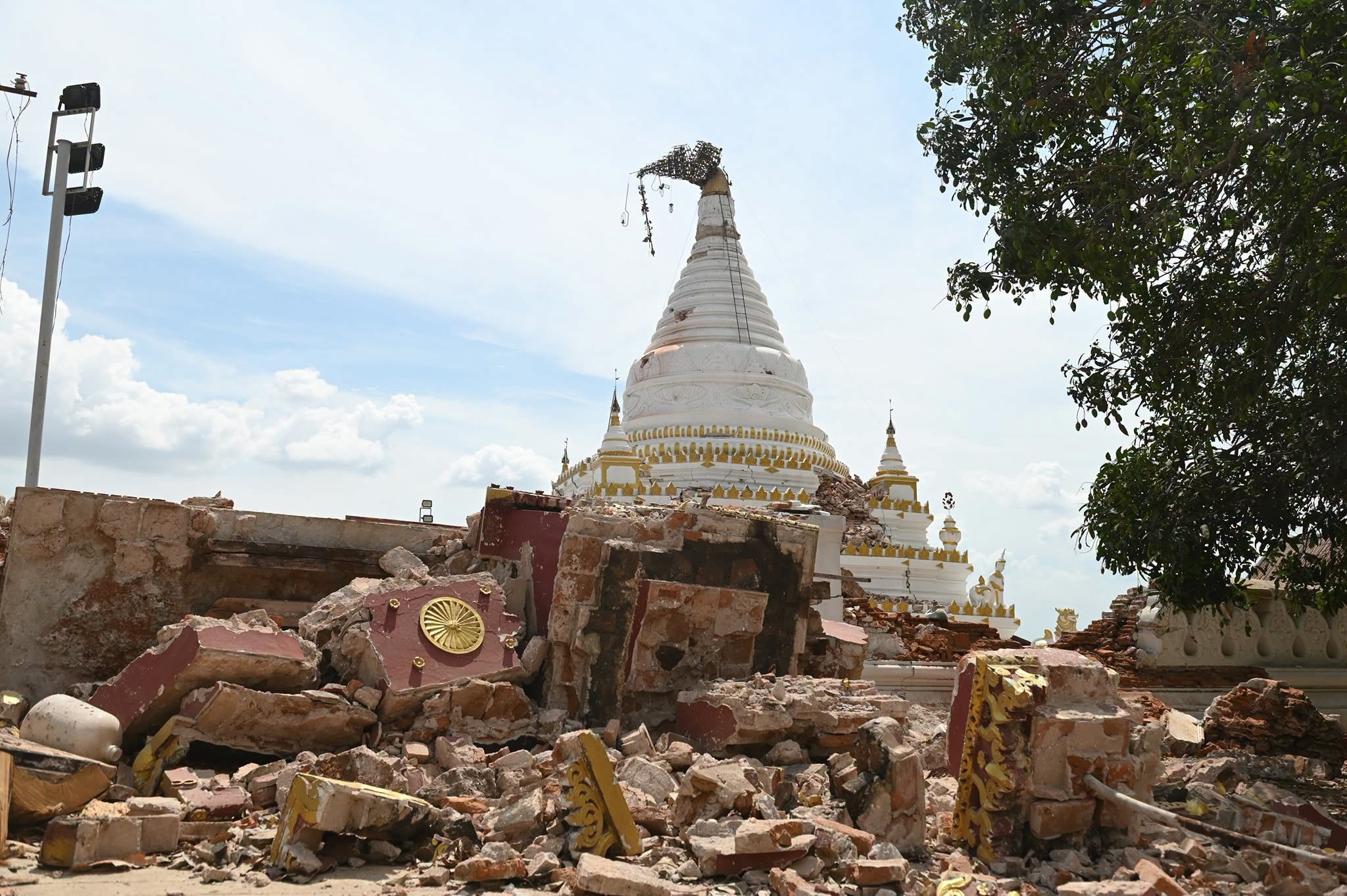
India has used its Quick Impact Projects programme to support community-level development in Myanmar through initiatives involving rural infrastructure, renewable energy, education and disaster recovery. In July, the Indian ambassador handed over solar systems for 50 households affected by the earthquake in the Inle area of Taunggyi.
The latest agreements extend that cooperation into education, vocational training, public infrastructure and administrative capacity, although the projects’ practical impact will depend on their implementation and the delivery of the planned facilities and services.
BOB Post