When Iranian forces effectively sealed the Strait of Hormuz in early March 2026 and retaliatory strikes hammered Gulf oil and LNG infrastructure, the world got a brutal reminder of just how fragile fossil-fuel geopolitics remains. Brent crude spiked past $100 a barrel, Asian LNG prices doubled, and import-dependent economies from Dhaka to Nairobi felt the pinch in higher fuel bills, inflation spikes, and stalled factories.
For the Global South, home to more than three-quarters of humanity and the fastest-growing energy demand this wasn’t just another Middle East flare-up. It was a strategic wake-up call. In boardrooms and presidential palaces from Pretoria to Brasília, officials are now treating the crisis not as a temporary shock but as the catalyst for a long-overdue pivot: a pragmatic, self-interested drive toward alternative energy sources that promise greater sovereignty, lower long-term costs and a seat at the table in a multipolar world.
The numbers tell the story. The International Energy Agency has called the Hormuz shutdown the largest supply disruption in history roughly 20 million barrels a day of oil and significant LNG volumes cut off at a stroke. For oil importers such as India, Pakistan, Kenya and much of sub-Saharan Africa, the bill is already running into billions. Exporters like Nigeria, Angola and Venezuela have seen short-term revenue windfalls, but even they know the party is unsustainable: volatile prices breed volatile politics, and no one wants to bet their development model on tanker routes that can be closed by a single conflict.
Enter the alternative-energy vision taking shape across the South. It is neither starry-eyed green idealism nor a wholesale rejection of hydrocarbons. It is a hard-nosed calculation: use the crisis to accelerate what was already happening cheap solar, wind, hydro, geothermal, green hydrogen and, in select cases, small modular nuclear reactors while hedging against future supply shocks and Chinese supply-chain dominance in panels and batteries.

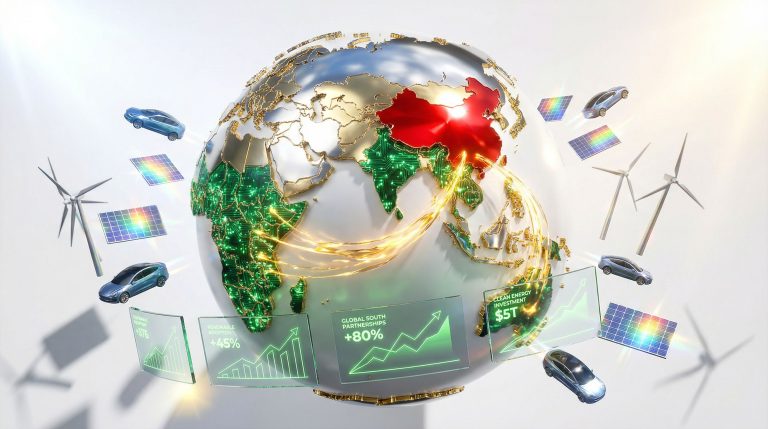
Start with the low-hanging fruit: solar and wind. Costs have collapsed globally, and the South sits on some of the planet’s best resources. India, already the world’s third-largest renewable installer, has doubled down with record auctions for hybrid solar-wind-storage projects and round-the-clock (RTC) tenders that guarantee firm power. Reliance Industries’ Dhirubhai Energy Complex, slated to open gigafactories for panels, batteries and electrolysers in 2026, is the clearest sign yet that New Delhi intends to manufacture its own escape from import dependence. Brazil and the rest of South America, where renewables already supply over 80 per cent of electricity, are pushing further: regional interconnection grids, sustainable biofuels for hard-to-electrify sectors, and green hydrogen export terminals along the Atlantic coast. Chile and Argentina are eyeing their lithium and vast solar deserts as the raw material for a hydrogen economy that could one day ship “green molecules” to Europe and Asia.
Africa is moving more cautiously but with growing ambition. Kenya’s geothermal plants in the Rift Valley already provide baseload power; Ethiopia is reinforcing grids with AfDB-backed revolving credit facilities to bring solar mini-grids to rural areas. The African Renewable Energy Initiative’s 300 GW target by 2030 suddenly looks less aspirational and more like insurance against the next oil shock. Even fossil-heavy Nigeria is quietly tendering large solar projects, recognizing that diesel generators are now more expensive than solar-plus-battery in many off-grid locations.
Nuclear is back on the table for those who can afford the capital and regulatory heft. South Africa is reviving small modular reactor talks; Egypt and others are exploring deals with Russia and China. The attraction is obvious: dispatchable, low-carbon power that doesn’t rely on imported fuel or intermittent sunshine. Yet rational analysts note the pitfalls prohibitive upfront costs, waste concerns and the risk of locking countries into another form of foreign technology dependence.

Green hydrogen occupies the most speculative but lucrative corner of the vision. Namibia, Morocco and South Africa see themselves as future exporters of green ammonia and hydrogen made with cheap desert solar and wind. Latin America’s hydropower-rich nations are eyeing electrolysers to turn surplus electricity into storable fuel. The prize: turning stranded renewable resources into globally traded commodities that bypass the geopolitical minefield of oil tankers.
Critically, none of this is happening in a vacuum. The crisis has sharpened the multipolar reality. China remains the undisputed workshop of the energy transition producing 80 per cent of the world’s solar modules and dominating battery supply chains. BRICS cooperation, now expanded, is quietly stitching together a parallel financing and technology network. The BRICS Energy Research Cooperation Platform and the New Development Bank are prioritizing joint projects on hydrogen, storage and critical minerals. India and Brazil are deepening mineral-processing ties; the bloc’s 2025–2030 energy roadmap explicitly calls for tripling renewable capacity while exploring “all viable alternatives,” including carbon capture where it makes sense.
That last phrase matters. A rational reading of the Global South’s position rejects the binary “renewables or fossils” debate peddled in Western capitals. Many countries still need gas or coal for baseload while grids are strengthened. Energy efficiency often the cheapest “source” of all gets too little attention amid the shiny solar headlines. And the social dimension cannot be ignored: a just transition means retraining workers from oil fields in the Niger Delta or coal belts of South Africa, not simply declaring victory when the last turbine spins.
The hard constraints are financial and institutional. The Global South receives only about 15 per cent of global clean-energy investment despite representing the bulk of future demand. High perceived risks, weak grids, currency volatility and debt overhangs keep capital expensive. The Hormuz crisis may concentrate minds in donor capitals and multilateral development banks, but history shows that promises of concessional finance often evaporate once oil prices stabilise. Domestic policy reform redirecting fossil subsidies, streamlining permitting, and enforcing competitive auctions remains the single biggest lever most governments control.
Sceptics will point out the gaps. Solar parks require land; transmission lines cross political minefields, and storage technology is still expensive at scale. Geopolitical risk is merely shifting from Middle Eastern chokepoints to Chinese control of critical minerals and processing. And in a world of rising great-power competition, no energy strategy is truly “independent.”
However, the trajectory is clear. The Iran war has done what years of climate summits could not: it has made energy security a domestic political imperative across the South. Governments are discovering that the same solar panels that lower emissions also shield budgets from Brent’s next tantrum. In a multipolar order where no single superpower can guarantee supply lines, diversification is not virtue signaling; it is survival.
The coming decade will test whether this vision translates into gigawatts on the ground or remains another set of glossy national plans. Early signs are encouraging: auction volumes are rising, private capital is sniffing opportunity, and South-South technical cooperation is accelerating. The Gulf crisis has handed the Global South an unexpected gift an urgent, self-interested reason to seize control of its energy destiny. Whether it uses that gift wisely will shape not just its own development path, but the balance of power in the 21st-century world.
BOB Post