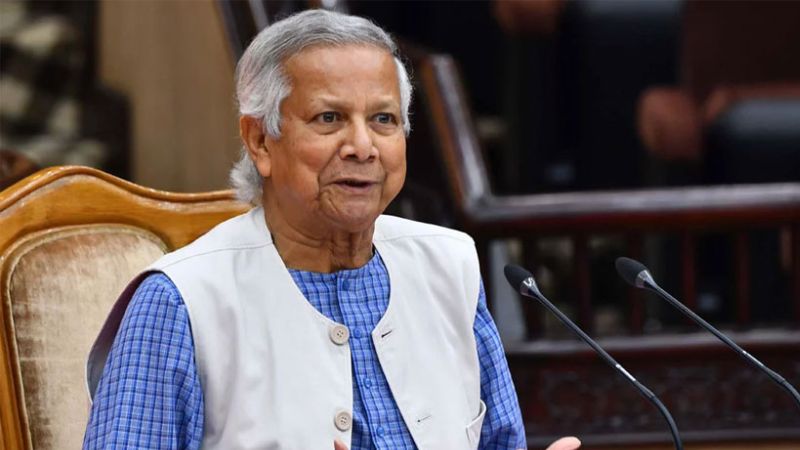
Chief Adviser Professor Muhammad Yunus on Friday strongly rejected claims that Bangladesh has provided a corridor to Rakhine State, labeling the claim as "a complete lie" and part of a broader propaganda campaign aimed at misleading the public.
In a televised address to the nation, Prof Yunus stated unequivocally, “We have noticed that a propaganda is being spread that Bangladesh has provided a corridor for Rakhine. I am saying clearly, this is a complete lie.”
He dismissed the so-called corridor claim as disinformation intended to stir unrest in Bangladesh. “This is a story that should be taken with a grain of salt,” he said, accusing a group of spreading false narratives to misguide citizens.
Prof Yunus assured the public that such misinformation will not distract his administration from their ongoing efforts to resolve the Rohingya crisis. “Do not be misled in any way. Despite this propaganda, we will not deviate from our goal,” he added.
The Chief Adviser also referred to a proposal made by UN Secretary-General António Guterres during his visit to Dhaka in March last year. Guterres had suggested establishing a relief channel to address the humanitarian crisis in Rakhine, which he believed could facilitate the repatriation of Rohingyas. However, Prof Yunus clarified that the proposal has not progressed beyond the initial stage.
Prof Yunus said when his government assumed office, the Rohingya issue had nearly vanished from the global agenda. “The issue had fallen off the international agenda,” he noted. However, he claimed that through diplomatic efforts, they have successfully brought the issue back into global focus.
As part of those efforts, Bangladesh proposed an international conference on the Rohingya crisis during the UN General Assembly in September last year. Prof Yunus confirmed that all UN member states have agreed to hold a high-level conference in New York in September this year.
“We have been able to shape international public opinion in favour of Rohingya repatriation,” he said.
Prof Yunus also highlighted a significant breakthrough, revealing that the Myanmar government has, for the first time, identified 180,000 Rohingyas as eligible for repatriation. This development followed discussions held on the sidelines of the BIMSTEC Summit in Bangkok last April.
The Chief Adviser said both formal and informal contacts are ongoing with Myanmar authorities and rebel groups to ensure safe repatriation and border security.
He also emphasized the extensive diplomatic engagements made globally, stating, “We have discussed the Rohingya issue with leaders and officials in all the countries I’ve visited, and their responses have been positive.”
Bangladesh is currently hosting over 1.2 million Rohingya refugees, including nearly 100,000 who arrived between September 2023 and 2024 amid renewed conflict in Rakhine.
Prof Yunus said the government is taking steps to prevent further influx and to expedite the safe and dignified return of the Rohingyas already in Bangladesh. “Many are still trying to come due to the ongoing conflict and humanitarian situation there,” he said.
He concluded by reaffirming the government's commitment: “Repatriation is the only sustainable solution, and we will not stop until it is achieved.”
BOB Post