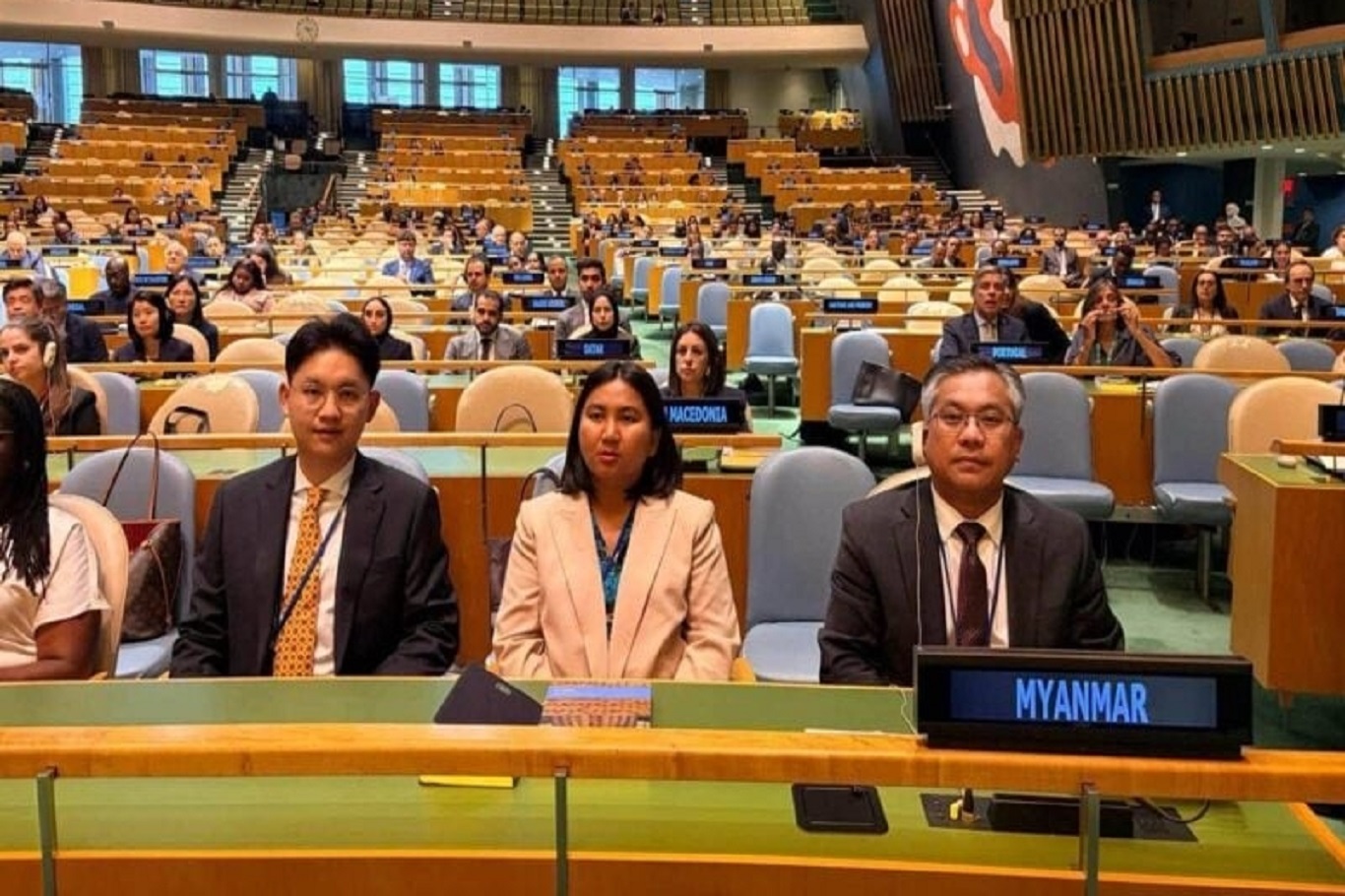
Myanmar government has challenged the legitimacy of its permanent representative to the United Nations, Kyaw Moe Tun, ahead of a fresh decision on the country’s representation at the world body.
Myanmar’s Ministry of Foreign Affairs said Kyaw Moe Tun was dismissed from government service in February 2021 after failing to comply with orders from the authorities. It also accused him of engaging in activities contrary to the interests of the state.
The ministry’s latest position comes as the UN Credentials Committee prepares to revisit the question of who should represent Myanmar at the United Nations.
According to AFP, Myanmar’s authorities have described Kyaw Moe Tun as occupying the post “illegitimately” and argued that he no longer has the authority to represent the country. AFP reported that the diplomat was dismissed shortly after publicly opposing the military takeover in 2021.
Kyaw Moe Tun has remained Myanmar’s representative at the UN despite the military’s efforts to remove him. He publicly condemned the February 2021 coup and called for international action to restore democracy.
Reuters reported that Myanmar government announced on September 13 that it had revoked and withdrawn Kyaw Moe Tun’s status, accusing him of engaging in what it called illegal activities. His position at the UN, however, has remained unchanged because the Credentials Committee has repeatedly deferred a decision on competing claims to represent Myanmar.
The dispute over Myanmar’s UN representation has broader diplomatic significance because recognition of a representative can affect which side is treated as the country’s legitimate authority in international forums.
The credentials issue has remained unresolved since the military seized power from the elected government in 2021. Kyaw Moe Tun was appointed to the UN post before the coup and subsequently refused to support the military authorities.
The latest development comes as Myanmar’s military-backed administration seeks to strengthen its international position while fighting continues between the armed forces, ethnic armed organisations and pro-democracy groups across the country.
The latest dispute has added a diplomatic dimension to Myanmar’s prolonged political crisis, with the question of who represents the country at the UN carrying wider implications for the military-backed government’s efforts to gain international recognition.
The nine-member Credentials Committee includes the Bahamas, Belgium, Benin, China, Jamaica, Russia, Uganda, the United States and Vanuatu. China and Russia have maintained close relations with Myanmar authorities, while the United States has imposed sanctions on senior figures associated with the military leadership.
The committee normally announces its annual credentials decision around November. The outcome could therefore become an important indicator of how the international community handles competing claims of political legitimacy in Myanmar.
The UN Credentials Committee’s eventual decision will be closely watched as an indication of how the international community approaches Myanmar’s competing claims to political legitimacy.
BOB Post