Prime Minister Tarique Rahman's landmark official visit to China has generated extensive attention across international media, with coverage largely portraying the trip as a significant diplomatic breakthrough that could redefine Bangladesh's regional engagement and economic trajectory.
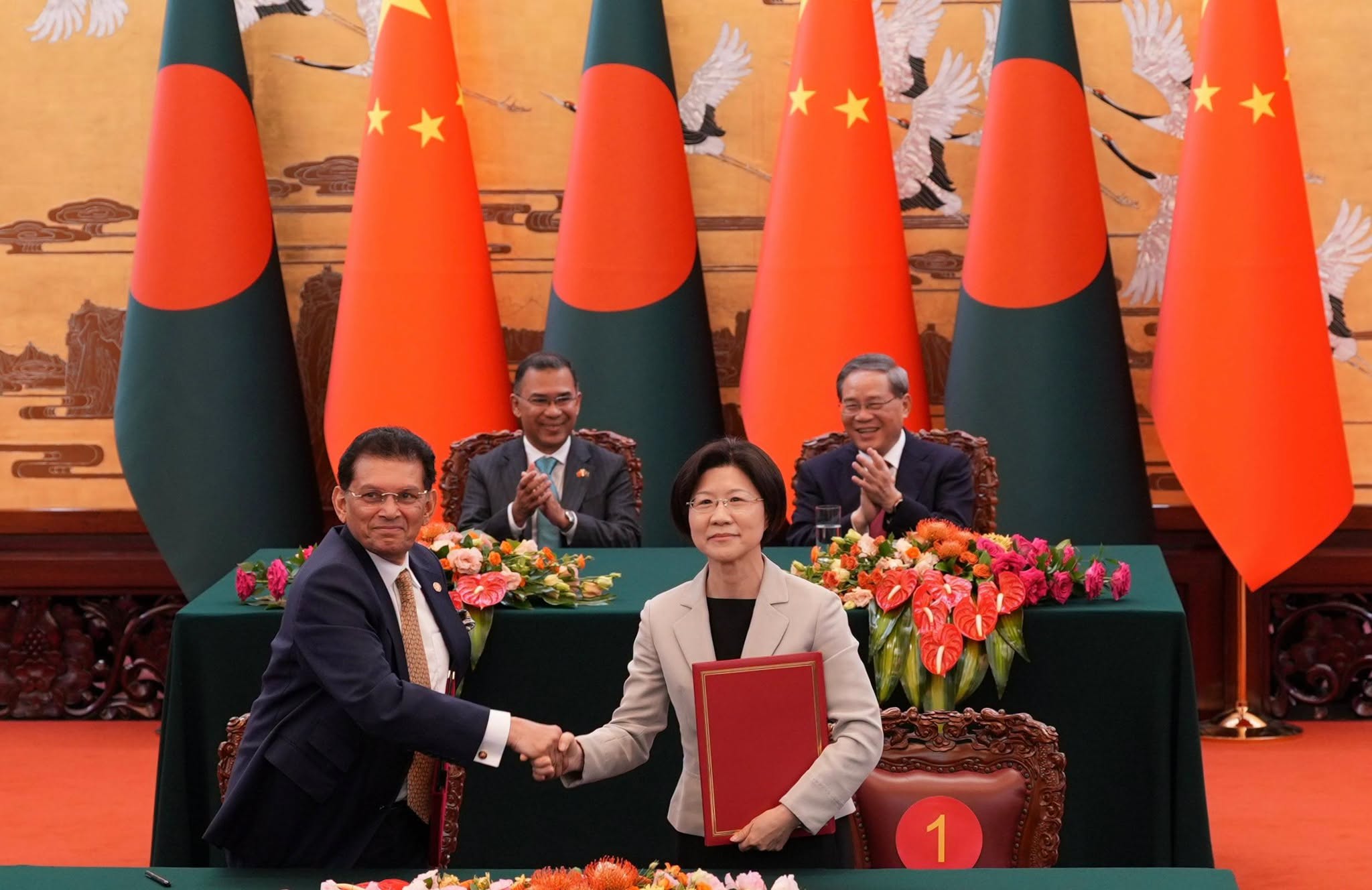
The visit, Rahman's first bilateral overseas mission since assuming office in February 2026, followed a stop in Malaysia before culminating in a high-profile four-day program in China. During the visit, he held separate meetings with President Xi Jinping, Premier Li Qiang and other senior Chinese leaders; witnessed the signing of 13 memorandums of understanding (MoUs), and jointly announced the establishment of a "China-Bangladesh Community with a Shared Future."
Media assessments from Beijing to Washington largely agreed that the visit represents one of Bangladesh's most consequential diplomatic engagements in recent years, although interpretations differed according to regional strategic interests.
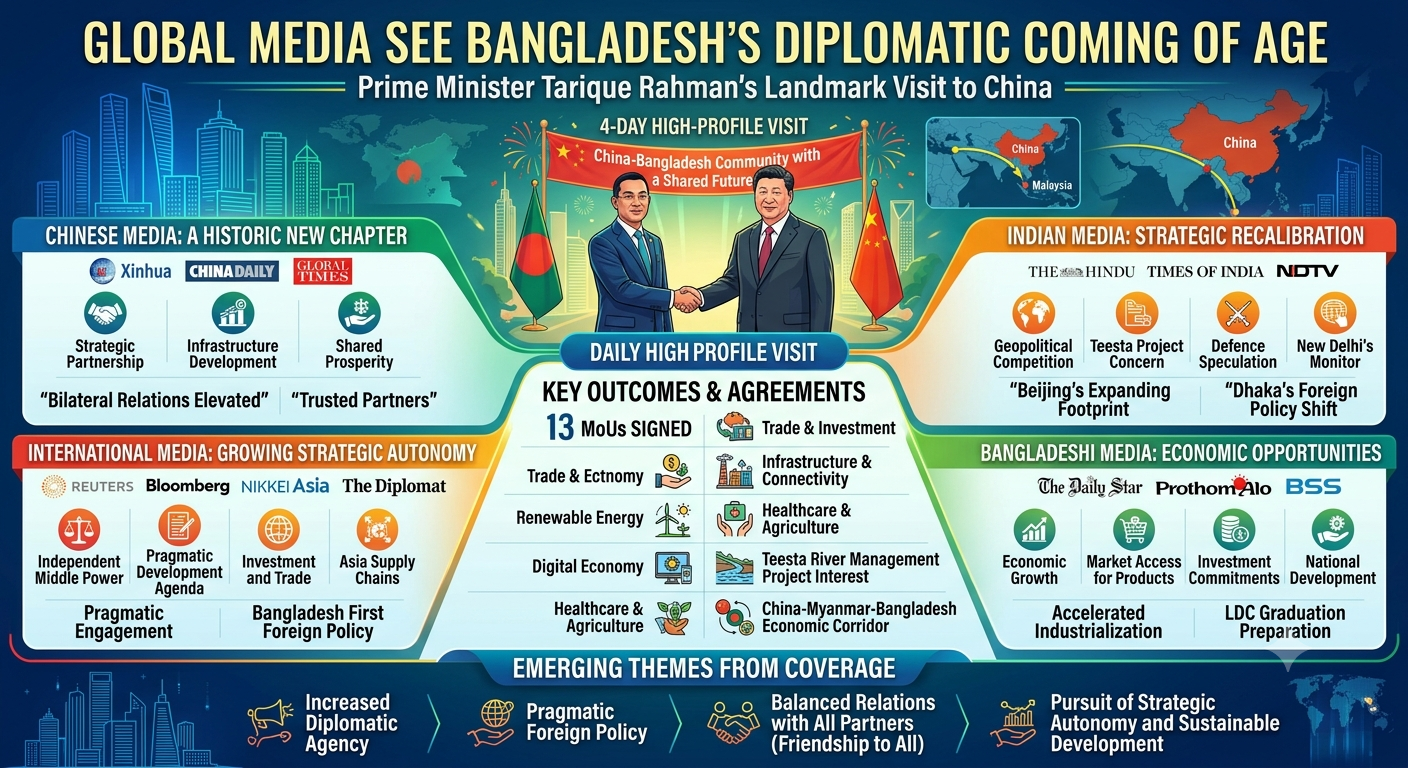
Chinese media hail a "new chapter"
Chinese state and mainstream media overwhelmingly described the visit as a historic success that elevated bilateral relations to a new level.
Xinhua, China Daily, CGTN, People's Daily, Global Times, China Global Television Network, and the South China Morning Post highlighted the warm reception accorded to Rahman, his meetings with China's top leadership, and Beijing's commitment to supporting Bangladesh's sovereignty, economic modernization and infrastructure development.
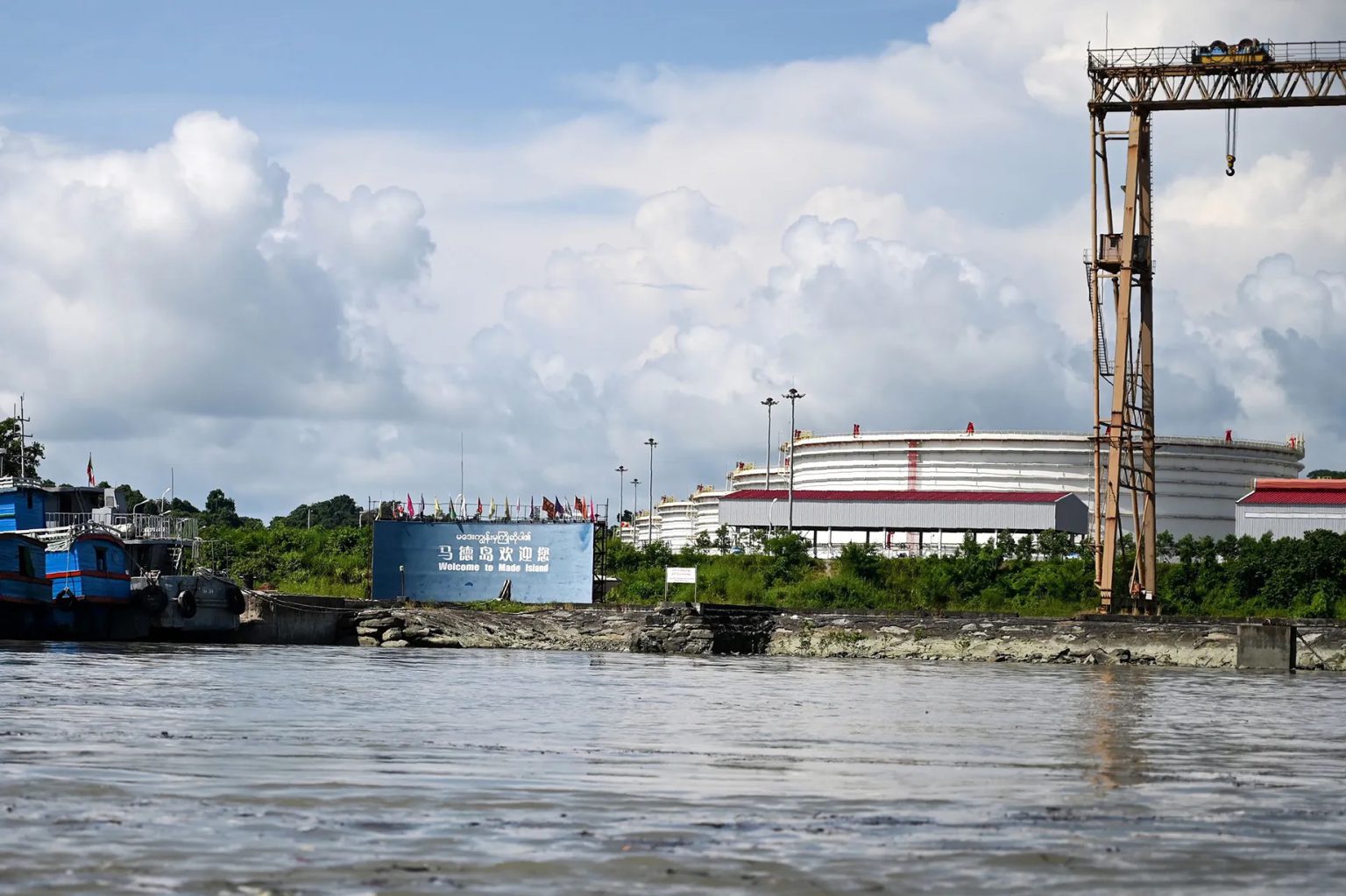
Coverage extensively focused on practical cooperation rather than geopolitics. Chinese outlets praised agreements covering trade, industrial investment, renewable energy, digital economy, healthcare, agriculture, and transport connectivity. Particular attention was given to China's continued interest in the Teesta River Comprehensive Management Project and discussions surrounding a future China-Myanmar-Bangladesh Economic Corridor.
President Xi Jinping's description of Bangladesh as a "valued and trusted partner" received wide prominence, with commentaries describing bilateral relations as entering "a new era of shared development."
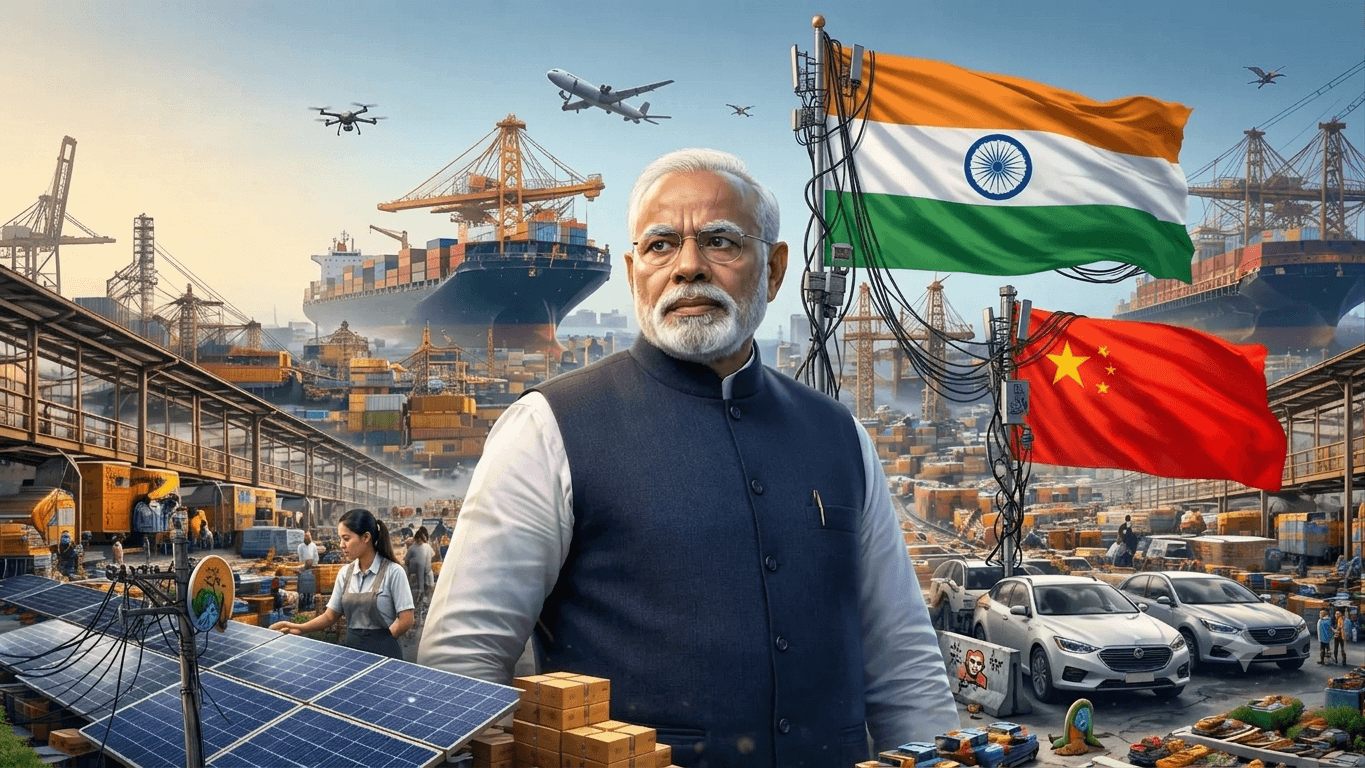
Chinese editorials also stressed that expanding China-Bangladesh cooperation is aimed at promoting regional prosperity rather than confronting any third country. Global Times dismissed concerns raised elsewhere as Cold War thinking, arguing that Bangladesh is pursuing development based on its own national priorities.
Indian media watch Dhaka's strategic recalibration
Indian media covered the visit extensively, interpreting it primarily through the prism of South Asian geopolitics and regional strategic competition.
Publications including The Print, The Hindu, The Indian Express, Times of India, NDTV, India Today, Firstpost, The Economic Times, and The Tribune noted that China became one of Rahman's earliest major bilateral destinations, ahead of an official visit to India, describing the sequence as diplomatically significant.
Much of the reporting examined the implications of expanding Chinese investments in Bangladesh, particularly regarding the Teesta project, infrastructure financing, industrial parks, and discussions over enhanced regional connectivity.
Several reports also discussed speculation surrounding possible defence cooperation, including media reports about potential Chinese J-10CE fighter aircraft, while noting that economic cooperation remained the dominant outcome of the visit.
Indian analysts generally acknowledged Bangladesh's legitimate need for investment, export diversification and infrastructure financing, but suggested New Delhi would closely monitor Beijing's expanding footprint in the Bay of Bengal and near India's northeastern region.
At the same time, several Indian commentators recognised that Dhaka is increasingly pursuing a more diversified foreign policy aimed at maximizing economic opportunities while maintaining constructive relations with all major partners.
International media highlight Bangladesh's strategic autonomy
International media largely framed the visit as evidence of Bangladesh's growing diplomatic confidence and pragmatic foreign policy.
Publications including Reuters, Bloomberg, Nikkei Asia, Asia Times, The Diplomat, Al Jazeera, Financial Times, and regional policy platforms noted that Dhaka is increasingly positioning itself as an independent middle power capable of engaging multiple global actors without abandoning strategic balance.
Analysts observed that Bangladesh's priorities remain overwhelmingly economic: attracting foreign direct investment, expanding manufacturing, improving connectivity, narrowing its trade deficit, strengthening energy security and supporting long-term industrial transformation.
Several reports highlighted China's willingness to support major infrastructure initiatives that have experienced delays elsewhere, particularly water management and river development projects.
Asia Times argued that renewed Chinese engagement could provide momentum for resolving longstanding infrastructure bottlenecks, while The Diplomat noted that Bangladesh appears determined to pursue a "Bangladesh First" foreign policy that places national development above geopolitical rivalry.
International observers also pointed out that Rahman's participation in the Summer Davos Forum before travelling to Beijing reinforced Bangladesh's broader ambition to deepen integration with Asian supply chains and attract global investment.
Bangladeshi media celebrate economic opportunities
Bangladesh's media broadly welcomed the visit, emphasizing its potential to accelerate economic growth, industrialization and regional connectivity.
Leading newspapers including The Daily Star, Prothom Alo, The Business Standard, Dhaka Tribune, New Age, The Financial Express, Bangladesh Sangbad Sangstha (BSS) and UNB highlighted the substantial economic outcomes of the visit rather than regional strategic competition.
Reports focused on expanded Chinese market access for Bangladeshi products, investment commitments, infrastructure cooperation, technology transfer, education partnerships, renewable energy projects and enhanced people-to-people exchanges.
Editorials argued that Bangladesh's engagement with China should be viewed through the lens of national development rather than great-power rivalry. Many analysts noted that as Bangladesh graduates from Least Developed Country (LDC) status, securing diversified investment sources, export markets and infrastructure financing has become increasingly important.
Several commentators also emphasized that Dhaka continues to maintain constructive relations with China, India, Japan, the United States and other partners simultaneously, reflecting Bangladesh's long-standing foreign policy principle of "friendship to all, malice toward none."
Across much of the international coverage, one consistent theme emerged: Bangladesh is increasingly exercising greater diplomatic agency in shaping its own future.
Rather than viewing the visit solely through the lens of strategic competition between major powers, many analysts argued that Dhaka is pursuing a pragmatic development agenda centred on economic transformation, infrastructure modernization, and diversified international partnerships.
The agreements signed in Beijing demonstrate Bangladesh's determination to expand opportunities wherever they align with national interests. For Dhaka, stronger engagement with China does not necessarily represent a departure from existing partnerships but reflects a broader strategy of maintaining balanced relations while accelerating economic growth.
As implementation of the 13 MOUs begins, the success of the visit will ultimately be judged by tangible outcomes new investments, expanded trade, employment generation, technology transfer and improved infrastructure. If these commitments materialize, Prime Minister Tarique Rahman's inaugural visit to China may be remembered not only as a diplomatic milestone, but as an important step in Bangladesh's pursuit of sustainable development, strategic autonomy and a more prominent role in regional affairs.
BOB Post