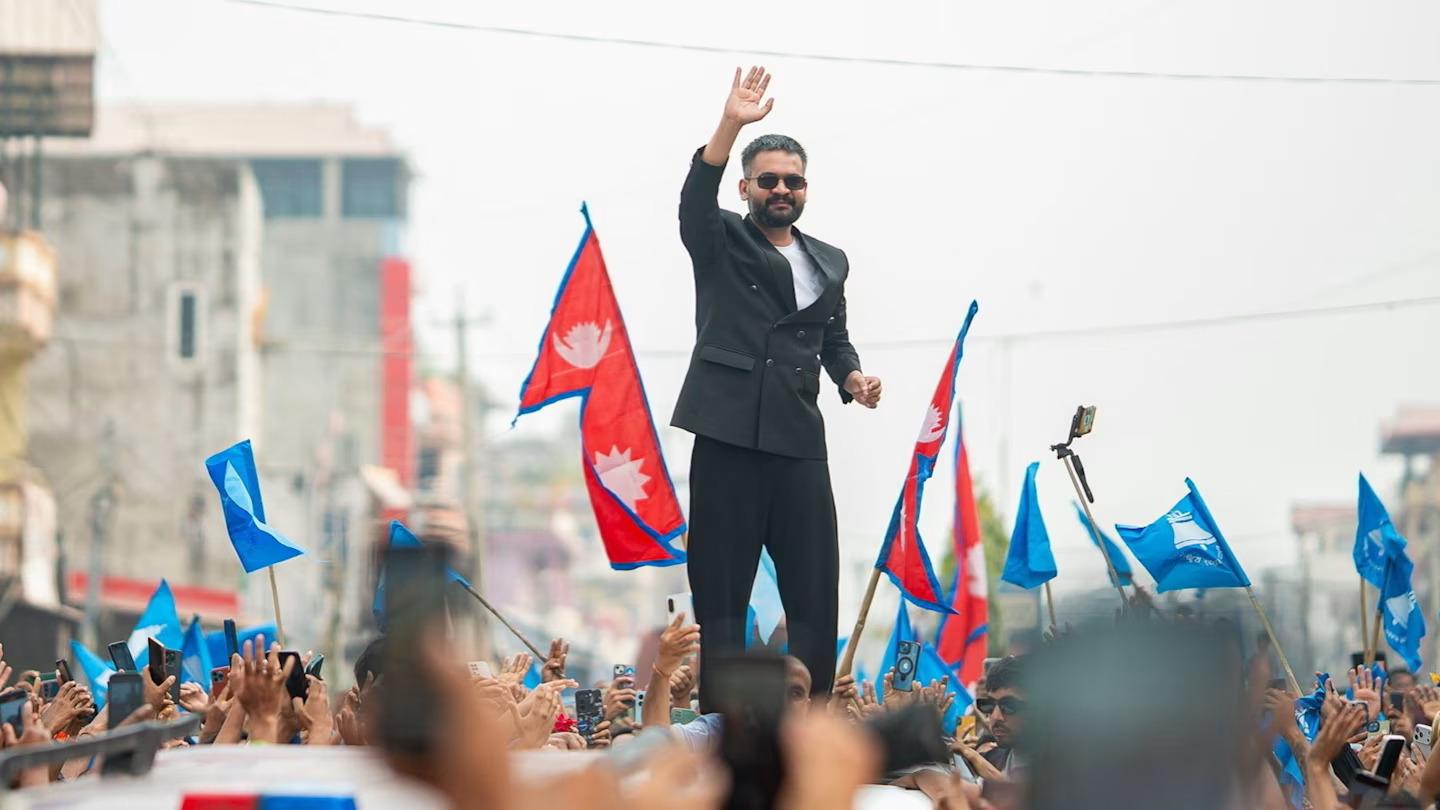
Nepal’s political landscape appears set for a dramatic shift as the Rastriya Swatantra Party led by Balendra Shah, widely known as Balen, moves toward a decisive victory in the country’s parliamentary elections. Early results and ongoing vote counting suggest the reformist party has secured a commanding lead, positioning Shah as a potential candidate for prime minister.
The elections were held on Thursday to select members of the 275-seat House of Representatives, Nepal’s lower house of parliament. Of these seats, 165 are filled through direct elections while the remaining 110 are allocated through a proportional representation system. The vote marks the first national election since the youth-led protests last year that forced the previous government from power.
Shah’s Rastriya Swatantra Party has already won at least 117 out of 153 declared direct seats and is leading in several other constituencies, giving it a strong path toward forming the next government. According to Al Jazeera, the party’s rapid rise reflects a broader reformist wave driven largely by young voters frustrated with traditional political elites.

In one of the most symbolic victories of the election, Shah defeated veteran politician and former prime minister Khadga Prasad Sharma Oli in his own constituency, securing nearly four times more votes than the long-time leader. The result highlights a major generational shift in Nepal’s politics, where many younger voters are demanding transparency, accountability and economic reform.
Traditional political parties have suffered significant setbacks in the election. The Nepali Congress, which previously led a coalition government, has managed to win only a small number of seats, while the Communist Party of Nepal–Unified Marxist Leninist, led by Oli, trails far behind in the vote count. Former Maoist commander and three-time prime minister Pushpa Kamal Dahal has retained his parliamentary seat but his party’s overall influence appears diminished
Shah, 35, first gained national attention as a civil engineer and socially conscious rapper whose music criticized corruption and inequality. His political career accelerated after he won the Kathmandu mayoral election in 2022 as an independent candidate, surprising many established politicians. His party later built a strong grassroots campaign network, including an extensive social media outreach effort and support from the Nepali diaspora
During the campaign, Shah emphasized improving public education, strengthening healthcare access for low-income communities and tackling corruption within government institutions. His message resonated strongly with younger voters, who make up a significant portion of Nepal’s population
The election result reflects growing dissatisfaction among the public with long-standing political leadership. More than 40 percent of Nepal’s population is under the age of 35, yet many major political parties continue to be led by figures in their seventies.
If the current trends continue, Shah could soon become one of the youngest prime ministers in Nepal’s history, marking a significant turning point in the country’s democratic journey and signaling a new era shaped by youth-driven political change.
BOB Post