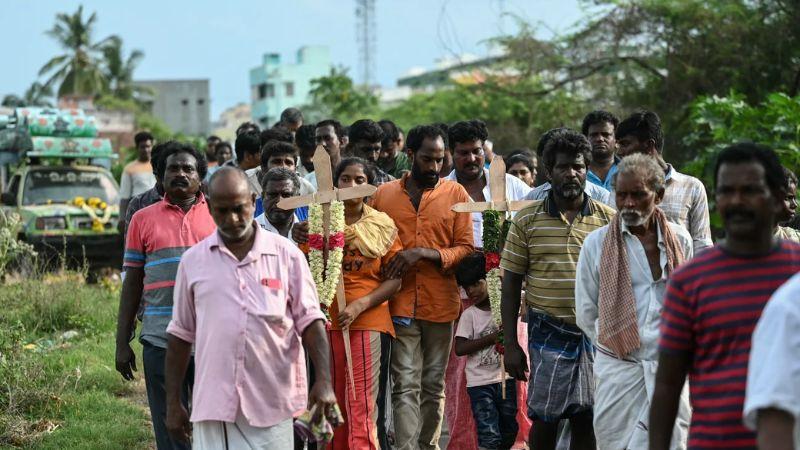
In the southern Indian town of Kallakurichi, 55-year-old Ponnusamy Rajendran, who worked as a day laborer unloading vegetables at the local wholesale market, fell victim to a lethal batch of methanol-laced bootleg alcohol last week. Rajendran, earning less than $4 a day, opted for the affordable but dangerous illicit liquor, purchasing three 50-cent pouches after finishing his work at dawn.
"He divided his modest earnings with his family and saw the counterfeit alcohol as the only option within his limited budget," explained Kaliappan Gnanavel, Rajendran’s son-in-law, speaking in Tamil to NPR.
Tragically, Rajendran succumbed to the toxic effects on Thursday in a Tamil Nadu government hospital. His death was one among 56 fatalities linked to the consumption of the tainted liquor in Kallakurichi.
Mass casualties from tainted alcohol have afflicted several Indian states, including Assam, Punjab, Bihar, and Tamil Nadu. Despite prohibition laws, the lower cost and easy availability of such alcohol continue to attract consumers. A study attributes these deaths to methanol being added to bootleg alcohol to cheaply boost its potency, leading to severe acidosis and vision impairment.
"My father complained of blurred vision, saying 'I cannot see anyone’s face clearly,'" recalled Rajendran's daughter, Karpagam Gnanavel. "He cried in distress that morning, shortly before a neighbor warned that others were dying after drinking the same liquor."
By Wednesday morning, 215 people had been admitted to four hospitals, showing symptoms like vomiting, stomach aches, and diarrhea, a doctor reported, speaking on condition of anonymity. Four patients remain in critical condition.
In response, Tamil Nadu's government appointed M.S. Prasanth, a former rural development official, as the new chief administrator for Kallakurichi. Several police officers were also suspended, with allegations that authorities had long ignored the illegal liquor trade.
Prasanth's immediate actions included recruiting additional doctors from nearby districts and ensuring the delivery of medical supplies and methanol antidotes to Kallakurichi. "We mobilized specialist doctors and medicine stocks to manage the surge in poisoning cases," Prasanth stated.
Despite these interventions, a quarter of those hospitalized did not survive. "This is a deep-rooted socio-economic issue," Prasanth acknowledged. "People turn to cheaper, illegal alcohol due to poverty. We need to curtail the supply and implement long-term solutions."
On the day Rajendran was hospitalized, his son-in-law, Kaliappan Gnanavel, joined around 50 villagers in a protest at the local police station, demanding action against the illegal alcohol producers. To date, seven individuals involved in the illicit production have been arrested, according to Prasanth.
The Tamil Nadu government has announced a compensation of $12,200 for each family affected by this tragedy. Karpagam Gnanavel confirmed her family received compensation but expressed frustration over the delayed government response. "We fought against the bootleggers, only to be told to restrain our own family members. This crisis must never happen again," she declared.
BOB Post