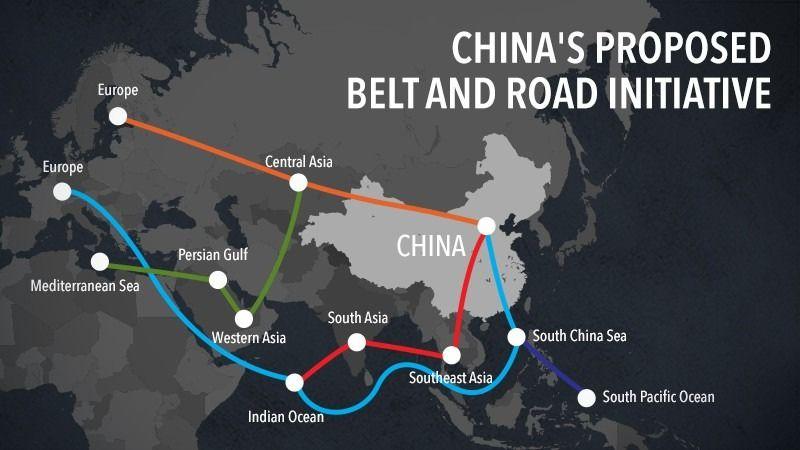
In a year marked by geopolitical shifts and economic challenges, China's Belt and Road Initiative (BRI) has continued to drive global connectivity and development, reinforcing its role as a cornerstone of international cooperation. Celebrating its 11th anniversary, the BRI has expanded its reach and deepened its impact, aligning with global development strategies and fostering economic growth across continents.
Strengthening Global Partnerships
China's commitment to collaboration over competition has defined its BRI strategy in 2024. Through partnerships with countries across Asia, Africa, Europe, and Latin America, the BRI has facilitated infrastructure projects, trade agreements, and cultural exchanges.
During President Xi Jinping’s visit to Brazil, the BRI aligned with Brazil’s Growth Acceleration Program, setting the stage for enhanced connectivity and economic integration. Similarly, synergies with Kazakhstan’s Bright Path policy, Saudi Arabia’s Vision 2030, and the African Union’s Agenda 2063 have illustrated the initiative’s adaptability to regional priorities.
In Europe, the Budapest-Belgrade railway, a flagship BRI project, remains on track for completion by 2025. This modern rail link will significantly enhance trade and travel between Hungary and Serbia, providing a model for sustainable infrastructure development in the region.
Boosting the Global South
The BRI has also emerged as a vital tool for empowering the Global South. In 2024, China supported over 150 development projects in Africa, ranging from transportation networks to renewable energy installations. The inclusion of the African Union in the G20—an effort championed by China—symbolizes the growing influence and unity of developing nations.
Eduardo Regalado of Cuba’s International Policy Research Center highlighted the BRI’s role in combating poverty and promoting sustainable growth. “China’s focus on practical cooperation and infrastructure development has brought tangible benefits to many countries in the Global South,” Regalado said.
Driving Tangible Results
Data from 2024 underscores the initiative’s achievements. Trade volumes between BRI participant countries have risen by 15% compared to the previous year, fueled by streamlined logistics and enhanced infrastructure. In addition, projects like the China-Laos Railway and Pakistan’s Gwadar Port have reported increased utilization, created jobs and boosted local economies.
China’s financial contributions to the BRI have also grown, with new investments focusing on green infrastructure and digital connectivity. These efforts align with global calls for sustainable development and innovation-driven growth.
Fostering Knowledge Collaboration
The Belt and Road Initiative is also advancing global knowledge collaboration by establishing research centers, think tanks, and scholarship programs that bridge educational and intellectual gaps. Institutions such as the ‘Institute for a Community with Shared Future (ICSF)’at Communication University of China, ‘The Green Belt and Road Initiative Lab (Green BRI Lab)’-Fudan University, ‘China-ECC Institute’ at Budapest based, the Silk Road Think Tank Association and so on have become hubs for academic exchange and policy dialogue. Additionally, the BRI scholarship programs have provided opportunities for students from participating countries to pursue higher education in China, cultivating a new generation of leaders equipped to tackle global challenges and drive cooperative development.
Driving Development in Africa
By filling important infrastructural gaps and promoting economic growth throughout the continent, the Belt and Road Initiative has established itself as a revolutionary force in Africa. The Belt and Road Initiative (BRI) has strengthened regional connectivity and trade by providing money for more than 150 development projects in 2024, including energy infrastructure, highways, and railroads. Notable partnerships, including the BRI's connection with Agenda 2063 of the African Union, show its dedication to sustainable, long-term development. In addition to generating jobs, these investments enable African countries to more successfully join global value chains, opening up new avenues for industrialization and economic growth.
Cultural and Civilizational Exchange
Beyond economics, the BRI has fostered cultural exchange and mutual understanding. Initiatives like the China-France Year of Culture and Tourism and the exhibition of Chinese artifacts at Peru’s Inca Museum have celebrated shared human heritage. These efforts underscore the BRI’s broader vision of building bridges not just between nations but also between civilizations.
Looking Ahead
As the BRI progresses, it continues to embody China’s vision of a "community with a shared future for mankind." By aligning development strategies, advocating for Global South solidarity, and promoting cultural dialogue, the initiative has set a precedent for inclusive, cooperative growth in an interdependent world.
President Xi’s oft-repeated phrase, "Passengers in the same boat should help each other," aptly summarizes the ethos driving the BRI. As nations navigate shared challenges, the initiative offers a roadmap for collective progress, proving that partnership, not rivalry, is the path to a brighter future.
Obaidur Chowdhury
BOB Post